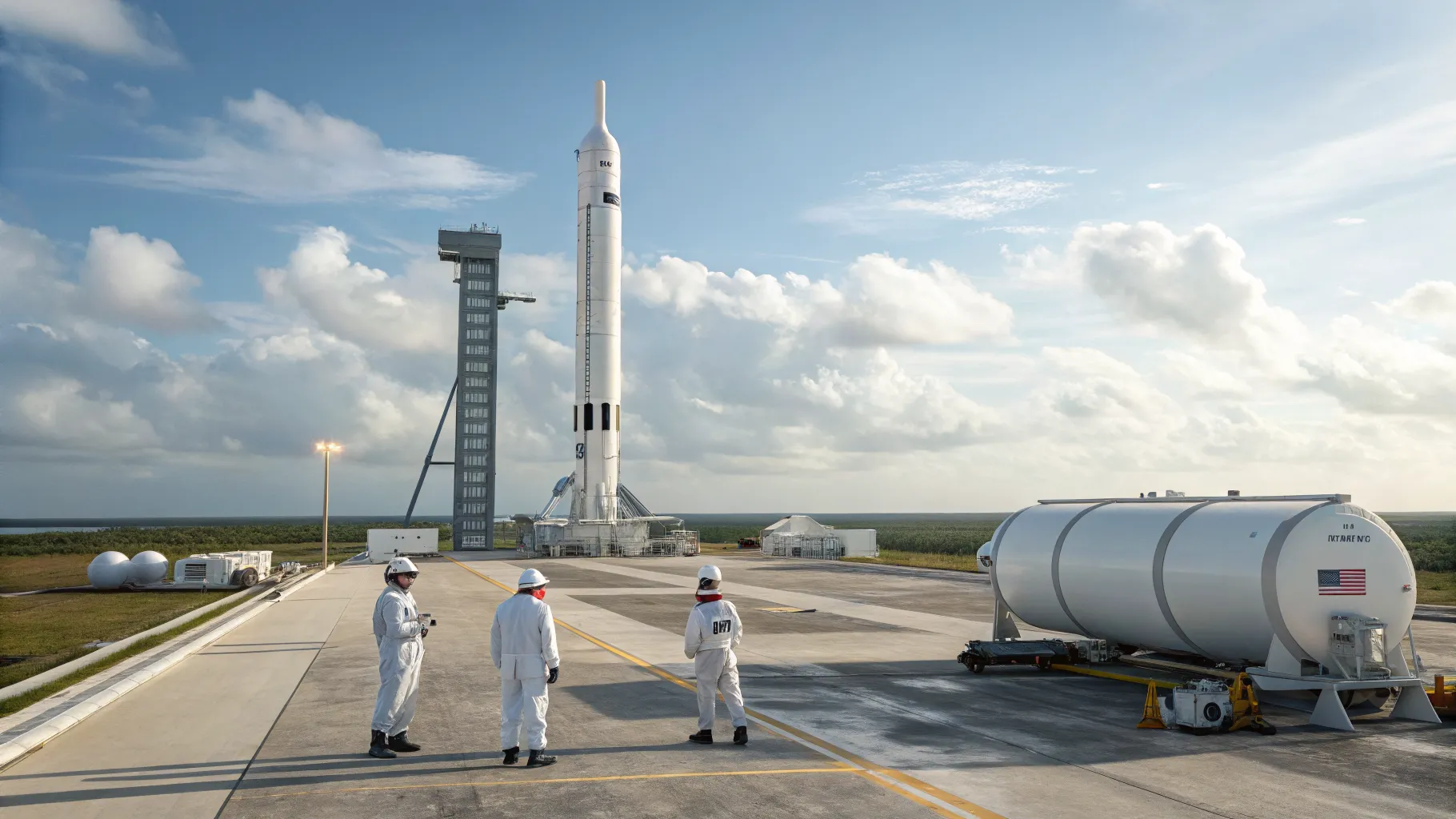
A young space company says it will try a water-based propellant test this fall, betting that a simple molecule could reshape how spacecraft move and refuel. General Galactic, co-founded by a former SpaceX engineer, is preparing a high-stakes experiment that could influence future missions, in orbit and beyond.
The firm has offered few public details, but the timing signals an aggressive push. The test would come as space operators look for safer, cheaper, and more sustainable options than traditional fuels. Many in the field agree the idea is promising. Many also warn the physics is unforgiving.
General Galactic, cofounded by a former SpaceX engineer, plans to test its water-based propellant this fall. If successful, it could help usher in a new era of space travel. That’s a big “if.”
What the Company Plans to Test
General Galactic has not disclosed the exact propulsion method. Water-based systems can take several forms. Some heat water to create high-pressure steam for thrust. Others split water into hydrogen and oxygen for combustion. Electric thrusters can also use water as a working fluid.
The fall schedule suggests the company has cleared early lab milestones. A field test would need a reliable storage system, a heat or power source, and a stable control setup. Any on-vehicle trial would also require regulatory approvals and safety reviews.
Why Water Matters in Orbit
Water is attractive because it is easy to store and handle compared with many propellants. It is not toxic and is less flammable in bulk form. Tanks can sit for long periods without major boil-off if the water is not cryogenic.
Supporters also point to future supply chains. Ice on the Moon and water-rich asteroids could, one day, feed depots in space. If spacecraft can run on water, refueling could shift from Earth-based launches to in-space sources, cutting cost and risk for deep-space missions.
- Safer handling than many legacy fuels.
- Potential in-space refueling from off-Earth water sources.
- Common infrastructure across thermal, chemical, or electric systems.
Technical Hurdles and Unknowns
Engineers caution that water is not a magic fuel. Steam propulsion can be simple but often produces modest performance. Splitting water into hydrogen and oxygen requires power and adds complexity. Electric systems need steady energy, which means larger solar arrays or other power units.
Thermal management is another barrier. Heating water efficiently in space demands precise insulation and control. Any boil-off, leaks, or line freezing can cripple a mission. Materials must also handle repeated heating and cooling cycles without failure.
There are also trade-offs in mass. Tanks must be strong enough to hold pressure, but every kilogram added to the spacecraft reduces payload or delta-v. The balance between performance, reliability, and cost is hard to strike.
Industry View and Market Impact
Analysts say the prize is large. If a water-based system can deliver reliable thrust at a competitive price, it could change station-keeping, orbital transfer, and on-orbit servicing. It could also enable refuelable tugs that move satellites between orbits and extend their lifetimes.
Yet many remain cautious. Established operators rely on proven chemicals and electric thrusters with long track records. Any newcomer must show equal or better performance, strong safety margins, and clear cost savings. A single test in the fall will not settle the debate. It could, however, signal a credible path forward.
What to Watch Next
The coming months will reveal how far along the company is. Key signs include ground-fire campaigns, vacuum-chamber trials, and thermal cycling tests. Watch for updates on:
- Power source and heating method.
- Pressure and temperature control strategies.
- Planned mission profile for the first demo.
- Any partnerships with satellite operators or depots.
If the trial succeeds, it could spark new funding and more ambitious demos. If it fails, the data may still help refine designs and point to better use cases.
General Galactic’s fall test is a bet on practicality. Water is cheap, abundant, and safe. Making it work as a high-performance propellant is the challenge. The result will be watched closely by engineers, investors, and mission planners. Either way, the outcome will sharpen the next wave of propulsion choices in space.

A seasoned technology executive with a proven record of developing and executing innovative strategies to scale high-growth SaaS platforms and enterprise solutions. As a hands-on CTO and systems architect, he combines technical excellence with visionary leadership to drive organizational success.