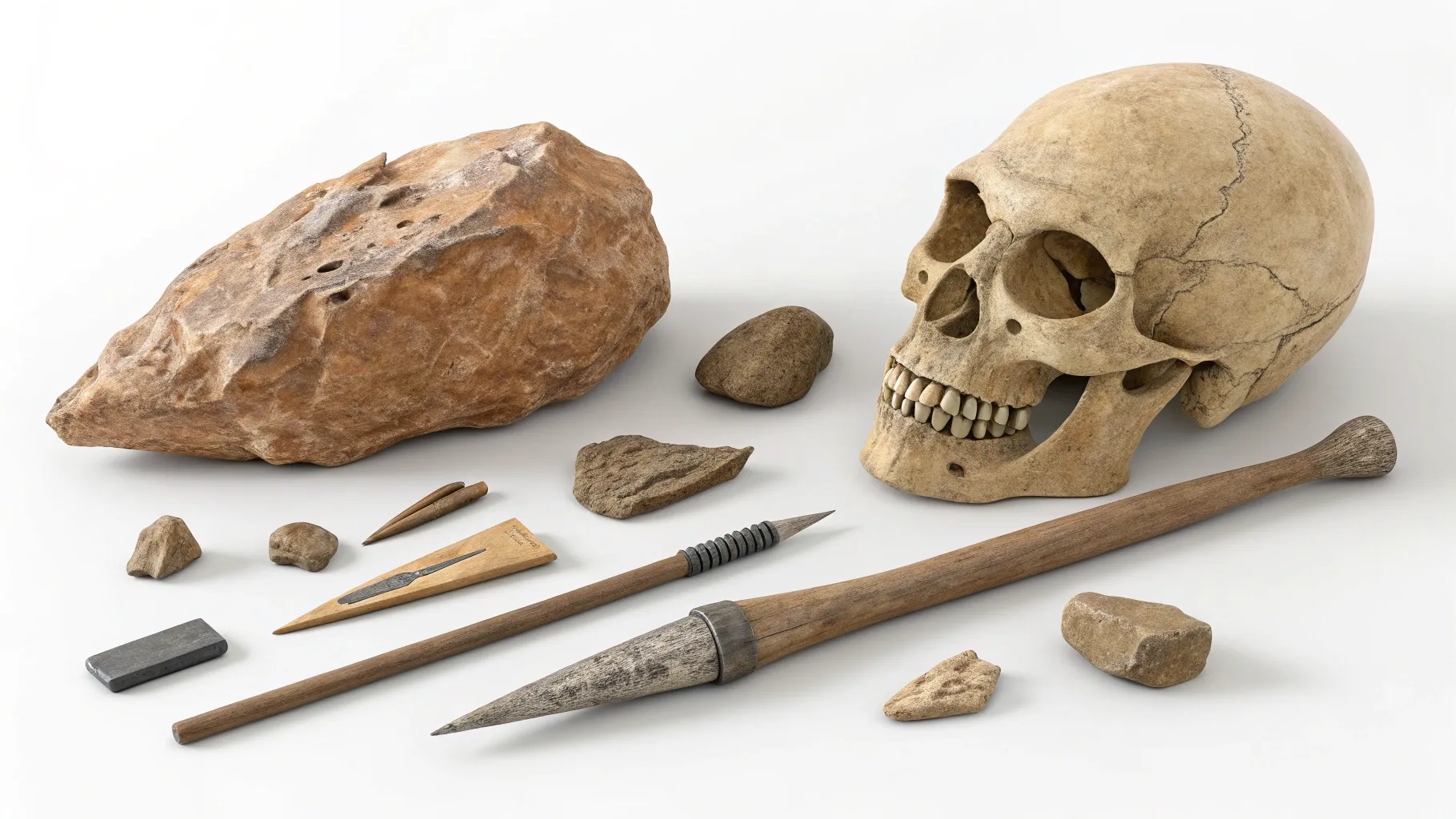
A new analysis suggests that our species began to take shape much earlier than scientists had previously believed, advancing the timeline by at least half a million years. The finding, released this week, challenges a standard view that Homo sapiens emerged roughly 300,000 years ago in Africa, and suggests a longer, more gradual origin story.
The claim is significant for how researchers interpret fossils, genetic data, and the complex transition from earlier human groups to modern humans. It could reshape museum labels, school textbooks, and the models used to explain how our species spread and adapted.
“New analysis suggests our species began to emerge at least half a million years earlier than we thought.”
Why The Timeline Is Being Rethought
For years, many experts have pointed to fossils from Jebel Irhoud in Morocco, dated to approximately 300,000 years ago, as early evidence of Homo sapiens. Other finds in East and South Africa added pieces to the puzzle. Yet the record has always looked patchy, with fossils showing a mix of modern and archaic traits.
Genetic studies also hint at deep roots. DNA analyses have traced common ancestors back in time, but these estimates can vary depending on the methods and assumptions used. The new claim suggests that the evolution of modern traits began earlier than the fossil record indicates.
Researchers have debated whether our species emerged suddenly or evolved over a long period across different regions. The new view favors a drawn‑out emergence, with traits appearing in stages rather than all at once.
What The New Analysis Could Mean
If the timeline shifts back, it suggests a longer period for the development of modern anatomy, cognition, and behavior. That would also change how scientists read signs of early tool use, symbolic items, and long-distance movement.
Several questions follow:
- Which fossils count as early Homo sapiens, and which do not?
- Did modern traits appear in one region or across many groups?
- How did climate, ecosystems, and interactions with other human lineages shape the trajectory?
Supporters of an earlier origin say the evidence fits a “mosaic” pattern. Some populations may have possessed modern faces or brains from the outset, while others did not. Over time, these traits combined.
Points Of Caution From The Field
Not all experts will agree. Dating methods vary in precision. Fossils are rare, and many are fragmentary. Small shifts in interpretation can change species labels. Some researchers warn that pushing the date back by hundreds of thousands of years requires broad support from multiple lines of evidence.
Another challenge is defining species. Biologists use different yardsticks in paleontology than in living populations. Anatomy, behavior, and genetics do not always point to the same conclusion. That makes it difficult to draw a sharp line between “modern” and “archaic.”
How Evidence Might Converge
Future work could test the claim in several ways. More precise dates for known fossils could tighten the timeline. Discoveries might fill gaps in key regions. Additional ancient DNA, where preservation allows, may clarify relationships between early groups.
Archaeological context will also matter. Changes in tools, trade of materials, and traces of symbolic behavior can mark shifts in cognition and social life. If those signs appear earlier than expected, they could support an older origin.
What A Longer Origin Story Changes
An earlier start would give more time for migration within Africa and, later, beyond it. It would also change how researchers think about contact with other human groups, such as Neanderthals and Denisovans. A longer period of time for Homo sapiens might explain the wide range of body shapes, faces, and cultural practices observed in the record.
It could also align with climate data showing repeating wet and dry cycles that opened and closed migration routes. Those shifts may have facilitated intergroup mixing, thereby accelerating the spread of modern traits.
The headline claim raises significant questions, but it also encourages a clearer view: our species likely emerged gradually, not in a single moment. The next phase will depend on careful testing, open debate, and the emergence of new findings. Readers should watch for fresh dates on known sites, discoveries from underexplored regions, and studies that connect anatomy, archaeology, and genetics. If the new timeline holds, the story of Homo sapiens will be longer and more complex than many once assumed.

A seasoned technology executive with a proven record of developing and executing innovative strategies to scale high-growth SaaS platforms and enterprise solutions. As a hands-on CTO and systems architect, he combines technical excellence with visionary leadership to drive organizational success.