Taiwan is facing a complex challenge as it strives to balance its ambitious climate goals with its position as a global leader in chip manufacturing. The semiconductor industry, which accounts for a significant portion of Taiwan’s economy, is also a major consumer of water and energy, and a significant contributor to carbon emissions. TSMC, the world’s largest semiconductor manufacturer, uses about 8 percent of Taiwan’s electricity, according to an S&P Global Ratings report.
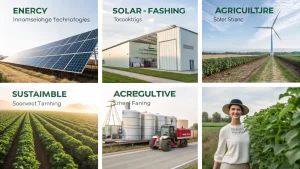
The rapid growth of the industry has raised sustainability concerns, particularly during a severe drought in 2021 when the government prioritized water supply to chip factories over agricultural needs. “After the petrochemical industry, the electronics industry is Taiwan’s biggest emitter of carbon,” said Chia-Wei Chao, research director at the nonprofit Taiwan Climate Action Network and an adjunct assistant professor at National Taiwan University. The expansion of solar farms, which are essential for sustaining chip manufacturing, has also led to conflicts with farmers over land use.
Experts argue that there is a lack of systemic analysis on the environmental effects of semiconductor production. While semiconductor manufacturers have addressed water use by recycling most of their water and through government investments in water infrastructure, the industry’s energy consumption remains a significant concern.
Balancing chip growth and sustainability
Taiwan is phasing out its nuclear reactors, and the construction of solar and wind energy infrastructure has been slow. Fossil fuels still account for more than 80 percent of Taiwan’s energy supply, with renewable sources contributing just 11 percent. The government had set a target of achieving 20 percent renewable energy by 2025, but it is unlikely to meet this goal.
Offshore wind projects have slowed due to high localization demands and logistical delays, while solar energy projects face land disputes and resistance from local farmers. As Taiwan grapples with the environmental impact of its semiconductor industry, balancing economic growth and sustainability remains a critical and complex challenge. Experts call for broader changes in Taiwan’s energy policies, including less stringent localization rules, permitting reforms, and encouraging companies like TSMC to build their own sustainable energy infrastructure.
The challenges faced by Taiwan’s semiconductor industry are not unique, as other countries like the United States and the European Union also aim to increase domestic chip production. However, similar issues, such as water use in drought-prone areas, have emerged in these regions as well.

Cameron is a highly regarded contributor in the rapidly evolving fields of artificial intelligence (AI) and machine learning. His articles delve into the theoretical underpinnings of AI, the practical applications of machine learning across industries, ethical considerations of autonomous systems, and the societal impacts of these disruptive technologies.