The race to build AI dominance is no longer just about algorithms and data—it’s about raw power. I’ve watched with fascination as a new breed of facility emerges: the AI gigafactory. These aren’t just datacenters; they’re power-hungry behemoths that are reshaping the energy landscape, water resources, and potentially the balance of global technological power.
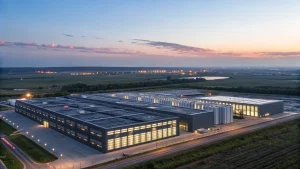
What caught my attention recently is Colossus 2, a facility that went from abandoned factory to operational AI gigafactory in just six months. This isn’t just impressive engineering—it’s a glimpse into our future where the companies that control the most energy may control the future of AI.
The Four Factories Within
What makes these new AI gigafactories so remarkable is that they’re actually four factories in one: power, cooling, networking, and compute. Remove any single element, and the entire system collapses.
The power requirements are staggering. Colossus 2 will draw up to 1.2 gigawatts—enough electricity to power over 2 million homes. When Memphis could only spare 50 megawatts, the builders crossed state lines to Mississippi, bought and shipped natural gas turbines from Europe, and assembled them on-site at a former power plant.
This isn’t just a datacenter with a power connection. It’s a power plant with computers attached. The facility pairs seven Titan-class turbines with 168 Tesla Megapacks to ensure stable power delivery—because even millisecond fluctuations can crash GPU arrays and waste millions in compute time.
The Water Challenge
The cooling requirements are equally daunting. A 1-gigawatt datacenter produces 1 gigawatt of heat—the output of an entire industrial power plant trapped inside four walls.
Most AI datacenters drain local water supplies, consuming millions of gallons daily. But Colossus 2 took a different approach by building the world’s largest ceramic membrane bioreactor—essentially a wastewater treatment plant that recycles 13 million gallons of city wastewater daily for cooling purposes.
This is the kind of innovation we need—technology that solves its own problems rather than creating new ones for communities.
From Computers to Supercomputer
What truly sets these facilities apart is the networking fabric. Without it, 500,000 GPUs would just be expensive space heaters. The networking system at Colossus 2 uses NVIDIA Spectrum-X Ethernet fabric to link everything at terabit speeds, allowing over half a million GPUs to function as a single brain.
Each link runs at 400 Gbit per second—hundreds of times faster than home internet—with smart traffic control keeping throughput above 90% across the entire datacenter. Timing is everything; even millisecond delays can cut efficiency in half.
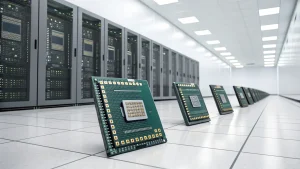
The compute layer is the most visible and expensive component. Colossus 2 began with 200,000 Hopper GPUs and is expanding with another 350,000 of NVIDIA’s latest Blackwell GPUs. At launch, it will deliver 50 exaflops of compute—about seven times more than the world’s top 10 fastest supercomputers combined.
The Energy Arms Race
This isn’t just about one company. We’re witnessing an energy arms race among tech giants:
- Microsoft is restarting the Three Mile Island nuclear power plant to secure 850 megawatts for AI
- Google is funding three new nuclear power plants
- OpenAI and Microsoft are building Stargate with a planned capacity of 10 gigawatts
Ten years ago, the biggest datacenters ran on tens of megawatts. Today, AI demands gigawatts—enough to power entire cities just to keep models running. Hyperscalers are on track to own more nuclear power capacity than some nuclear nations.
The Bigger Picture
The implications extend far beyond technology. We’re building a new industrial layer that competes for the same resources every community depends on. The companies that secure the most energy will shape not just the AI landscape but potentially the balance of power between nations.
As these facilities multiply across the US, China, and Europe, we may eventually face difficult choices about who gets energy—people or machines. The environmental impact is substantial, but so is the potential for breakthrough discoveries in energy, medicine, and beyond.
I believe we’re witnessing a fundamental shift in how computing works—from software companies to energy companies with software attached. The winners of the AI race won’t just be those with the best algorithms, but those who can secure and manage the most power.
Whether this massive investment will pay off in discoveries that benefit humanity remains to be seen. But one thing is certain: the gigawatt revolution is here, and it’s reshaping our world in ways we’re only beginning to understand.
Frequently Asked Questions
Q: How much power does an AI gigafactory like Colossus 2 consume?
Colossus 2 draws up to 1.2 gigawatts of electricity at peak capacity. To put this in perspective, that’s enough power to supply more than 2 million homes. This massive energy requirement is why AI companies are increasingly investing in their own power generation capabilities.
Q: Why can’t these facilities just use existing power grids?
The sheer scale of power needed (gigawatts rather than megawatts) often exceeds what local grids can supply. Additionally, AI computing requires extremely stable power—even millisecond fluctuations can crash systems and waste millions in compute time. This is why facilities like Colossus 2 build their own power generation and stabilization systems.
Q: How do these facilities handle cooling with so much heat generated?
A gigawatt-scale facility produces a gigawatt of heat. Colossus 2 uses a multi-stage cooling system where liquid coolant flows through cold plates attached to GPUs, then transfers heat to a building-wide chilled water system, which is cooled by massive air-cooled chillers outside. Some facilities are innovating with recycled wastewater to reduce environmental impact.
Q: Why is the networking aspect so important in these facilities?
Without advanced networking, hundreds of thousands of GPUs would just be individual computers rather than a unified supercomputer. The networking fabric allows all GPUs to work together with minimal latency. At Colossus 2, each link runs at 400 Gbit/second with smart traffic control keeping throughput above 90% across the entire facility.
Q: What are the environmental implications of these AI gigafactories?
The environmental footprint is substantial, primarily due to energy consumption and water usage for cooling. However, some facilities are implementing innovations like wastewater recycling and exploring clean energy sources. As these facilities multiply globally, their resource demands may compete with community needs, raising questions about sustainability and resource allocation.