The Recipe for an AI Music Sensation
Creating an AI band like Velvet Sundown is surprisingly straightforward. The process involves just a few key steps:
- Generate music using platforms like Suno.com, which offers both free and paid plans
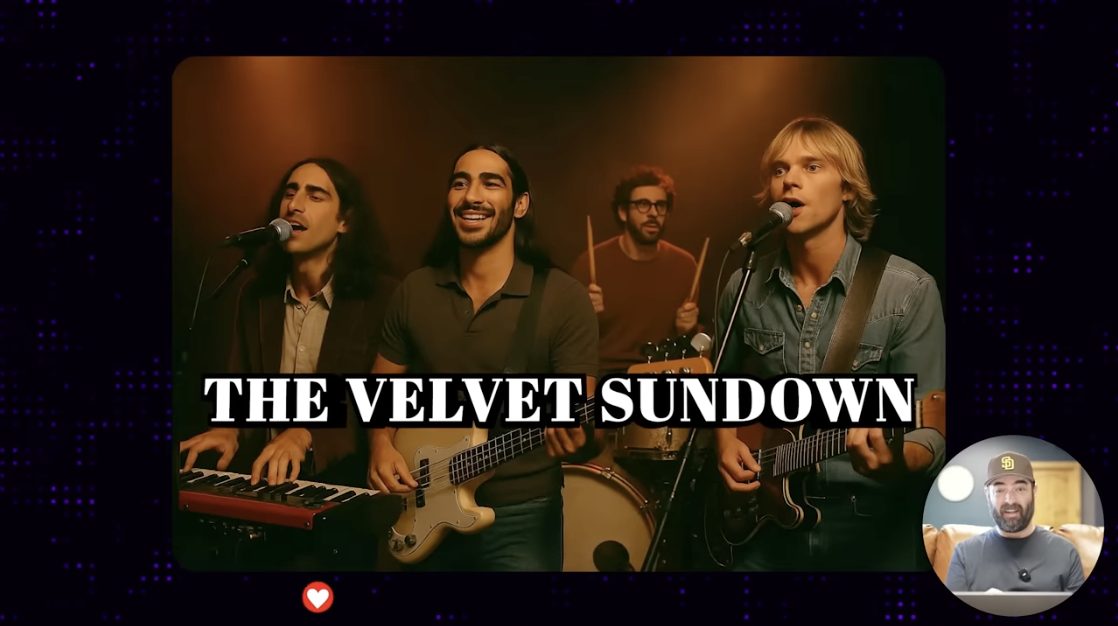
- Create consistent “band members” using image generation tools like ChatGPT’s DALL-E
- Establish a social media presence with AI-generated content
- Distribute the music through services like DistroKid
The technical barriers are minimal. Anyone with basic internet skills can create an entire catalog of songs that sound professionally produced, complete with vocals that mimic human singers. The AI even allows you to maintain consistency across songs by creating a “persona” that preserves the style and sound.
What’s particularly striking is how the distribution process works the same as it does for human musicians. There’s no special vetting or categorization that separates AI music from human-created content.
Once uploaded, these AI tracks are subject to the same recommendation algorithms as all other content, potentially displacing human artists in playlists and recommendations.
The Telltale Signs of AI Music
Examining Velvet Sundown’s content reveals clues that suggest its artificial nature. The band images exhibit inconsistencies that human photographers would never permit—life jackets with varying numbers of straps, paddles with mismatched handles, and subtle anatomical discrepancies in the band members themselves.
The music itself often has a certain sameness to it—technically proficient but lacking the subtle imperfections and emotional depth that come from human experience. Yet these signs are easy to miss for casual listeners who aren’t explicitly looking for them.
We need to develop a better understanding of literacy around AI-generated content. Not because AI music is inherently bad, but because listeners deserve to know what they’re consuming. Transparency matters, especially as these tools become more sophisticated.
The Spotify Conspiracy Theory
There’s a rumor circulating that platforms like Spotify might be behind some of this AI music. The theory suggests that streaming services could create their own AI music to reduce royalty payments to human artists. While there’s no concrete evidence of this happening yet, the financial incentive is undeniable.
Think about it: if Spotify owns the AI that creates the music, they don’t have to share revenue with artists. It’s a troubling possibility that could fundamentally alter the economics of music creation.
Whether or not this conspiracy holds water, the technology now exists to make it possible, and corporations have a history of prioritizing profit over creative integrity.
The Future of Music Creation
We’re entering uncharted territory where the definition of “musician” is being rewritten. Will future generations care if humans or algorithms created their favorite songs? If a song resonates with you emotionally, does its origin matter?
These questions don’t have easy answers, but they’re becoming increasingly relevant as AI-generated music improves and proliferates. For working musicians, this technology represents both an opportunity and an existential threat.
I worry about a future where the music landscape becomes flooded with AI-generated content—what some might call “AI slop”—drowning out human creativity in a sea of algorithmically optimized tracks designed to game recommendation systems rather than express genuine emotion.
Yet I also recognize that AI tools could democratize music creation, allowing people without traditional musical training to express themselves in new ways.
The Velvet Sundown phenomenon isn’t just about one fake band going viral—it’s a preview of the complex questions we’ll need to answer about creativity, authenticity, and the value of human expression in an increasingly AI-driven world.
Frequently Asked Questions
Q: How can I identify if a band is AI-generated?
Look for inconsistencies in band photos (unusual anatomical features, mismatched details), check for a lack of live performances or interviews, and listen for an unusual sameness across songs. AI-generated music often lacks the subtle imperfections that make human performances unique.
Q: Is listening to AI-generated music harmful to the music industry?
This is complex. When AI music is presented transparently, it’s simply another creative tool. However, when AI content competes with human artists without disclosure, it potentially diverts streaming revenue and attention away from human creators who depend on music for their livelihood.
Q: What platforms are currently being used to create AI music?
Suno.com is one of the most accessible platforms for creating AI music with vocals. Other options include Soundraw, Mubert, and AIVA. These tools vary in their approach and quality, but all allow users to generate complete songs with minimal technical knowledge.
Q: Do streaming services have policies about AI-generated music?
Currently, most streaming platforms don’t have specific policies requiring disclosure of AI-generated content. Music is typically submitted through distributors like DistroKid, regardless of how it was created. This lack of transparency makes it difficult for listeners to make informed choices.
Q: Could AI eventually replace human musicians entirely?
While AI can create technically proficient music, it lacks the lived experience, cultural context, and emotional depth that human artists bring to their work. Rather than replacement, we’re more likely to see a hybrid future where AI serves as a tool that some artists embrace while others reject. The unique human perspective in music creation will likely remain valuable even as AI capabilities advance.