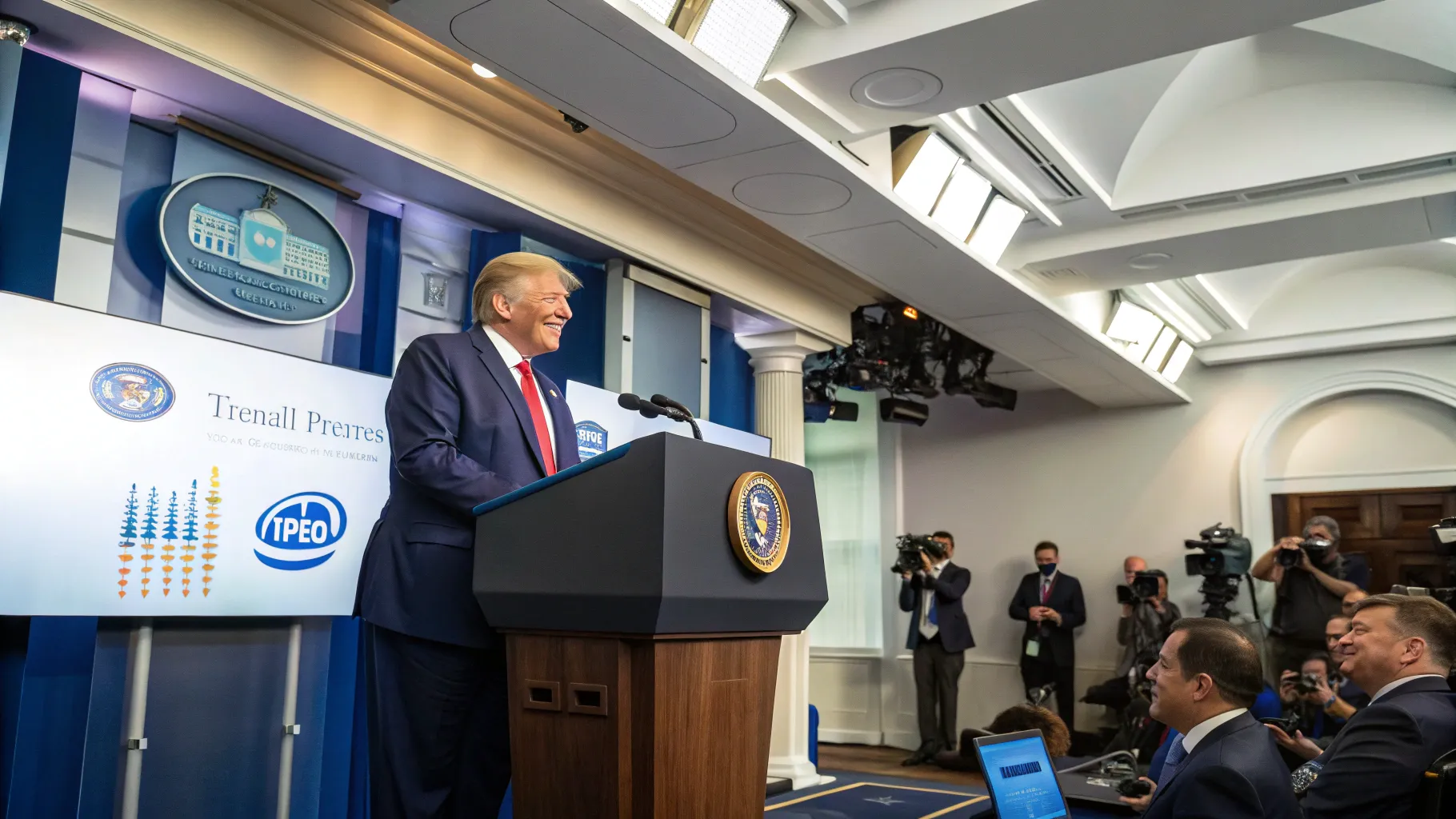
President Trump revealed that the U.S. government will acquire a stake in semiconductor giant Intel, marking the latest development in a series of public-private partnerships within the technology sector. This move follows similar arrangements with major tech companies, including Apple, Nvidia, and AMD.
The announcement signals a significant shift in government strategy toward direct investment in critical technology infrastructure. While details of the government’s planned stake in Intel remain limited, the deal appears to align with broader efforts to strengthen domestic semiconductor production and reduce reliance on foreign manufacturing.
Growing Government-Tech Industry Collaboration
The Intel deal represents an expansion of government involvement in the technology sector, particularly in semiconductor manufacturing. This partnership comes amid increasing concerns about supply chain security and technological competition with China.
Previous agreements with Apple, Nvidia, and AMD have similarly connected these corporations with government interests, though the specific nature of these arrangements varies. These partnerships typically involve:
- Government funding or subsidies for domestic manufacturing facilities
- Research and development collaboration on technologies with national security applications
- Commitments from companies to maintain critical production within U.S. borders
The semiconductor industry has become a focal point for national security and economic policy, with chips powering everything from consumer electronics to military systems. Global chip shortages during the pandemic highlighted vulnerabilities in supply chains heavily dependent on Asian manufacturing.
Policy Implications and Industry Response
This direct government stake in Intel marks a notable step beyond previous policy approaches that relied primarily on incentives rather than ownership. The CHIPS and Science Act, passed in 2022, allocated $52 billion to boost domestic semiconductor manufacturing but did not generally include provisions for direct government ownership stakes.
“This represents a new chapter in U.S. industrial policy,” said Dr. Margaret Chen, technology policy analyst at Georgetown University. Direct government stakes in private technology companies signal a more interventionist approach than we’ve seen in recent decades.
Industry response has been mixed. Some technology executives view these partnerships as necessary to compete with heavily subsidized foreign competitors, while others express concerns about potential government influence over corporate decision-making.
Intel has faced significant challenges in recent years, losing market share to competitors and struggling with manufacturing delays. The company announced major layoffs in 2023 as part of a restructuring plan. This government stake could provide needed capital while securing Intel’s position as a strategic asset.
International Implications
The increasing connection between U.S. tech giants and the federal government mirrors approaches taken by other global powers, particularly China, where the line between state and private enterprise is often blurred.
European officials have monitored these developments closely, with some expressing concern about potential market distortions. The European Union has pursued its own semiconductor strategy, including the European Chips Act, which aims to boost the bloc’s share of global chip production.
These government-corporate partnerships also raise questions about global trade relationships and regulatory frameworks. Companies operating under partial government ownership may face additional scrutiny in international markets.
As technology increasingly intersects with national security concerns, the trend of closer government-industry collaboration appears likely to continue across major economies. The Intel deal may signal a new model for how the U.S. approaches critical technology sectors in an era of intensifying global competition.

A seasoned technology executive with a proven record of developing and executing innovative strategies to scale high-growth SaaS platforms and enterprise solutions. As a hands-on CTO and systems architect, he combines technical excellence with visionary leadership to drive organizational success.