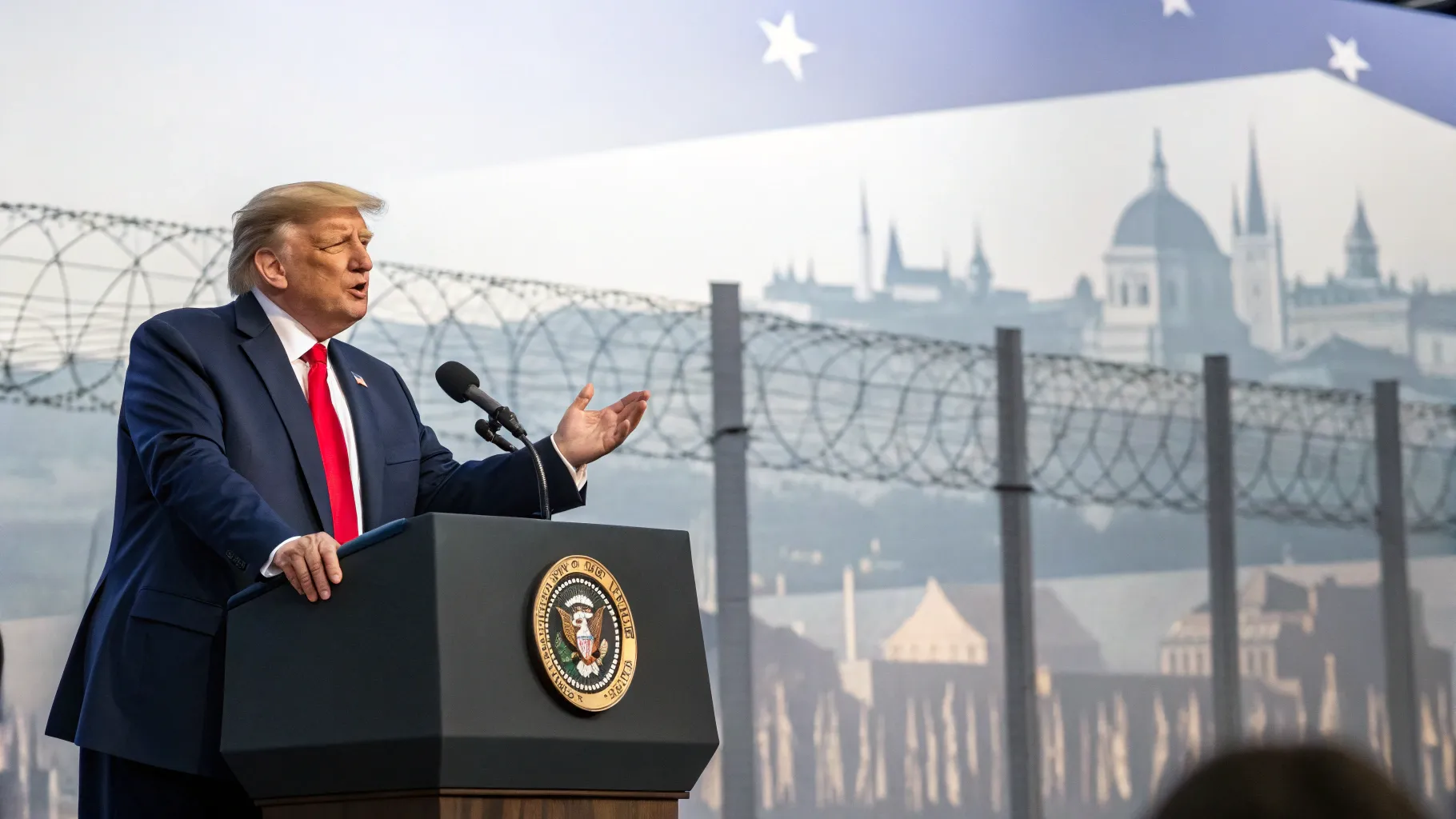
U.S. President Donald Trump on Wednesday criticized changes in parts of Europe, saying some areas are no longer recognizable, and “not in a positive way.” The remark sharpened a long-running debate over migration, security, and cultural change across the continent. The comment, brief but pointed, arrives as European governments weigh border policy, urban safety, and social cohesion amid economic and political strains.
A Familiar Theme in Transatlantic Politics
Trump has often framed Europe as a cautionary tale on migration, policing, and national identity. His latest comment mirrors earlier critiques that tied urban change to immigration patterns and security concerns. During his presidency, he urged stronger border controls and pressed NATO allies to increase defense spending. The message resonated with supporters who see rapid change as harmful, and drew pushback from leaders who say such claims overstate the risks and ignore economic benefits.
European policymakers face a complex set of pressures. Conflicts abroad have fueled periodic spikes in asylum requests. Labor shortages have drawn in workers from outside the European Union. Cities are growing more diverse, which has prompted debates over housing, language access, and school resources. Officials argue that these issues require steady investment, not alarm.
What He Said and Why It Matters
“Some areas of Europe are no longer recognizable — and not in a positive way.”
The remark is brief, but its meaning is clear. Trump is signaling that change across European cities has gone too far, too fast. The statement lands amid ongoing campaigns on both sides of the Atlantic. In Europe, parties to the right highlight crime and cultural shifts. Parties in the center defend managed migration and point to employment gains. Parties on the left emphasize integration and public services.
Diplomats watch these exchanges closely. Rhetoric on security and migration can ripple through talks on trade, visas, and joint policing efforts. Transatlantic cooperation relies on steady ties between Washington and European capitals, especially on sanctions, defense, and intelligence work.
Data, Perception, and Urban Change
Experts caution that broad statements about “unrecognizable” areas often blend perception with selective evidence. Crime data in Europe varies by country and city. Some places have seen declines in certain offenses, while others report localized spikes. Economic data also cuts both ways. Migrant labor has supported sectors such as care work, agriculture, and construction, but strains exist in housing and transit.
- Urban change often concentrates in a few districts, shaping national debate.
- Integration outcomes differ by age, education, and local policy design.
- Public safety trends vary across offenses and do not move in unison.
City leaders point to investments in community policing, language training, and job placement. Critics argue these efforts are uneven and slow, and say national borders should be tighter. Both sides agree that pressure on housing is real, especially in major capitals and port cities.
Reactions and Political Stakes
Supporters of Trump’s view say the comment reflects what many residents see in daily life. They cite crowded services, rising housing costs, and culture clashes. They argue that leaders ignored early warnings and left communities to cope without enough resources.
Opponents call the claim misleading and harmful. They say it paints diverse neighborhoods as threats and discourages investment. They also argue that sweeping statements can fuel stigma against lawful residents and citizens with immigrant roots.
European officials, while divided on solutions, generally stress enforcement paired with integration. Police agencies coordinate on trafficking and terrorism. Municipal governments pilot programs to reduce youth unemployment and improve language access. Outcomes remain mixed, with local context driving results.
What It Means for U.S.–Europe Relations
Comments like Wednesday’s can complicate diplomatic messaging. European leaders may respond defensively, even when cooperation remains strong on defense and sanctions. U.S. administrations of both parties rely on European partners for intelligence sharing and military basing. Public friction can distract from that work.
Investors also track tone. Perceptions of disorder can influence tourism, retail plans, and real estate decisions, even when underlying data is stable. City branding campaigns, safety audits, and public transit upgrades are part of efforts to keep confidence high.
Trump’s brief statement adds heat to a sensitive debate that blends safety, identity, and economics. The facts on the ground are uneven, and outcomes differ block by block. European governments will keep balancing enforcement with integration, while critics demand tighter controls and faster results. The next phase will be shaped by local elections, budget choices, and whether city programs show measurable gains. Watch for shifts in border policy, new housing investments, and detailed crime reporting to test the claims on both sides.

A seasoned technology executive with a proven record of developing and executing innovative strategies to scale high-growth SaaS platforms and enterprise solutions. As a hands-on CTO and systems architect, he combines technical excellence with visionary leadership to drive organizational success.