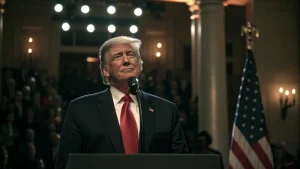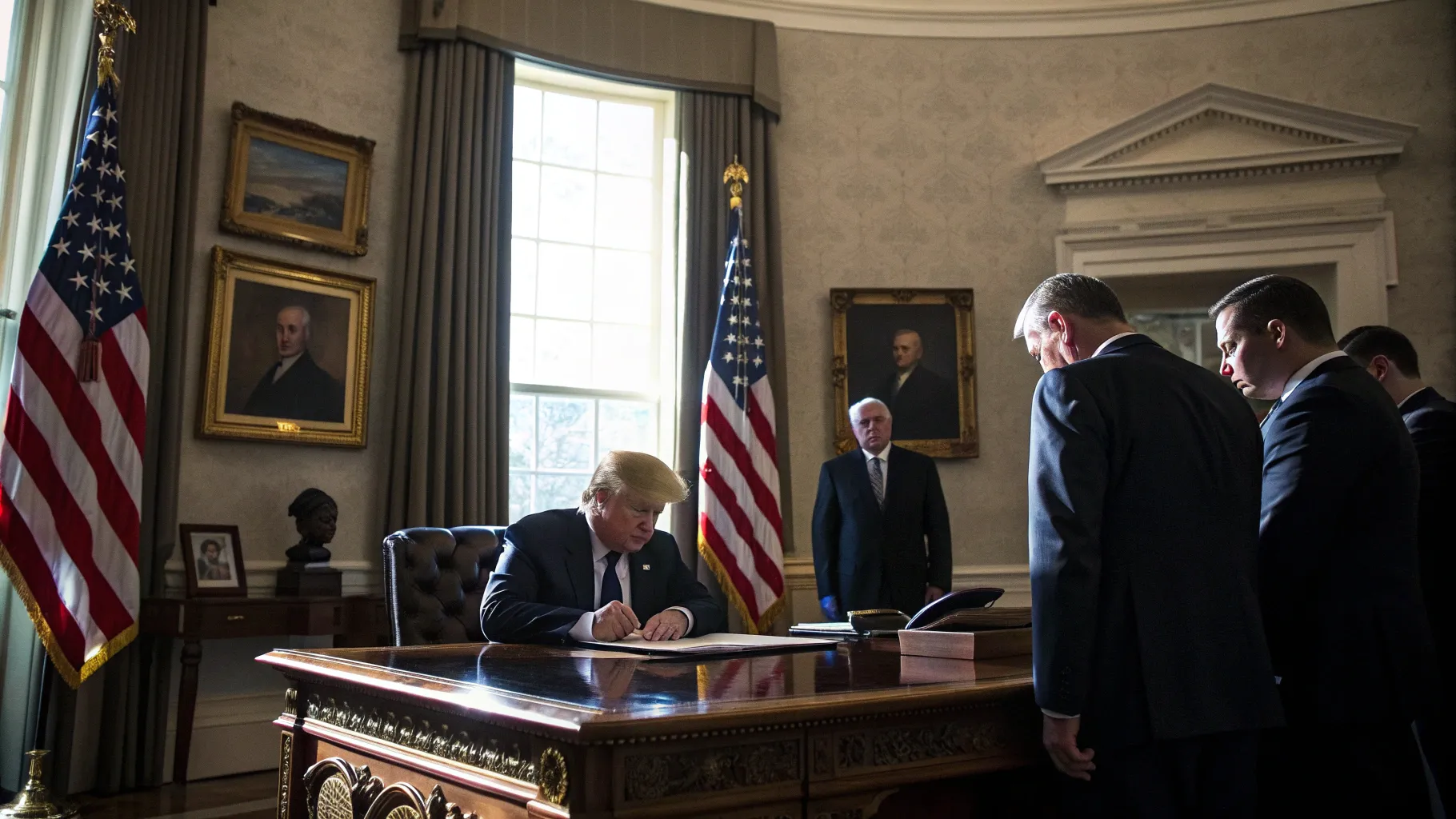
President Donald Trump issued a new executive order aimed at states that regulate artificial intelligence, stirring a sharp split inside the Republican Party. The move signals a federal push to set the rules on AI as states craft their own limits. It also sets up a legal fight over the balance of power between Washington and state capitals.
Trump’s latest executive order attempts to punish states that regulate artificial intelligence technology, a policy that has triggered division in the GOP.
The order arrives as AI systems spread into healthcare, hiring, education, policing, and campaigns. It raises urgent questions about who sets guardrails, how far preemption can go, and what penalties the federal government can apply.
Why This Fight Is Emerging Now
States have raced ahead on AI rules while Congress remains gridlocked. Colorado enacted a first-of-its-kind AI law in 2024 to manage risks from “high-risk” systems, with provisions set to take effect in 2026. Illinois and Texas have long regulated biometric data, which shapes how companies deploy face and voice recognition tools. Several states also passed laws to curb deepfake election ads.
The federal government has previously tried to override state tech rules. Under the Trump administration, the Justice Department sued California in 2018 over its net neutrality law. Courts later allowed California’s law to stand, showing the limits of Washington’s reach when agencies lack clear authority from Congress.
At the same time, the Biden administration’s 2023 AI order pushed safety testing and federal standards but stopped short of sweeping preemption. The new order takes a sharper stance, putting fresh pressure on states laying out their own AI safeguards.
What the Order Signals
While full details were not immediately available, the order points to federal resistance to state-by-state AI rules. Supporters argue that companies need uniform standards to operate nationwide. They warn that a patchwork of state laws could slow product releases and raise compliance costs.
Critics see an attack on state authority. They say elected leaders know local needs and can act faster than Washington. Consumer advocates add that state laws often seed national policy by testing ideas the federal government later adopts.
- Uniformity argument: Businesses prefer one rulebook for all states.
- States’ rights argument: Local governments tailor safeguards to residents.
- Legal risk: Courts will scrutinize any attempt to penalize state policymaking.
GOP Division Over States’ Rights
The order exposed a rift among Republicans. One camp favors national standards to support industry growth and avoid compliance chaos. Another defends state sovereignty, a long-standing party theme. Conservative legal scholars warn that sweeping penalties could run into Tenth Amendment concerns.
Republican governors who have backed AI or data privacy rules may resist federal pressure. Lawmakers from tech-heavy states could press for flexibility. Others, especially those focused on defense, election integrity, or law enforcement, may back stronger federal control over AI tools that cross state lines.
Potential Impact on Industry and Consumers
Tech firms face growing obligations under state laws, especially for high-risk AI used in hiring, housing, healthcare, and credit decisions. Colorado’s model requires risk management and transparency around automated decisions. Biometric laws in Illinois have led to costly lawsuits, prompting companies to refine face recognition and voice data practices.
If the order curtails state measures, companies may get a clearer path to launch new systems across markets. But a rollback could reduce consumer protections and limit local responses to harms such as bias, privacy breaches, or deceptive deepfakes. The immediate effect will depend on how the order tries to pressure states and how courts respond.
Legal Questions Ahead
Key legal issues will shape the outcome:
- Does existing federal law give agencies the power to override or penalize state AI rules?
- Would penalties tied to federal funds meet constitutional tests set by the Supreme Court?
- How will courts weigh state police powers in areas like consumer protection and civil rights?
Recent rulings suggest courts demand clear direction from Congress for major preemption moves. Without new legislation, sweeping penalties could face setbacks. That could push the White House and Congress to negotiate a nationwide AI framework.
What to Watch Next
States with active AI agendas—such as Colorado and California—are likely flashpoints. Industry groups may seek quick injunctions to block any penalties. Civil rights and consumer groups will track how the order handles bias audits, transparency, and redress for people harmed by automated decisions.
Congressional leaders may revive stalled bills that set national AI rules for safety testing, disclosure, and liability. A clear statute would reduce legal risk and stabilize expectations for companies and states.
The order has thrust a simmering debate into the open: who writes the rules for AI in the United States. The next phase will unfold in courts and statehouses while Congress weighs a federal standard. For readers, the key takeaway is simple. The struggle over state authority and national uniformity will decide how quickly AI tools reach the market and how well the public is protected. Watch for lawsuits, state pushback, and whether Congress moves to craft a single rulebook.

Senior Software Engineer with a passion for building practical, user-centric applications. He specializes in full-stack development with a strong focus on crafting elegant, performant interfaces and scalable backend solutions. With experience leading teams and delivering robust, end-to-end products, he thrives on solving complex problems through clean and efficient code.