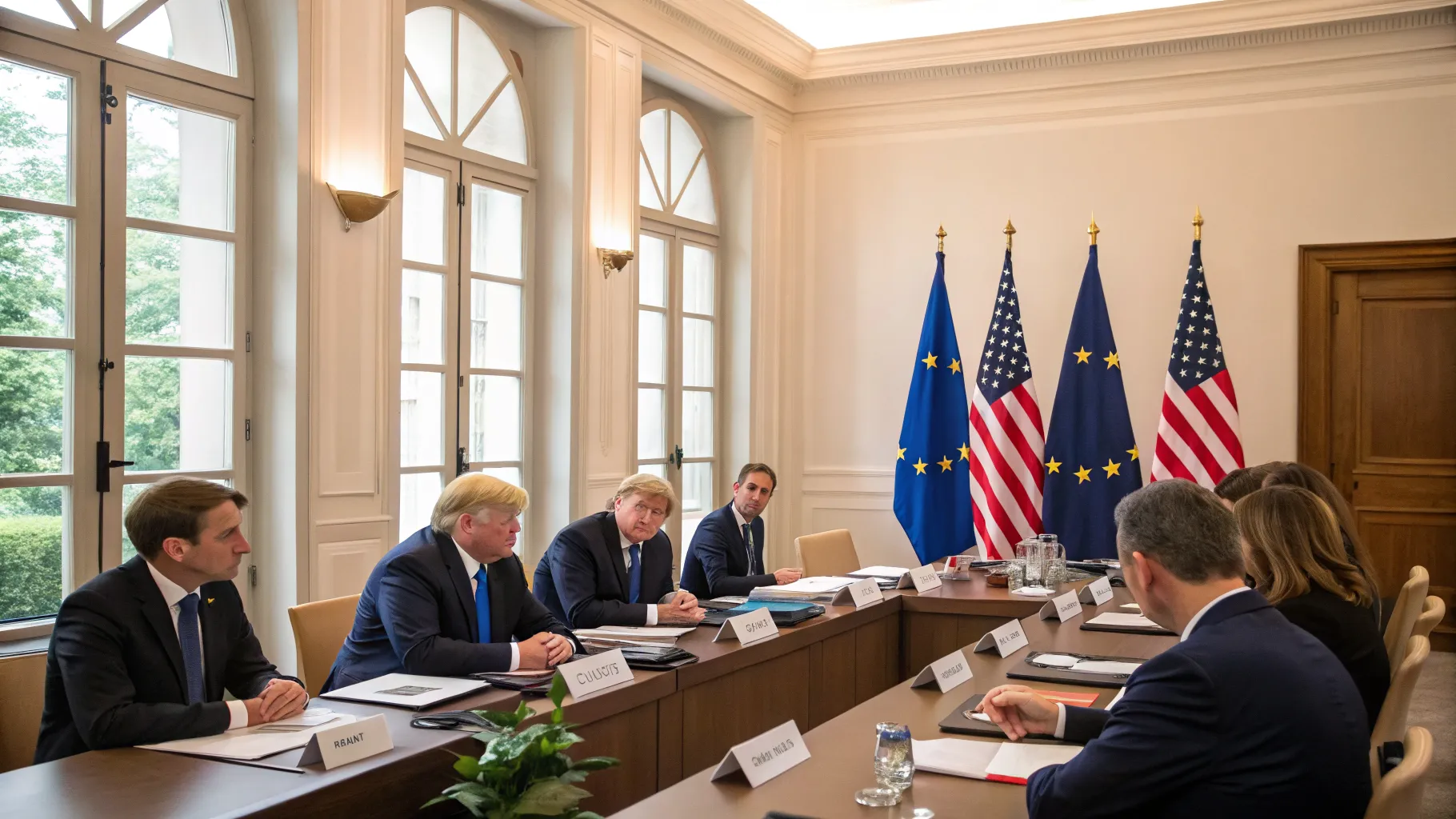
The White House has stepped up a campaign against what it describes as censorship abroad, channeling diplomatic muscle through the State Department to confront European governments. The initiative marks a sharper turn in transatlantic debates over online speech, platform rules, and state power. It also tests a long alliance as both sides weigh security, free expression, and the reach of technology firms.
The president has expanded efforts to fight what he sees as censorship overseas, using the State Department to target European governments.
Officials frame the push as a defense of free expression. European regulators say their rules protect citizens from hate speech, illegal content, and disinformation. The clash lands as new European Union measures, national laws, and global elections place speech policy under a bright light.
Long-Running Disputes Over Online Rules
Transatlantic tensions on speech have simmered for years. The United States puts strong legal weight on the First Amendment and often resists government pressure on speech. Several European countries take a different view, criminalizing certain forms of hate speech and requiring faster takedowns by platforms.
Germany’s Network Enforcement Act (NetzDG), enforced since 2018, set early timetables for removing illegal content. France and the United Kingdom have pursued strict online safety regimes. The European Union’s Digital Services Act (DSA) now imposes wide duties on major platforms to curb illegal content and risks, with fines for noncompliance.
Supporters of these laws argue that unregulated platforms have amplified harassment, extremist propaganda, and foreign interference. Critics warn that compliance pressures can lead to over-removal, chilling lawful speech and research.
What the New U.S. Push Could Mean
Routing the effort through the State Department signals a shift from private complaints to firmer diplomatic messaging. That could include formal démarches, public statements, or meetings that raise free speech with European counterparts. It may also feature engagement with civil society groups and technology firms to document alleged overreach.
Policy analysts expect U.S. officials to focus on two areas. First, rules that require quick removals of flagged posts, which can pressure platforms to err on the side of deletion. Second, provisions that mandate broad risk assessments or algorithmic changes that could reduce reach for lawful but controversial content.
- Faster takedown deadlines can cause over-removal by moderators.
- Ambiguous definitions of “harm” may sweep in protected speech.
- Opaque enforcement can make appeals slow or ineffective.
Free speech groups in the United States have voiced similar concerns about indirect state pressure, even when framed as “guidance” or “voluntary.” European officials, for their part, argue that public-interest duties for large platforms are no different from health or financial safety rules.
European Governments Defend Their Approach
European officials say their goal is not to silence dissent but to limit clear harms, such as illegal hate speech or coordinated disinformation by foreign actors. They often point to terrorist propaganda removals and action against fraudulent schemes as proof of necessity.
Lawmakers also stress that European courts oversee speech restrictions. They note that platforms retain appeals processes and that risk rules under the DSA require transparency reports and audits. Advocates in Europe argue that strong action has reduced the spread of illegal content and made companies more responsive to user complaints.
Industry and Social Impacts
Technology companies could face conflicting duties. U.S. pressure to protect lawful speech may clash with European timelines and reporting rules. That tension raises costs and legal risk, especially for global services. Smaller platforms may struggle the most, as compliance teams and legal budgets are thin.
Civil liberties experts warn of a global pattern. As more governments set speech standards, platforms become enforcement hubs, often deciding quickly on content with little context. Communities that rely on social media for activism worry that over-removal will mute minority voices and blunt documentation of abuses.
What to Watch Next
Several developments will shape the next phase. European regulators are rolling out DSA investigations, which could test the balance between safety and free expression. Courts on both sides of the Atlantic are weighing cases on state influence over moderation. Diplomatic readouts may reveal whether the U.S. approach remains quiet or becomes more public.
Key questions remain. Can the United States secure changes without straining security and trade ties? Will European officials adjust rules to give clearer safeguards for lawful speech? And how will platforms manage different legal demands across markets?
The administration’s move signals a harder line as election seasons unfold in many countries. For now, one message is clear: the debate over speech, safety, and sovereignty is entering a more direct phase, with Washington and European capitals set for difficult talks.

Senior Software Engineer with a passion for building practical, user-centric applications. He specializes in full-stack development with a strong focus on crafting elegant, performant interfaces and scalable backend solutions. With experience leading teams and delivering robust, end-to-end products, he thrives on solving complex problems through clean and efficient code.