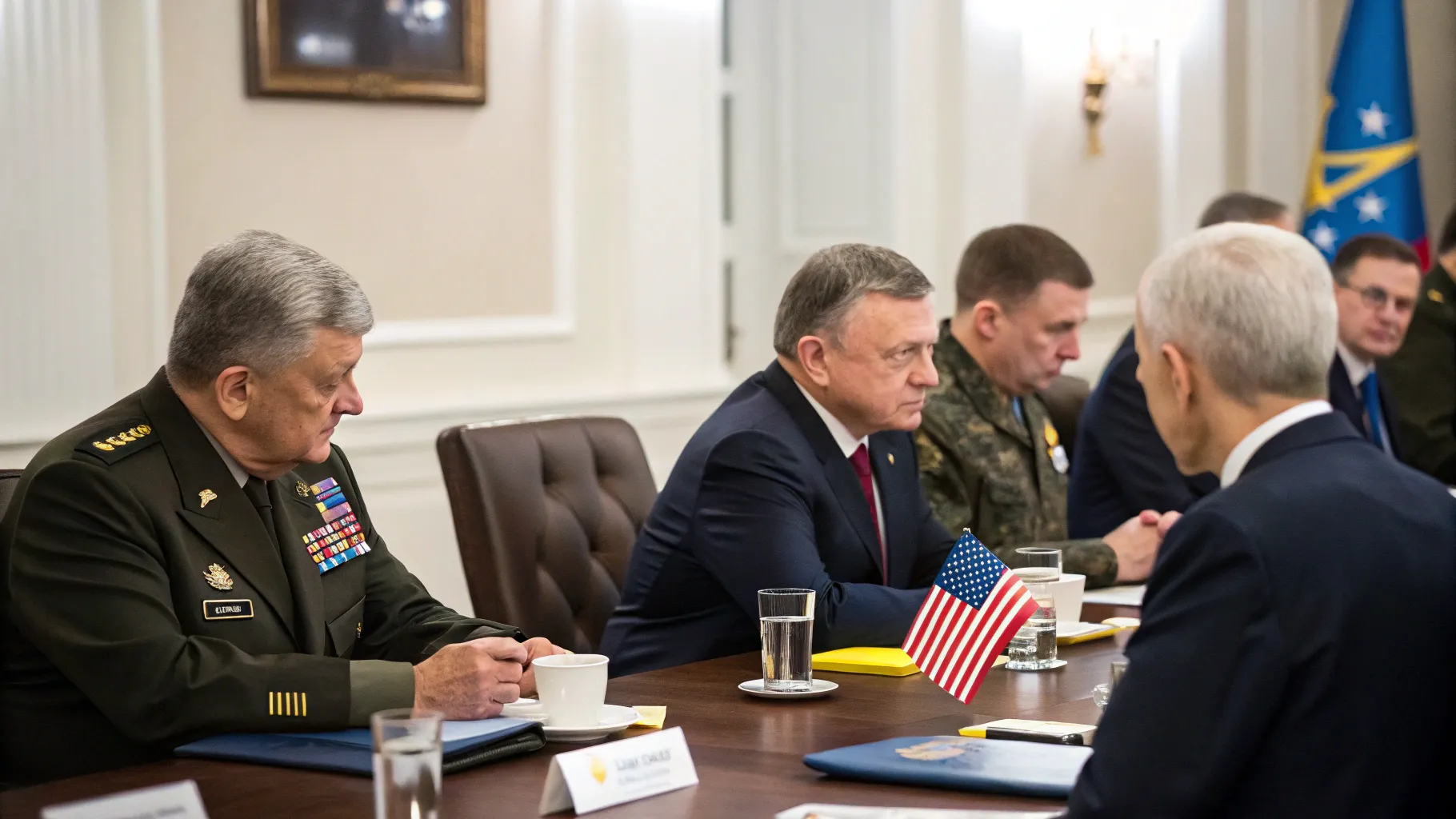
Senior U.S. military officials traveled to Ukraine on Thursday, a visit that follows reports of a confidential 28-point framework under discussion between Washington and Moscow. The trip comes as the war nears its third year, with front-line combat, air strikes, and drone attacks continuing across multiple regions. The reported framework has not been made public, and none of the governments involved has released details or confirmed authorship.
Senior U.S. military officials are in Ukraine on Thursday — a day after reports emerged that Washington and Moscow had devised a secret 28-point peace plan.
The timing adds urgency to questions about war aims, red lines, and the shape of any future negotiations. Kyiv faces ongoing attacks while seeking sustained Western support. Moscow signals it is prepared for a long fight, even as sanctions tighten.
What We Know About the Visit
Officials familiar with the trip describe it as focused on security consultations and battlefield assessments. Such visits typically include briefings with Ukrainian defense leaders, reviews of air defense needs, and updates on artillery and drone use. The presence of senior U.S. personnel suggests Washington is gauging current risks and supply gaps as winter approaches.
Past visits have often preceded announcements on aid, training, or equipment deliveries. Whether this trip will be followed by new commitments is unclear. The Pentagon and the White House have declined to link the visit to any specific negotiation track.
The Reported 28-Point Proposal
Media accounts describe a confidential outline that spans security guarantees, nuclear safety, prisoner exchanges, and grain exports. None of these reports identify a single author or official sign-off. U.S., Russian, and Ukrainian officials have not presented a draft in public. Without official texts, the plan’s contours remain speculative.
Analysts caution that any framework would need to address territory, sovereignty, and long-term security. Each has derailed talks before. Verification, enforcement, and timelines would also be central to any durable arrangement.
Kyiv, Moscow, and Washington Positions
Ukraine’s leadership has repeatedly said peace requires a full withdrawal of Russian forces and restoration of internationally recognized borders. Kyiv also seeks security guarantees and accountability for war crimes. These goals align with a 10-point plan that President Volodymyr Zelensky has promoted to allies.
Moscow has demanded recognition of annexed regions and limits on Ukraine’s military partnerships. The Kremlin argues that Western weapons have escalated the conflict. It frames sanctions as unlawful and ineffective, while acknowledging economic strain.
Washington supports Ukraine’s sovereignty and has provided large-scale military and economic aid since 2022. U.S. officials say any settlement must be acceptable to Kyiv. They have urged Moscow to stop strikes on civilian infrastructure and to return to internationally monitored agreements that protect nuclear sites and grain shipments.
War Costs and Previous Efforts
The United Nations has recorded thousands of civilian deaths and injuries, while warning the true toll is higher. Millions of Ukrainians remain displaced inside the country and abroad. Russia faces battlefield losses and a prolonged sanctions regime that targets energy, finance, and technology imports.
There have been earlier attempts to pause the fighting. Talks in Istanbul in 2022 stalled. Saudi-hosted meetings in 2023 sought common ground among Ukraine’s partners. China presented a 12-point position paper. Turkey has acted on grain corridors and prisoner swaps. None of these efforts produced a lasting cease-fire.
- Key dispute areas: territory, security guarantees, and accountability.
- Sticking points: enforcement, verification, and sequencing of steps.
- Immediate needs: air defense, artillery ammunition, and energy grid protection.
Military and Political Stakes
On the ground, Russia focuses on slow advances backed by heavy artillery and drones. Ukraine relies on mobile defense, precision strikes, and layered air defenses. Both sides use electronic warfare to disrupt communications and drones.
The political calendar adds pressure. European capitals debate aid levels. U.S. lawmakers weigh new packages and oversight. Russia signals it can outlast Western support. Each claim affects bargaining power and the appetite for talks.
What Comes Next
If the reported 28-point outline exists, it would still face steep hurdles. Kyiv will not accept terms that lock in territorial losses. Moscow seeks recognition that Ukraine rejects. Washington says Ukraine must decide its own terms.
Any credible path would likely start with limited steps. These could include prisoner exchanges, nuclear site safeguards, and expanded grain shipments. Durable cease-fire lines and international monitoring would come later, if at all.
The visit by senior U.S. officials signals active engagement as winter fighting intensifies. The core questions remain the same. Can the parties agree on borders, security, and enforcement. And can outside powers provide guarantees that hold under fire.
For now, the war continues with high costs and uncertain diplomacy. Observers will watch for public confirmation of any framework, changes in aid flows, and shifts on the front lines. Any real progress will require concrete steps, not just private drafts.

Senior Software Engineer with a passion for building practical, user-centric applications. He specializes in full-stack development with a strong focus on crafting elegant, performant interfaces and scalable backend solutions. With experience leading teams and delivering robust, end-to-end products, he thrives on solving complex problems through clean and efficient code.