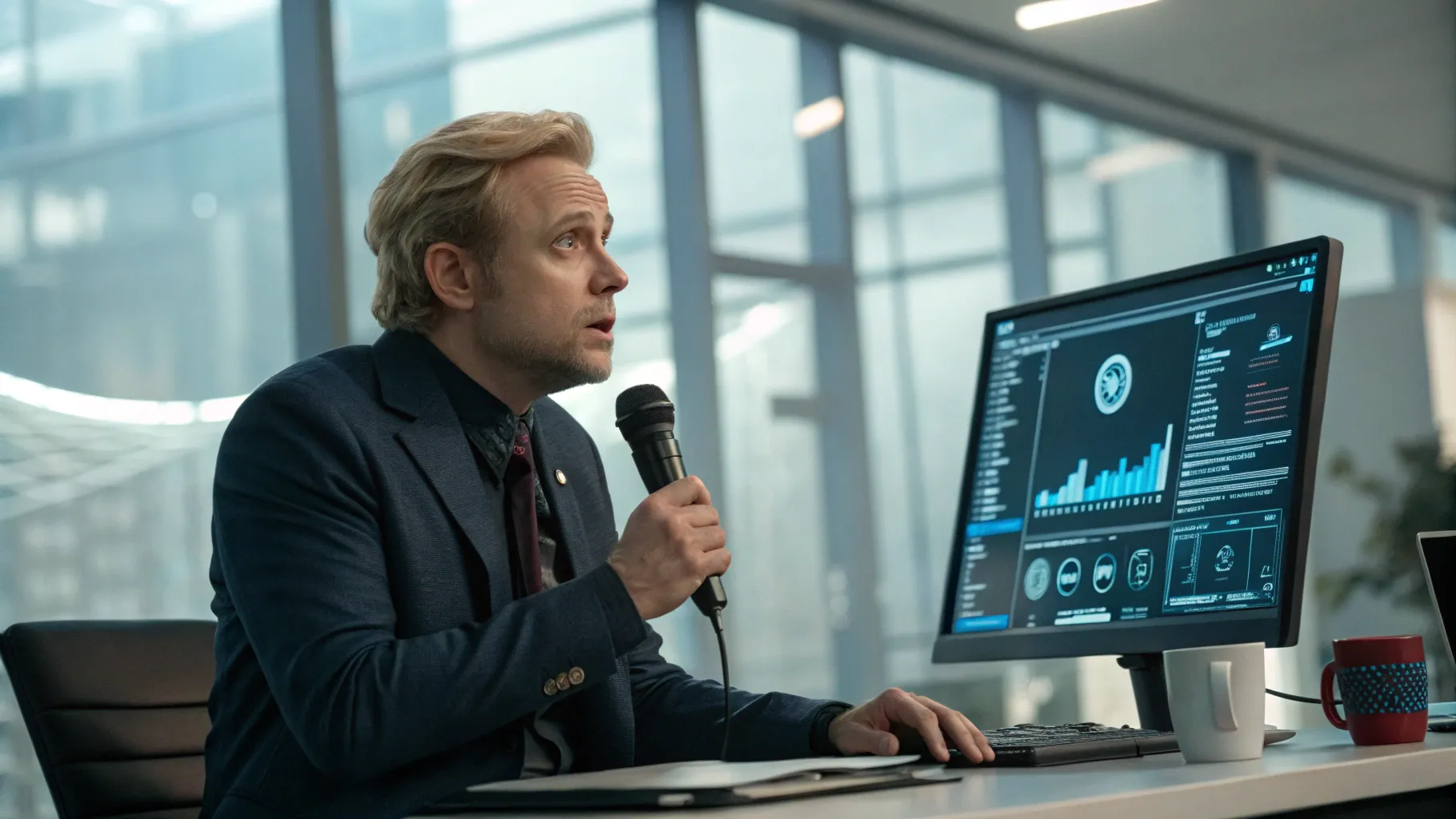
Tech journalist Kurt “CyberGuy” Knutsson warned that the contest for leadership in artificial intelligence is intensifying, raising new worries about American jobs. In a segment on Fox & Friends, he outlined how the United States and China are vying for an edge, and why workers across sectors are asking what comes next.
The discussion highlighted the who and what: U.S. tech firms, Chinese competitors, and Washington policymakers racing to set the pace. It focused on when and where: right now, on the air and in boardrooms, courtrooms, and research labs. And it addressed why it matters: the technology is advancing quickly while job roles are shifting, leaving families and businesses looking for clarity.
“Kurt ‘CyberGuy’ Knutsson breaks down the AI race with China, concerns about the job market and more on ‘Fox & Friends.’”
The Contest for AI Leadership
Knutsson described a two-front competition. One front is computing power, including advanced chips and cloud scale. The other front is data and talent, which drive model training and product rollouts. He noted that policies such as export controls and security reviews are shaping how quickly each side can move.
Analysts say the United States still leads in top-tier research and enterprise deployment, while China pushes hard on consumer applications and state-backed adoption. Tech investors are watching chip supplies, energy access for data centers, and rules on model safety and content as indicators of who pulls ahead.
Industry trade groups have urged clear standards for testing powerful systems, citing risks from faulty outputs to intellectual property misuse. Civil society groups want transparency on model training and labeling of AI-generated content. The debate is no longer academic; it affects which tools reach classrooms, hospitals, factories, and small businesses.
Workers Weigh Automation and Opportunity
On employment, Knutsson said viewers are asking whether AI will take their jobs or change them. Office roles in finance, marketing, and customer service face pressure from automation. Creative fields are seeing AI in editing, image generation, and coding assistance.
Labor economists often describe a “task shift” rather than a simple loss. AI may handle routine writing, summarizing, and data entry, while people focus on judgment, negotiation, and oversight. That shift demands training. Community colleges, online platforms, and employers are expanding courses in data literacy and prompt design, even for nontechnical roles.
For many small firms, the first gains come from automating paperwork and support tickets. For large companies, AI pilots are moving from trials to production, with tight human review. Union leaders are pushing for wage protections, retraining funds, and clear rules on how productivity gains are shared.
Security, Safety, and the Rules of the Game
Knutsson emphasized that competition with China is not only about speed, but also about security. Policymakers are weighing how to secure critical models used in infrastructure, defense, and public services. They are also scrutinizing supply chains for chips and server hardware.
Safety testing remains a central concern. Companies are building red-teaming programs to probe models for bias, harmful prompts, and sensitive data leaks. Advocates want plain-language disclosures so users understand when a tool may hallucinate, and what data it retains.
International coordination is uneven. Some countries are adopting licensing for high-risk systems, while others prefer voluntary commitments. Businesses that operate globally are planning for a patchwork of rules, audits, and content standards.
What Employers and Workers Can Do Now
- Map tasks, not jobs: identify routine steps that AI can assist, then set human review checkpoints.
- Invest in training: prioritize data literacy and tool-specific skills for frontline teams.
- Pilot with guardrails: use small trials, track errors, and document approvals and outputs.
- Protect data: restrict sensitive information, apply access controls, and monitor model use.
Looking Ahead
Knutsson’s message landed during a moment of rapid product releases and fresh rules. The near-term picture suggests mixed effects: certain tasks will speed up, some roles will be reshaped, and new jobs in AI oversight and integration will grow. The longer-term outcome will hinge on chip supply, energy costs, workforce training, and how governments set and enforce standards.
For now, the clearest takeaways are caution and preparedness. Companies that train workers and document AI processes will adapt faster. Policymakers who balance competition with safety can reduce risk without stifling useful tools. Viewers asked practical questions, and the answers point to steady, measurable steps rather than hype.
The race for AI leadership is real, but so is the work of making these systems safe and useful. Watch for moves on chip capacity, energy permitting, model testing rules, and funding for skills programs. Those decisions will shape both national competition and what happens at the office tomorrow.

Deanna Ritchie is a managing editor at DevX. She has a degree in English Literature. She has written 2000+ articles on getting out of debt and mastering your finances. She has edited over 60,000 articles in her life. She has a passion for helping writers inspire others through their words. Deanna has also been an editor at Entrepreneur Magazine and ReadWrite.