The US power sector has an instrumental role to play in decarbonization, but is facing headwinds, including accelerating demand growth and challenges building clean resources. In new analysis, we unpack these & quantify the impact they may have. https://t.co/O0ywJnxdzr pic.twitter.com/TT2UlpTuav
— Rhodium Group (@rhodium_group) July 24, 2024
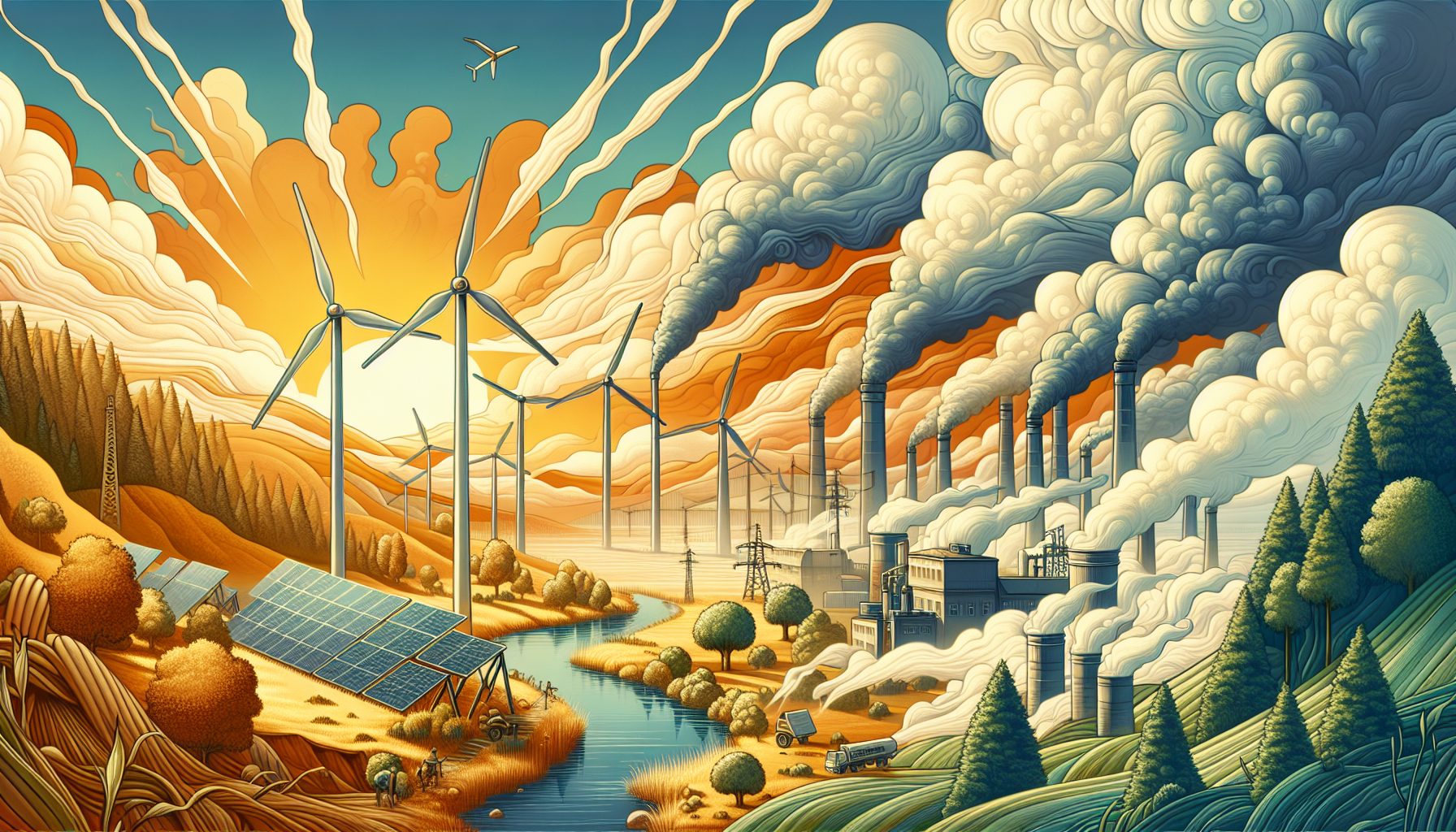
The United States is making significant progress in reducing greenhouse gas emissions, but it may not be enough to meet the ambitious climate goals set by the Biden administration. A new report from the research firm Rhodium Group shows that emissions are falling thanks to major investments in clean energy and transportation. However, the US is not on track to meet its targets under the Paris Agreement, which aims to limit global temperature rises to well below 2 degrees Celsius.
New: Every year, we provide an independent projection of future US emissions under current policy. In the ten years since our first Taking Stock report, the US has made progress, and policies for achieving decarbonization have never been stronger. 🧵https://t.co/O0ywJnxdzr
— Rhodium Group (@rhodium_group) July 23, 2024
The report projects that US emissions will fall 32% to 43% below 2005 levels by 2030 and 38% to 56% by 2035. Several factors are complicating efforts to control emissions. Political upheaval and the prospect of another Donald Trump presidency could jeopardize climate policies.
While the IRA makes climate progress, data center loads drive utilities backward to fossil power. Huge new loads like those should be required to provide clean supply, like we did with hydrogen electrolyzers.https://t.co/sM5uN2rg8T
— Sheldon Whitehouse (@SenWhitehouse) July 23, 2024
The increasing use of data centers for AI, crypto, and cloud computing is also adding pressure to the aging electrical grid. Electricity demand is expected to be 24% to 29% higher in 2035 than in 2023. Transportation will account for nearly half of that growth, but data centers are also becoming major players, expected to make up 22% of the added demand.
Pretty sobering to see that even post IRA we still have a lot of work to do when it comes to cutting emissions
No one said it would be easy, but man, lots to do…https://t.co/bJE6X4OKcs pic.twitter.com/r0Lty0dpyz
— Justin Guay (@Guay_JG) July 23, 2024
If data center electricity demand grows nearly threefold by 2035, power sector emissions could rise 56% compared to Rhodium’s central estimate. The US could potentially meet its goal several years late, reducing emissions between 38% to 56% by 2035. This would require steeper annual drops in pollution than the US has managed over the past couple of decades.
The upcoming election in November will have a significant impact on the US greenhouse gas trajectory. Republicans could seek to dismantle parts of the Inflation Reduction Act, the most significant climate legislation to date, if they win the White House and Congress.
US struggles under climate pressures
The Supreme Court’s recent Chevron ruling, which limits federal agencies’ power, is also expected to lead to a wave of challenges to environmental policies. The next administration will shape the defenses to those challenges. Despite these obstacles, the Rhodium report suggests that economic growth does not have to be sacrificed for a healthier climate.
The US economy has been growing faster than its carbon footprint in eight of the past ten years. The US set records last year for adding solar power and clean energy storage to the grid. Ben King, an associate director with Rhodium, said history is likely to remember the past few years as an “inflection point” in climate policy.
“This is where clean energy went mainstream,” King said. “It’s real business. It’s not your hippie neighbor with solar panels on the roof.”
However, the energy transition remains far too slow to reach US emissions goals without new policy measures.
The renewable energy industry faces barriers that need to be smoothed out to get new projects built and operating more quickly. Investment in clean energy, transportation, and technology is growing rapidly. In the first quarter of 2024, firms invested $71 billion in the sector, a 40% increase from the same time in 2023.
Clean energy now accounts for more than 5% of private investment in structures, equipment, and durable consumer goods. The US has historically contributed more greenhouse gases than any other country and remains the world’s top producer. Whatever the US does on climate moving forward will have a global impact.

Cameron is a highly regarded contributor in the rapidly evolving fields of artificial intelligence (AI) and machine learning. His articles delve into the theoretical underpinnings of AI, the practical applications of machine learning across industries, ethical considerations of autonomous systems, and the societal impacts of these disruptive technologies.