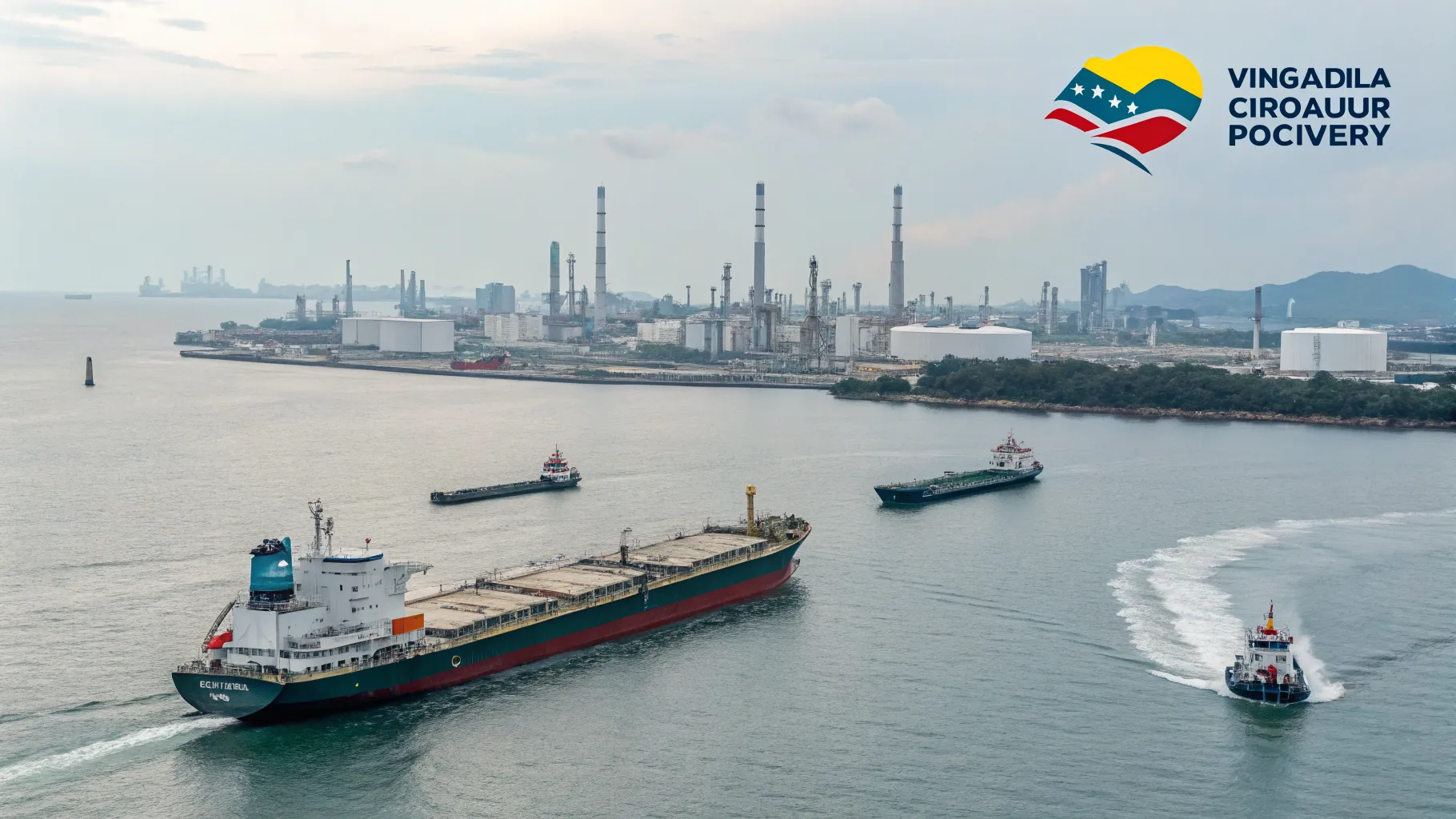
Traders have rebranded more than $1 billion of Venezuelan crude as Brazilian for delivery to China over the past year, according to tanker trackers and market participants. The shipments moved through offshore Malaysia and targeted independent refiners in China. The practice cut freight costs and helped buyers avoid U.S. sanctions, the sources said.
The shipments and labeling changes began around July 2024, documents show. Two tanker tracking firms and four traders described how cargoes were blended and relabeled before discharge in China. The pattern adds new pressure to enforcement efforts and raises questions for refiners and shipowners.
“Traders have rebranded more than $1 billion of Venezuelan oil shipments to China as Brazilian crude over the past year,” said two tanker tracking firms and four traders.
Background: Sanctions, Demand, and a Shipping Hub
Venezuela has faced broad U.S. oil sanctions in recent years, with periods of partial relief followed by tighter limits in 2024. Those measures restrict sales, payments, and shipping services tied to Venezuelan state producers. Iranian barrels face similar obstacles.
Independent refiners in China, often called “teapots,” are frequent buyers of discounted sanctioned crude. They compete on thin margins and seek flexible supplies. Oil from Venezuela and Iran often moves through ship-to-ship transfers near Malaysia. Offshore Malaysia has become a known staging point for blending, storage, and changes to paperwork.
“Independent refiners in China are the main buyers of seaborne oil shipments from countries sanctioned by the United States, with offshore Malaysia serving as a key trans-shipment hub.”
How the Rebranding Works
Traders described a process where cargoes lift in the Americas, conduct ship-to-ship transfers near Malaysia, then discharge in China under altered paperwork indicating a different origin. Since mid-2024, the declared origin has at times shifted to Brazil.
- Ship-to-ship transfers offshore Malaysia enable blending and opacity.
- Documents presented at discharge list Brazilian origin for Venezuelan barrels.
- Chinese independent refiners are the end buyers, seeking lower costs.
“Since July 2024, however, traders have also rebranded Venezuelan oil as from Brazil,” said one market participant familiar with the cargoes.
The switch to a Brazilian label can lower scrutiny from banks and port agents, traders said. It can also trim freight and insurance costs linked to sanctioned origins. The discount on Venezuelan grades sweetens the economics for buyers willing to accept paperwork risk.
Industry and Legal Reactions
Compliance officers at trading houses and shipping firms have tightened vetting of ship-to-ship activity near Malaysia. They track AIS gaps, ownership changes, and unusual routing to flag suspect barrels. Some financial institutions ask for additional certificates of origin or refinery assays to confirm crude type.
Enforcement agencies have targeted deceptive shipping practices, such as false documentation and manipulation of vessel tracking. But tracing crude identity after blending remains hard. Matching cargo chemistry to a field source requires time and lab work, which is costly for routine trade.
Market analysts said the move to a Brazilian label suggests wider use of third-country identities for sanctioned oil. Brazil’s growing role as a supplier to Asia may provide plausible cover in customs data, even when the cargo’s qualities differ from typical Brazilian grades.
Implications for Markets and Policy
The rebranding can shift reported trade flows, clouding official statistics. It also pressures compliant sellers by undercutting prices. For China’s independent refiners, lower-cost barrels support margins but add legal risk if authorities increase audits.
For Washington, the pattern highlights a cat-and-mouse problem. Tightening sanctions can push more cargoes into opaque channels. Looser measures can invite higher volumes but reduce stealth tactics. Either path has trade-offs in enforcement and market transparency.
Traders expect the practice to continue as long as discounts persist and verification remains weak at discharge ports. They also expect more blending to mask crude origin and specifications.
What to Watch Next
Several developments could reshape this trade:
- Stronger origin checks by Chinese customs or port authorities.
- Sanctions designations on vessels or intermediaries tied to false paperwork.
- Greater use of cargo assays to confirm crude identity at discharge.
- Shifts in Venezuelan policy or U.S. licensing that change legal supply routes.
For now, the flow shows the pull of discounted oil and the limits of maritime oversight. The reported $1 billion in relabeled shipments points to a growing workaround that blends logistics, price incentives, and paperwork risk. Buyers gain savings, while regulators face a moving target.
As scrutiny builds, traders and refiners will weigh costs against the chance of disruption. Future policy shifts and tighter checks in Malaysia or China could change the math. Until then, rebranding looks set to remain part of the trade.

A seasoned technology executive with a proven record of developing and executing innovative strategies to scale high-growth SaaS platforms and enterprise solutions. As a hands-on CTO and systems architect, he combines technical excellence with visionary leadership to drive organizational success.