The James Webb Space Telescope (JWST) has made a remarkable discovery by detecting light from a highly distant galaxy, JADES-GS-z13-1, which existed just 330 million years after the Big Bang. This ancient galaxy, with a redshift (z) of 13, offers a glimpse into the mysterious Cosmic Dark Ages, a period when the universe was shrouded in a dense fog of neutral hydrogen and helium gas. An international team of astronomers, led by Joris Witstok from the University of Copenhagen, used data from JWST’s Near-Infrared Camera, Near-Infrared Spectrometer, and Mid-Infrared Instrument to study this early epoch in the universe’s history.
They focused on the Epoch of Reionization, also known as the Cosmic Dawn, when light from the first galaxies began to clear the dense fog that enveloped the universe. JADES-GS-z13-1 is one of the pioneers of reionization, helping scientists understand how the earliest galaxies evolved and how reionization began across the universe. Witstok emphasized the importance of pinpointing the very first moment reionization started, which likely coincided with the formation of the first stars.
The light from JADES-GS-z13-1 traveled billions of light-years to reach Earth, transforming from ultraviolet to infrared light due to the expansion of the universe.
Ancient galaxy sheds light on reionization
This light would have created a reionized plasma bubble around the galaxy, allowing some of it to pass through the intergalactic cloud and reach us.
Witstok and his team noted that the light from JADES-GS-z13-1 appeared bluer than expected and showed an unusually high amount of Lyman-α radiation. This suggests that the galaxy is either teeming with unusually massive, hot blue stars or harbors a supermassive black hole at its center. If the light comes from stars, they would need to be about 15 times hotter than the Sun and over a hundred times more massive.
If a supermassive black hole is responsible, it would be even more massive than the one at the center of the Milky Way, an unexpected finding given the early stage of the universe’s history. The discovery of JADES-GS-z13-1 challenges existing models and prompts new questions about the universe’s earliest epochs. It enhances our understanding of the early universe and pushes the boundaries of what we know about cosmic formation and evolution.
Further follow-up observations of this ancient galaxy will provide more information about its nature and the epoch of reionization, potentially rewriting our understanding of cosmic history.
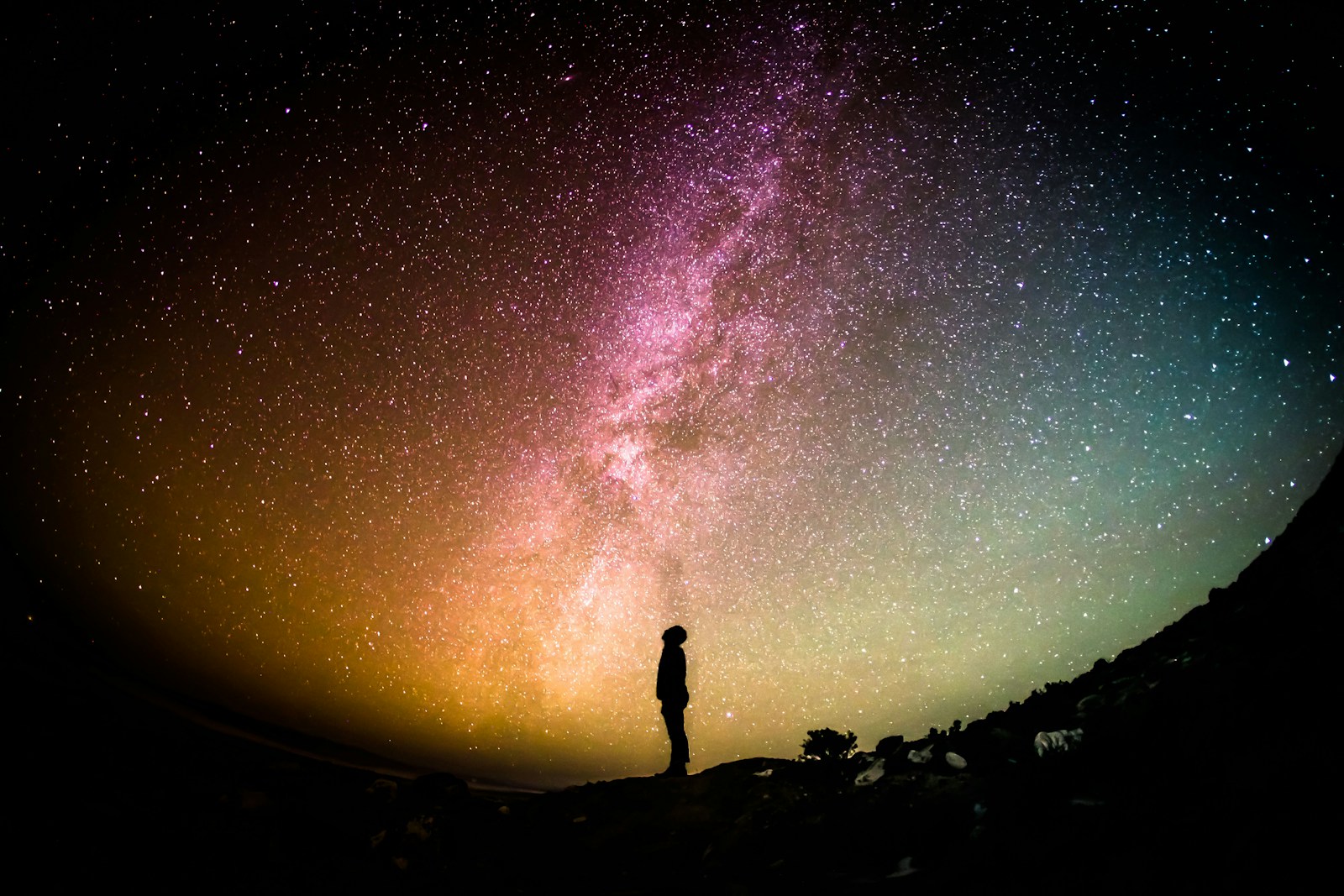
Image Credits: Photo by Greg Rakozy on Unsplash

Noah Nguyen is a multi-talented developer who brings a unique perspective to his craft. Initially a creative writing professor, he turned to Dev work for the ability to work remotely. He now lives in Seattle, spending time hiking and drinking craft beer with his fiancee.