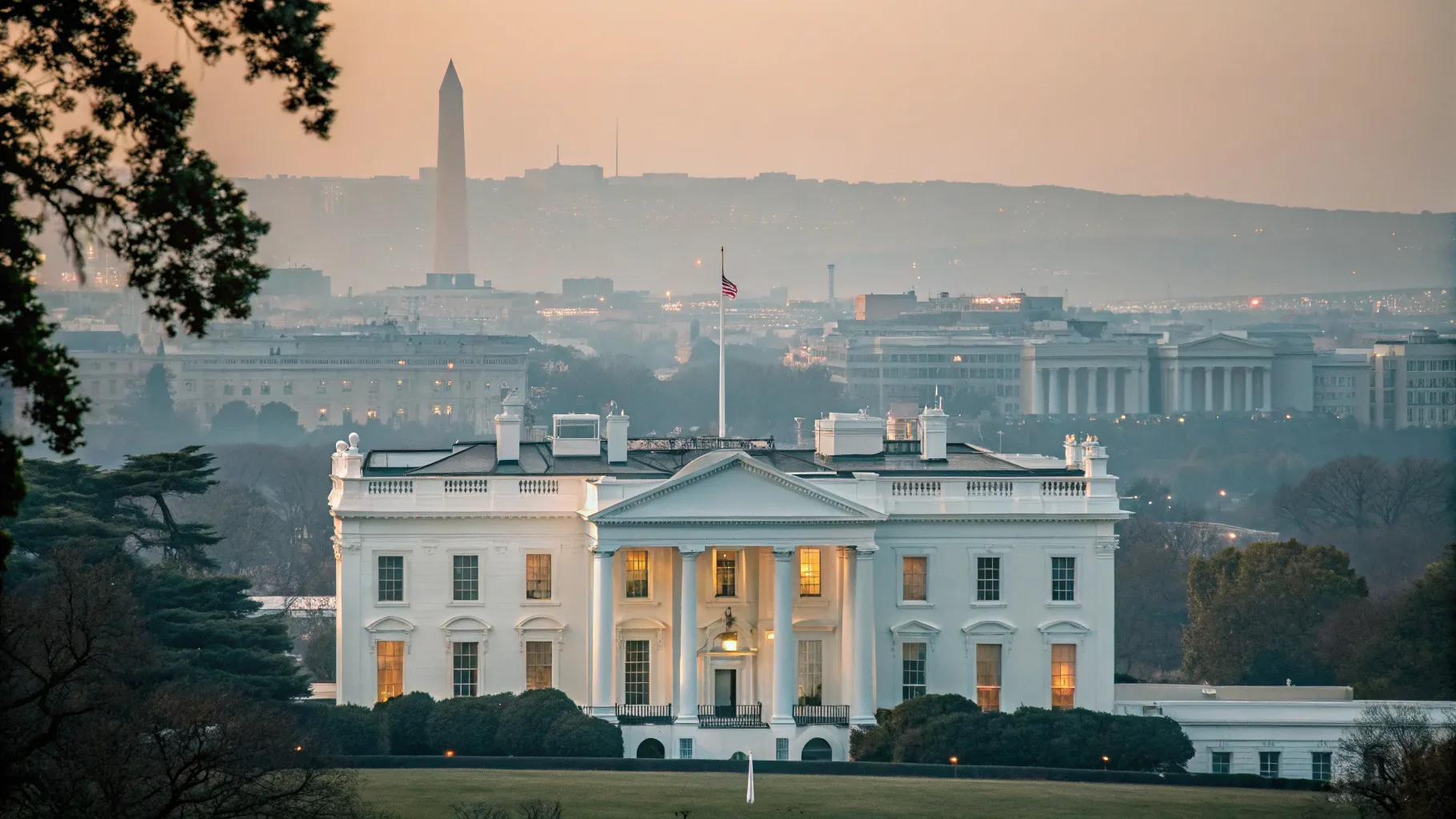
The White House issued a new order that positions the federal government against a growing patchwork of state rules on artificial intelligence. It creates a Justice Department task force to challenge state AI laws and directs the Commerce Department to tie future broadband funding to state policy choices. The move escalates a national debate over who sets the rules for AI and how federal money should be used to influence them.
The action arrives as many states race to write their own AI protections, while tech firms press for a single national standard. State officials say they are filling a gap. Federal officials argue the mix of rules risks confusion for companies and consumers.
What the Order Does
The administration framed the effort as an attempt to avoid a maze of different rules for one technology. The Justice Department task force will examine state statutes and, when warranted, challenge them in court. At the same time, the order uses a powerful lever: federal broadband dollars.
The order creates a Justice Department task force to challenge state AI laws and directs the Commerce Department to pull future broadband funding from states that pass “onerous” legislation.
Officials did not define “onerous” in detail, leaving room for case-by-case decisions. The flexibility could allow tailored responses, but it also invites disputes over where the line is drawn.
Background: A Patchwork Emerges
States have moved fast on AI, proposing rules on bias testing, disclosures, use in hiring, and model safety. Colorado adopted a broad AI law in 2024, setting duties for high-risk systems. California lawmakers have weighed bills on automated decision tools and safety standards. Other states are studying narrower rules on deepfakes and election content.
Industry groups warn that fifty sets of requirements would raise costs and slow new tools. Civil rights advocates counter that state action is needed to protect residents now. Congress has held hearings and issued frameworks, but a sweeping federal law has not emerged.
On broadband, the Commerce Department is administering the roughly $42.5 billion BEAD program under the 2021 infrastructure law. States receive planning and build-out grants to reach unserved and underserved communities. The order connects those future funds to state AI policy choices, a linkage critics say is unrelated to last-mile construction.
Why Broadband Money Is in Play
Federal agencies have long used grants to steer state behavior. By tying broadband dollars to AI rules, the administration seeks leverage where Congress has already approved large sums. Supporters say the approach pushes states to avoid rules that could restrict AI services delivered over the networks those funds build.
Opponents argue the tactic punishes rural and low-income areas that need broadband the most. They say disagreements over AI should not delay fiber projects or raise costs for providers seeking grants.
- Backers: A single standard avoids compliance confusion.
- Critics: Conditional funding risks slowing rural broadband build-outs.
Legal and Political Tensions
The Justice Department task force signals possible preemption fights. Federal lawyers could contend that some state AI rules interfere with interstate commerce or conflict with federal policy. States are likely to defend their police powers to protect residents from discrimination, fraud, and unsafe systems.
Legal experts expect lawsuits from both sides. Trade associations may sue states over strict mandates. State attorneys general could sue Washington over the funding conditions, arguing coercion. Courts will be asked to weigh AI regulation against spending clause limits and state authority.
Industry and Advocate Reactions
Technology companies have urged Congress to act, favoring a single set of requirements on testing, safety, and disclosures. They say uniform rules help small startups as much as the largest firms. Labor groups and civil rights organizations warn that weak standards could leave workers and consumers exposed to biased or faulty systems.
Broadband providers are split. Some welcome policy clarity that could align service offerings across states. Others worry that mixing AI policy with network grants could slow approvals and add new compliance tasks to infrastructure work that is already complex.
What Comes Next
Agencies will likely issue guidance on what counts as “onerous” and how funding decisions will be made. States may revisit bills to avoid risking future awards. Lawmakers in Congress could respond with their own proposals to set national rules and reduce pressure on grant programs to fill the gap.
For now, the order raises the stakes for both AI policy and broadband expansion. It forces a choice for statehouses: adjust AI bills to secure federal money or prepare for legal fights. The result will shape how quickly communities get connected and how AI tools are governed in daily life.
The key questions are clear. Will Washington define a fair standard that protects users without stalling progress, and can states retain room to address local harms? The answers will guide AI oversight and the pace of broadband build-outs in the months ahead.

Senior Software Engineer with a passion for building practical, user-centric applications. He specializes in full-stack development with a strong focus on crafting elegant, performant interfaces and scalable backend solutions. With experience leading teams and delivering robust, end-to-end products, he thrives on solving complex problems through clean and efficient code.