The race to define artificial intelligence’s next step has split a once simple phrase. “World model” now points to three separate ideas rising at the same time across labs and products. The shift is visible in new work on Gaussian splats, SIMA 2, JEPA, and Genie 3. The result is a field that shares a label but not a single plan.
“Gaussian splats, SIMA 2, JEPA and Genie 3 — and why ‘world model’ now means three very different things at once.”
Researchers and companies are pushing new systems able to remember, predict, or generate how the world looks and behaves. Some build compact scene maps. Some learn abstract physics and common sense. Others create interactive environments from text or video. The differences matter for safety, costs, and how fast these tools move into daily use.
Background: One Term, Three Tracks
Early “world model” research aimed to help agents act without constant labels. The idea was to learn from raw data and predict what comes next. Over time, the term expanded. It now covers 3D scene capture, predictive self-supervised learning, and generative, controllable simulators.
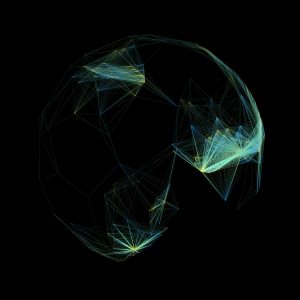
3D Gaussian Splatting appeared in recent vision research as a faster alternative to NeRFs for scene reconstruction. It uses many small Gaussian blobs to represent a space. The method renders views quickly and can train from video. It targets robotics, AR, and mapping.
JEPA, short for Joint Embedding Predictive Architecture, is tied to work by Yann LeCun and collaborators. It predicts missing or future content in a learned space without decoding pixels each time. The goal is efficient common-sense learning from unlabeled data.
SIMA is Google DeepMind’s project for instructable agents across simulated worlds. A “SIMA 2” push suggests broader skills and more complex tasks. It reflects a focus on grounded actions and goal completion. Genie 3 points to generative models that create playable environments from a prompt or a clip, bringing training data and testing ground under one roof.
Three Meanings of “World Model”
These efforts anchor three camps:
- Scene representations: Gaussian splats turn videos into fast 3D maps.
- Abstract predictive models: JEPA learns latent structure and causality hints.
- Interactive generators: Genie 3 and SIMA-style systems build and use worlds for agents.
Each camp solves a different bottleneck. Mapping helps robots and AR devices see. Predictive models help agents reason and plan. Generators give agents a place to learn and test at scale.
Why the Split Matters
The split shapes how companies invest. Scene maps need sensors and efficient rendering. Predictive models need vast unlabeled corpora and stable training. Generators require controllable physics, assets, and safety checks.
It also affects measures of progress. A mapping system is judged on rendering speed and accuracy. A predictive model is judged on transfer and planning. A generator is judged on playability and alignment with prompts.
The costs vary. Scene capture can run on consumer hardware with smart caching. Latent prediction reduces compute at inference by avoiding full decoding. Generative simulators may be compute-heavy but cut data collection costs by creating synthetic training grounds.
Industry Impact and Use Cases
Robotics teams view Gaussian splats as a path to real-time scene updates. AR apps can anchor objects more stably in a room. Drone mapping benefits from quick view synthesis.
JEPA-style models promise better planning for agents without heavy supervision. They could reduce failures from thin training signals and improve sample efficiency in control tasks.
Genie-like systems can spin up new levels or tasks on demand. SIMA-style agents can train in diverse worlds, then transfer to new games or structured tasks. That may shrink the gap between lab demos and useful assistants.
Signals to Watch
Several signals will show which meaning wins mindshare:
- Benchmarks that tie representation quality to downstream control.
- Transfer from simulation to the real world in robotics pilots.
- Safety tooling for generated environments, including content filters and guardrails.
- On-device variants that reduce cloud costs for mapping and prediction.
Expert Views
Researchers stress that no single path covers the full problem. A scene map without prediction cannot plan. A predictor without a world to act in cannot learn actions. A generator without abstraction may overfit to textures and miss physics.
As one analyst put it, the field is arguing over the same destination. But each group is building a different vehicle. The question is whether a hybrid will emerge, or if specialized stacks will coexist.
The latest releases show a sharp divergence, but also a chance for links. A future system could use Gaussian splats to map, a JEPA core to predict, and a Genie-like engine to practice. If SIMA 2 or its peers bind these pieces, agent performance could rise while costs fall. For now, companies should pick tools based on needs: precise mapping, strong prediction, or broad training. Watch for shared benchmarks, tighter safety tooling, and early wins in robotics and AR over the next year.

A seasoned technology executive with a proven record of developing and executing innovative strategies to scale high-growth SaaS platforms and enterprise solutions. As a hands-on CTO and systems architect, he combines technical excellence with visionary leadership to drive organizational success.