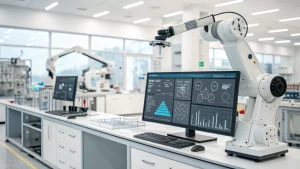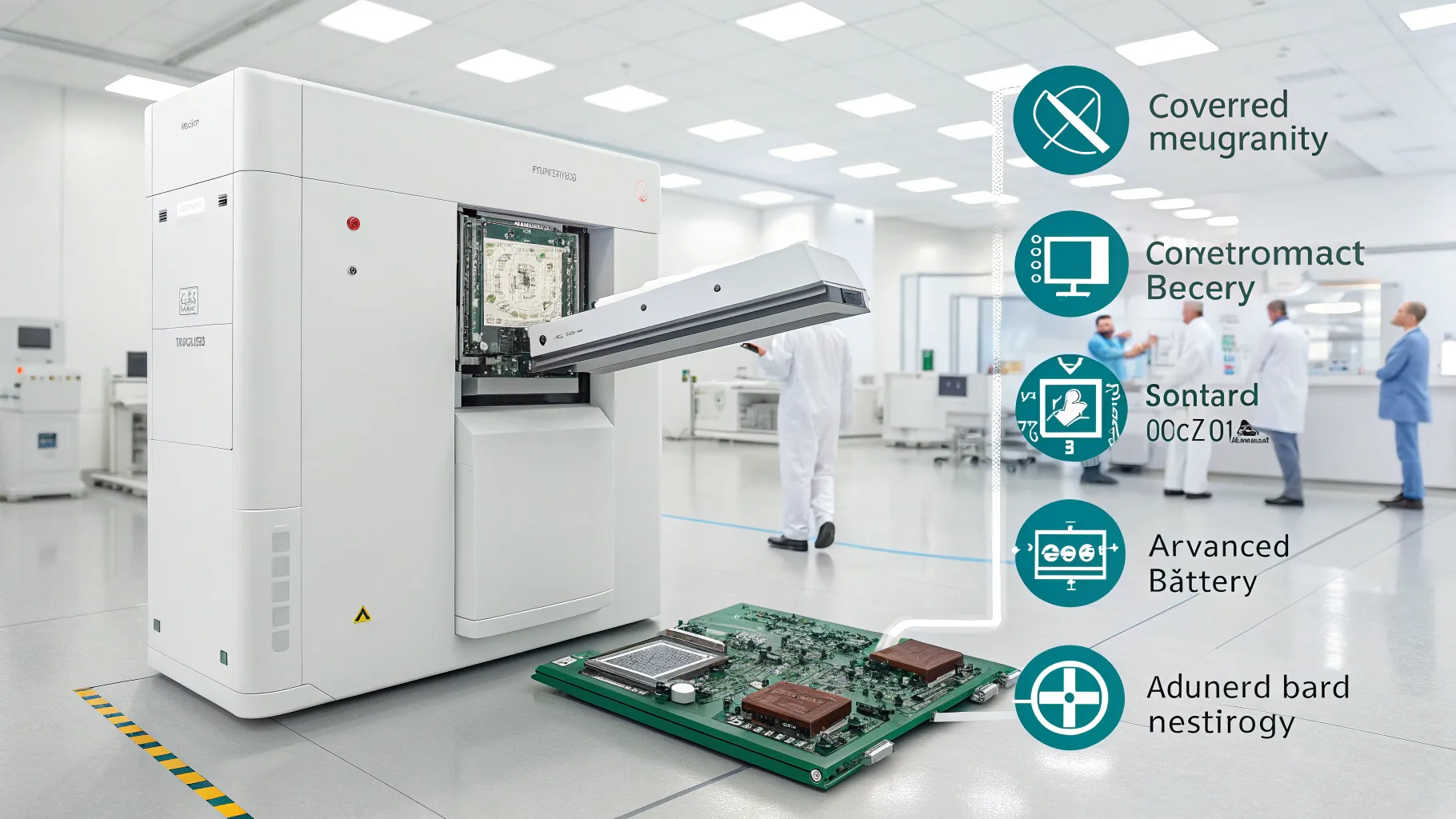
X-ray tomography is moving from labs to factory floors as firms seek safer, faster ways to inspect complex devices without taking them apart. The technique offers three-dimensional views of computer chips and advanced batteries, helping teams spot flaws, verify designs, and improve reliability at scale.
Engineers have used X-rays for decades, but higher resolution, faster scanning, and better software now make it practical for routine quality control. The approach appeals to chipmakers worried about hidden defects and battery companies under pressure to improve safety after high-profile recalls.
What X-Ray Tomography Does
“X-ray tomography is a powerful tool that enables scientists and engineers to peer inside of objects in 3D, including computer chips and advanced battery materials, without performing anything invasive.”
The method builds a 3D model by taking many X-ray images as the object rotates. Software reconstructs the internal structure, showing layers, voids, and connections that are invisible to the eye. Unlike destructive testing, the same sample can be examined again later to track changes over time.
Medical CT sparked the early interest. Industrial and research versions adapted the idea for smaller features and denser materials. Today, micro-CT and nano-CT systems probe features measured in micrometers and even tens of nanometers, depending on equipment and sample size.
Why It Matters For Chips
Modern semiconductors are stacked and densely wired. Traditional optical inspection cannot see buried interconnects or through packaging. X-ray tomography helps detect misalignments, microvoids, and solder cracks before products ship.
Packaging houses use it to validate new 3D architectures. Failure analysis teams rely on it to find defects without slicing devices that cost thousands of dollars each. It also supports supply chain trust by confirming that delivered parts match design files.
There are limits. Very fine features can fall below the system’s resolution. Heavy metals in chips can cause artifacts that need careful calibration. Throughput remains a challenge for high-volume lines, where seconds matter.
Battery Safety And Performance
Lithium-ion batteries benefit from non-invasive inspection because internal damage can trigger fires. Tomography can reveal dendrites, gas pockets, and electrode misalignment without opening the cell. That helps manufacturers refine processes and improve yield.
Researchers also use repeated scans to track how electrodes swell and crack during charge and discharge. These time-lapse studies inform new chemistries and better binders. Safer, longer-lasting batteries depend on this kind of feedback.
Trends Shaping Adoption
- Faster reconstruction: New algorithms cut processing time, supporting near-line inspection.
- Higher contrast: Advanced detectors improve clarity in dense or low-contrast regions.
- Automation: Software flags anomalies and reduces operator subjectivity.
Vendors are pairing tomography with machine learning to spot patterns linked to failures. Plants are building reference libraries of “good” and “bad” structures to guide real-time decisions. These tools help prioritize which parts need deeper review.
Costs, Training, And Data Handling
Capital costs remain high, and skilled staff are needed to run scans and interpret results. Companies weigh these costs against the price of recalls, warranty claims, and production delays. Many start with pilot cells or sample lots before scaling up.
Data volumes are large. A single high-resolution scan can generate gigabytes. Secure storage and access controls are essential, especially for chip designs with strict IP protections.
What Could Come Next
Expect tighter integration with production lines, where sampling is guided by live quality metrics. Hybrid systems may combine tomography with ultrasound or optical tools for a fuller picture. Portable units could support field audits and failure investigations at customer sites.
Researchers also aim for better resolution at lower doses to reduce scan time and protect delicate samples. Improvements in source brightness and detector sensitivity would help reach smaller features with fewer artifacts.
Regulators and insurers may push for wider use as part of safety standards, especially for high-energy battery systems in cars and storage plants.
X-ray tomography is giving engineers a reliable view inside the most complex products on the market. It strengthens quality control for chips and improves safety for batteries without tearing devices apart. Watch for faster, smarter systems and broader use across manufacturing as costs fall and software improves.

Deanna Ritchie is a managing editor at DevX. She has a degree in English Literature. She has written 2000+ articles on getting out of debt and mastering your finances. She has edited over 60,000 articles in her life. She has a passion for helping writers inspire others through their words. Deanna has also been an editor at Entrepreneur Magazine and ReadWrite.