Enterprises across industries are under pressure to automate repetitive, rules-based tasks without compromising accuracy or compliance. As a result, many are looking to use artificial intelligence to handle these workflows for them and free humans to do more creative and important work. However, this presents the challenge that comes with building automation pipelines that are both reliable and adaptable, which is important to minimize the unpredictability of these models while delivering practical value to end users.
Michael Zhang, an AI engineering undergraduate at Hong Kong Polytechnic University, has devoted his early career to tackling that problem. His path began in indie game development, where he built XR and VR projects recognized on campus, instilling a user-first approach to design. Today, Zhang applies that mindset to developing pipelines that integrate language models with deterministic logic and human-in-the-loop safeguards to allow companies to automate tasks with confidence.
How Video Games Led To An Interest In Engineering
Zhang’s first encounter with software was driven by curiosity. While still in high school, he began experimenting with game engines, building simple platformers before expanding into XR titles that used computer vision and gesture recognition. One of these VR projects allowed players to cast spells using hand signs recognized by vision models, which was achieved by blending natural language processing and gesture input into an interactive environment.
What began as a hobby soon became a proving ground for technical rigor. He soon realized that the performance of VR experiences meant a balance of computation, accuracy, and immediate responsiveness under real-time constraints and factors that can’t be neatly quantified, like the physical surroundings of individual users. The lessons carried forward were modular design, ongoing feedback loops, and prioritizing the end user’s perspective.
“This taught me how we always need to think from the customer side,” Zhang explains, as this experience was crucial to building a mindset that takes user design as a key priority.
Shifting To Applied AI Software
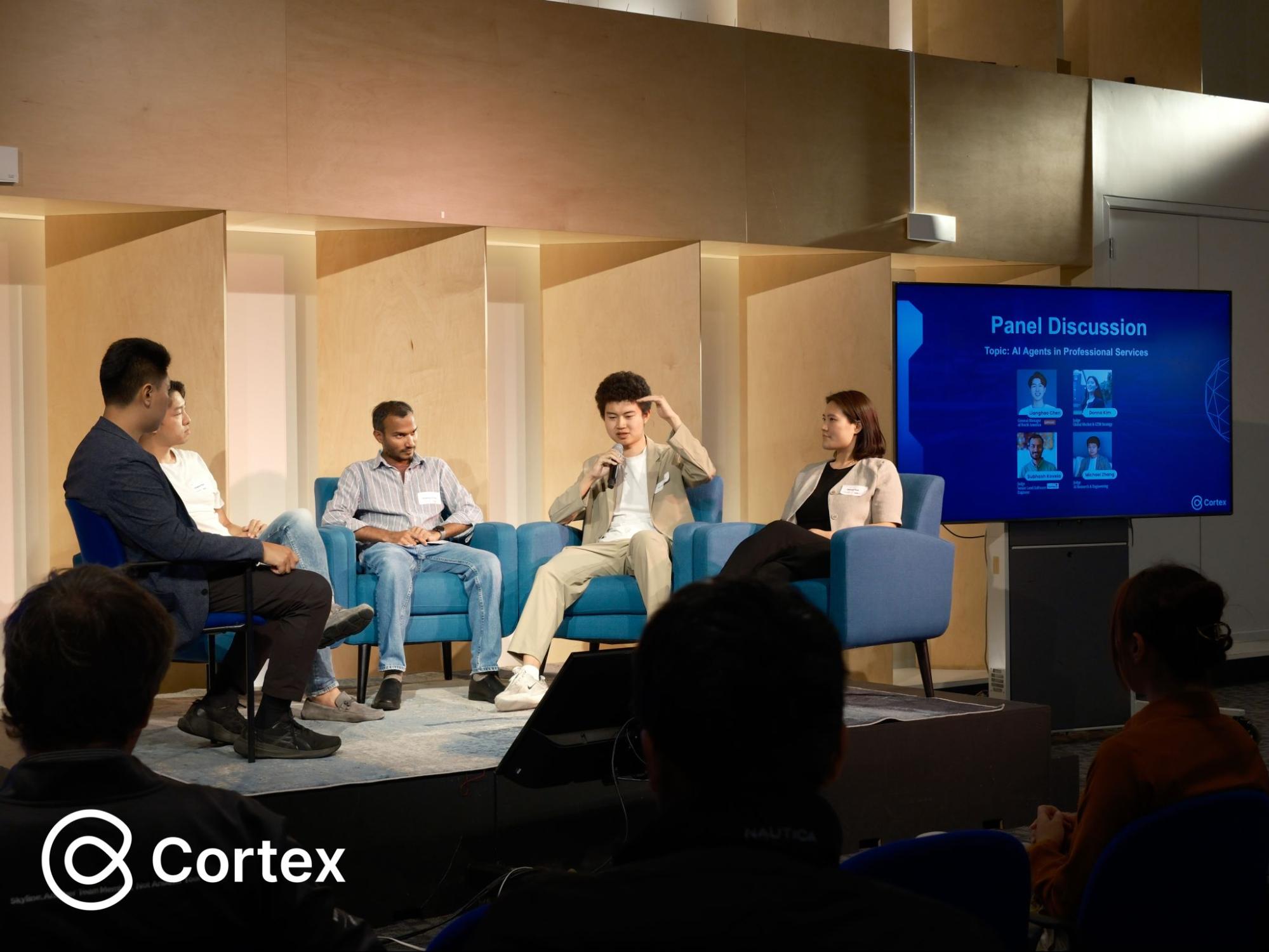
When Zhang entered university, his attention turned toward research in speech and emotion recognition. But while research provided theoretical depth, he sought practical opportunities to apply AI workflows to address everyday pain points. That opportunity emerged in the rising field of agents that could be set in place to take care of routine tasks, a field that’s only grown over the years, with recent reports showing 85% of organizations are planning to use these agents to streamline certain aspects of their work.
Zhang began developing AI agent pipelines that combined the flexibility of language models with the reliability of deterministic programming. His approach was pragmatic: while many models could already analyze unstructured data, they required guardrails to ensure the outputs were consistent and accurate while also maintaining compliance with strict industry standards. His solutions structured automation into modular pipelines (integrating APIs with pre-existing databases and enterprise tools) so that tasks once handled by humans could be executed at scale.
He often cites the example of mortgage underwriting, where workers would historically spend hours verifying documents and applying repetitive rules. By codifying those steps into orchestrated workflows, his automation systems reduced both error and tedium. “Turning the logic of a process into something you can ship in minutes, not days — that’s the developer value of AI workflows,” Zhang explains.
Zhang’s View On Developing Functional Agents
For Zhang, the real challenge in automation lies not in capability but in trustworthiness. Throughout his experiences building fine-tuned agents specifically for enterprise environments, Zhang realizes that these processes need systems that can expand a system’s capabilities without losing accuracy, deal with output errors automatically, and provide clear logging for potential audits.
To meet those demands, he emphasizes setting a technical backbone where developers can prototype freely without worrying about compromising the efficiency of the final work. The workflows he designs integrate human-in-the-loop checkpoints, ensuring accuracy in instances that could be critical to the development of a final product. They support synchronous and asynchronous execution to guarantee quality outputs that are also reliable, and they abstract repetitive code into configurable modules, which in turn allows developers to test different aspects of the agent without requiring a full overhaul.
The result, he argues, is a smarter software built on a dependable infrastructure for industries that can’t afford small errors.
Letting Enterprises Harness AI At Scale
Zhang’s technical drive extends into projects outside the corporate sphere. Inspired by his grandmother’s health challenges, he led a team that designed a “smart diaper” for elderly incontinence patients. The device integrated sensors with cloud-based AI inference, providing caregivers with data that could track health conditions in real-time. For Zhang, the project underscored a broader mission: technology is not simply about efficiency, but about the creation of tools that meaningfully improve lives.
This philosophy also shapes how he evaluates others’ work. As a hackathon judge, Zhang often stresses that the wrong way to build an AI agent is to rely entirely on a large model’s outputs. Instead, he seeks to teach them to blend deterministic programming with AI Workflows and AI reasoning, mitigating limitations like long-context handling and consistency.
Zhang positions himself foremost as an engineer, someone who translates complexity into structured systems. In his words, “I don’t want to see people fully rely on technology to decide things: accuracy and consistency still come from solid engineering.”
From the VR games of his university years to the pipelines that now guide the creation of autonomous agents, Michael Zhang’s trajectory highlights a developer mindset that prioritizes iteration, precision, and a focus on how the final user will engage with the product. His work shows how the craft of engineering, of layering creativity on top of structure and intelligence on top of logic, can greatly improve not only how businesses operate on a day-to-day basis but also how people experience their workday.

Kyle Lewis is a seasoned technology journalist with over a decade of experience covering the latest innovations and trends in the tech industry. With a deep passion for all things digital, he has built a reputation for delivering insightful analysis and thought-provoking commentary on everything from cutting-edge consumer electronics to groundbreaking enterprise solutions.