Linus Tech Tips has spent years perfecting his own gaming setup, but nothing could have prepared him for what he saw in Austin, Texas. Kenton Varda has created LAN party house, a gaming paradise that makes even Linus’s setup look like child’s play. This isn’t just a house with a few gaming rigs—it’s a purpose-built temple to multiplayer gaming that can host up to 23 people at once.
As Linus walked through this gaming wonderland with Kenton and his wife Jade, he felt both inspired and, honestly, a little jealous. This is actually version two of Kenton’s LAN party house concept—taking everything he learned from the first build and scaling it up with even more refinement and ambition.
Hidden Gaming Stations: The Invisible LAN
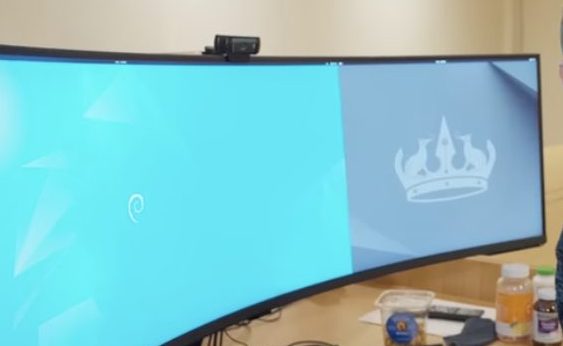
The most jaw-dropping feature? Twelve completely invisible gaming stations in what Kenton calls the “grown-up playroom.” Each station can be deployed with minimal effort—just open a cabinet, fold down a tabletop, and you’re ready to play. Every setup includes a 32-inch CORSAIR XENION 4K 144Hz monitor, mounted on low-profile articulating arms that swing out when needed.
But the real genius? All the actual PCs are stored in a separate server room. That means no heat, no fan noise, and zero distractions in the gaming spaces—a level of luxury Linus has dreamed of but never fully achieved in his own builds.
Each station comes fully equipped with high-end peripherals, accessible power outlets for charging devices, and even overhead cupboards for snack storage. The only thing Linus would add? Desk pads (but he’ll skip the shameless plug—for now).
The Infrastructure Behind the Magic
The heart of LANparty.house is what Kenton’s HVAC contractor called “the biggest server rack he has ever seen in a residential building.” This houses:
- 20 identical gaming PCs that power every station in the house
- A small AMD EPYC server for AI tinkering and a persistent Minecraft instance
- Network infrastructure supporting 10Gb connections throughout
The systems are modestly spec’d but hit the price-to-performance sweet spot. What’s truly clever is how they’re managed—all machines boot from a single network image on the server, allowing games to be installed on all systems simultaneously and making updates a breeze.
The entire setup can draw up to 15,000 watts at full power, but Kenton’s large solar array generates around 75 kilowatt-hours daily, offsetting some of that consumption.
Beyond PCs: The Complete Gaming Experience
LANparty.house isn’t just about desktop gaming. The main room features a massive 98-inch Samsung TV connected to a PS5 and 5.1 electrostatic speaker setup. Four La-Z-Boy power recliners provide comfortable seating with built-in controller storage.
Perhaps the most unexpected feature is the four DDR dance platforms from Eltek embedded directly into the concrete slab of the house. Kenton uses these every other day for cardio fitness—gaming and exercise combined in the most permanent way possible.
The upstairs office transforms from a productive workspace with His and Hers stations featuring Samsung Odyssey Neo G9 monitors into another 8-person gaming setup. The boardroom table in this space converts into a LAN gaming paradise with cable runs going straight down the middle.
Future-Proofing Done Right
What impressed me most was Kenton’s commitment to future-proofing. Conduit is everywhere. Every room has at least four network ports, whereas most homes have only one. Even the kids’ bedrooms have a conduit back to the server room for when they’re old enough to need powerful workstations.
This approach to infrastructure means the house can evolve as technology changes—something I wish more builders considered.
The attention to detail extends to quality-of-life features like dedicated cat bathrooms with negative air pressure venting and a whole-house intercom system (though it’s currently just broadcasting IP addresses until Kenton figures out SIP infrastructure).
Lessons for Our Own Spaces
Not all of us can build multi-million dollar gaming houses, but there are valuable takeaways here:
- Centralize your computing when possible to reduce noise and heat in living spaces
- Plan for future expansion with proper cable management and conduit
- Consider multi-purpose furniture that can transform based on needs
- Don’t forget practical details like accessible power outlets and peripheral storage
What Kenton has created isn’t just impressive—it’s inspirational. It shows what’s possible when gaming isn’t treated as an afterthought, but as a central design principle for how a living space functions.
As Linus left the LAN party house, he couldn’t help but start mentally redesigning his own setup. Sure, he might not have the budget or square footage for 20 hidden gaming rigs—but the core ideas? Those can scale. Seamless integration. Centralized power. Thoughtful design that prioritizes play.
And who knows? Maybe one day Linus will have his own version of the ultimate gaming house—though he’s the first to admit, topping what Kenton has built in Austin would be a serious challenge.
Frequently Asked Questions
Q: How many gaming stations are in the LANparty.house?
The house features a total of 23 gaming stations. There are 12 in the main “grown-up playroom,” 8 more at the convertible boardroom table upstairs, plus additional gaming setups connected to TVs throughout the house.
Q: Where are the actual computers located?
All the gaming computers are housed in a central server room rather than at each gaming station. This design choice eliminates noise and heat from the gaming areas while making system management much easier.
Q: How does Kenton manage updates and game installations across so many systems?
All systems boot from a single network image on a central server. This allows games to be installed on all computers simultaneously and makes system updates much more manageable. The setup also allows for quick factory resets if a guest causes any issues.
Q: What’s the power consumption like for a setup of this scale?
At maximum capacity, the server rack can draw approximately 15,000 watts. However, Kenton has installed a large solar array that generates around 75 kilowatt-hours per day, which helps offset some of the power consumption.
Q: What unique features does the house have beyond gaming computers?
The house includes four DDR dance platforms embedded in the concrete floor, dedicated cat bathrooms with negative air pressure venting, extensive conduit throughout for future upgrades, convertible furniture that transforms between work and gaming modes, and a whole-house intercom system.

Finn is an expert news reporter at DevX. He writes on what top experts are saying.