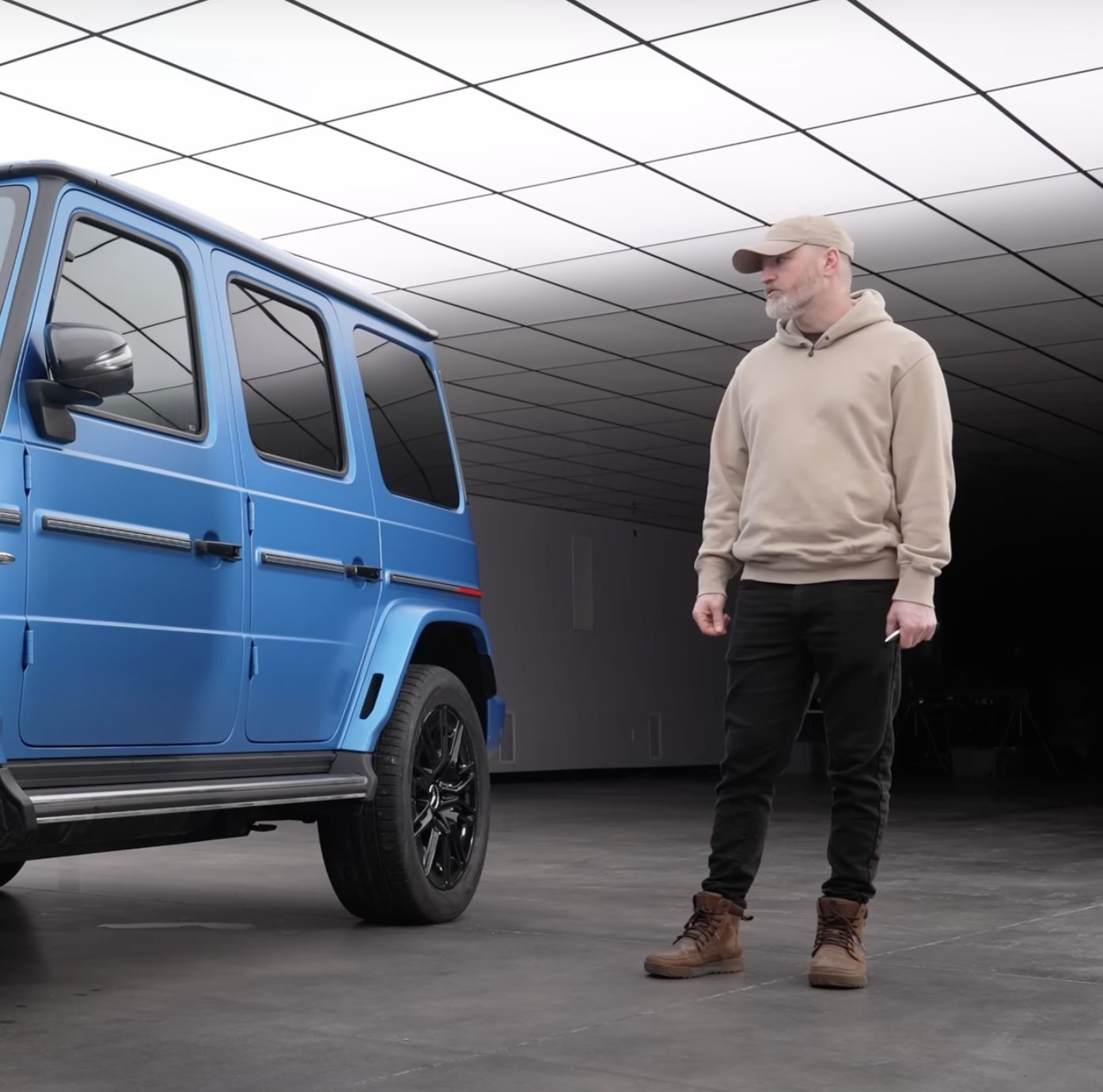
The new electric G-Wagon is here, and after watching Unbox Therapy’s video, I’m thrilled to report it’s still very much a G-Wagon. Mercedes-Benz has managed to create an electric vehicle that doesn’t scream “I’m electric!” at every turn, and that’s exactly what longtime G-Wagon enthusiasts want.
What struck me immediately was how Mercedes preserved the vehicle’s iconic vault-like look. When you open and close those doors, you’re greeted with that unmistakable mechanical thunk that no other vehicle on the market can replicate. Even the locking mechanism sounds substantial. This isn’t your typical whisper-quiet EV experience—it’s a statement.
Tradition Meets Electrification
The genius of this vehicle is how it maintains the G-Wagon’s rugged DNA while incorporating electric technology. From the outside, you’d be hard-pressed to identify it as electric unless you spot the subtle EQ badge or the thin blue strip running along the side.
Mercedes made a smart decision with the front grille. Rather than going with the futuristic “cap” design seen in early prototypes (available as a $1,600 option), they kept the traditional grille that G-Wagon buyers expect. Why mess with an iconic design just because there’s no engine to cool? People who buy these vehicles want that military-inspired aesthetic, not a space-age makeover.
The Edition One model Unbox Therapy examined comes with distinctive elements like side steps, black wheels with blue brake calipers matching the paint, and carbon fiber interior trim with subtle blue accents. It’s expensive, yes, but G-Wagon buyers expect to pay for premium features.
An Interior That Prioritizes Tactile Experience
Inside, the G-Wagon continues to defy EV conventions. While most electric vehicles are moving toward minimalist, screen-dominated interiors, the G-Wagon embraces physical controls. There’s a button or switch for almost everything:
- Heated seats controlled by dedicated buttons
- A twist dial for the heated steering wheel
- Physical air vents you can grab and direct manually
- Paddle shifters to adjust regenerative braking levels
- A touchpad for screen interaction (reducing fingerprints)
This approach creates an interface that’s immediately intuitive. Anyone can get in and understand how to operate the climate controls without diving into touch menus.
The steering wheel deserves special mention—it’s beautifully crafted with perforated leather and heats up quickly. After using Tesla’s yoke, returning to this traditional wheel feels like coming home.
Driving Experience: Not Your Typical EV
On the road, the electric G-Wagon feels like a G-Wagon first and an EV second. It maintains that characteristic boxy, utilitarian feel with stiff steering and an elevated driving position.
The acceleration, while not as brutal as the gas-powered G63, delivers plenty of immediate electric torque that makes it feel surprisingly sporty. It’s a little squirrelly in a fun way when you punch it.
Perhaps most interesting is the sound design. Mercedes pipes in convincing engine-like sounds that correspond to your acceleration. It’s simulated, yes, but it adds a familiar dimension to the driving experience that many EV converts miss.
Range isn’t this vehicle’s strong suit compared to more aerodynamic EVs, but Mercedes has built in clever features to maximize efficiency when needed. A dedicated “maximize range” function can instantly adjust climate settings and driving parameters to extend your driving distance.
The G-Turn: Electric Advantage
The electric G-Wagon’s party trick is the “G-Turn”—essentially a tank-style turn made possible by the four independent motors. On snow or dirt, you can make the vehicle pivot 360 degrees in place. It’s mind-blowing to experience and showcases one area where the electric powertrain offers something the gas version can’t match.
This feature isn’t just for show; it could genuinely help in tight off-road situations where maneuverability is limited.
Who Is This For?
The electric G-Wagon isn’t for the typical EV buyer looking for maximum efficiency or futuristic styling. It’s for someone who already wanted a G-Wagon and is now considering electric, or for someone who wants an electric vehicle that doesn’t look like one.
There’s really no direct competition. A Rivian buyer and a G-Wagon buyer are likely different customers with different priorities. The Hummer EV might be the closest comparison, but even it embraces its electric nature more openly.
What Mercedes has created is a vehicle that bridges two worlds—maintaining the G-Wagon’s storied heritage while embracing electric technology on its own terms. It’s not trying to be the most efficient or aerodynamic EV; it’s trying to be a G-Wagon that happens to be electric.
And in that specific mission, it succeeds brilliantly.
Frequently Asked Questions
Q: How does the range of the electric G-Wagon compare to other electric SUVs?
The electric G-Wagon isn’t designed to win any range competitions. Its boxy shape and focus on maintaining the traditional G-Wagon design mean it sacrifices some efficiency. However, Mercedes has included a “maximize range” feature that can extend driving distance by adjusting climate controls and driving parameters when needed.
Q: What are the key visual differences between the electric G-Wagon and the gas version?
The differences are subtle by design. Look for the EQ badge, a thin blue strip along the side, and the “backpack” storage compartment where the spare tire would normally be. The Edition One model also features blue brake calipers and special carbon fiber trim with blue accents inside.
Q: Can the electric G-Wagon still go off-road like the original?
Absolutely. Mercedes designed the electric G-Wagon to maintain the off-road capability the model is known for. It features protective underbody plating for the battery, four independent motors (one per wheel), and various off-road driving modes. The “G-Turn” feature even adds new capabilities that the gas version doesn’t have.
Q: What’s special about the “G-Turn” feature?
The G-Turn is a tank-style 360-degree turn made possible by the four independent electric motors. By spinning wheels on opposite sides in different directions, the vehicle can rotate in place on loose surfaces like snow or dirt. It’s both a fun party trick and a practical feature for navigating tight spots off-road.
Q: Does the electric G-Wagon feel like a typical electric vehicle inside?
Not at all. Unlike most EVs that embrace minimalist, screen-dominated interiors, the electric G-Wagon maintains a more traditional approach with physical buttons and switches for most functions. It even pipes in engine-like sounds during acceleration. The overall experience is designed to feel familiar to G-Wagon enthusiasts rather than emphasizing its electric nature.