The development of SIM cards bore great fruit – it ensures reliable and secure connections for its users today. However, technology is advancing at such a rapid pace that it raises doubts – how long will traditional SIM cards be relevant? While some believe that the downfall of SIM cards is coming, others remain skeptical.
Let’s take a look at the history of SIM cards and current trends to share some insights.
A Brief History of SIM cards
The first portable mobile phone did not use a SIM card at all. The device connected to the entire radio frequency spectrum, and its owner could be identified by the device itself.
Subscriber Identity Modules (SIMs) were designed to identify and authenticate a user and assign them to an operator’s network in 1991. Thanks to them, the user can use all the benefits of mobile communication: making calls, sending and receiving messages, browsing the Internet, etc.
The first SIM cards could only hold 20 contacts and a few messages. However, over time, SIM cards have become smaller, and their capacity has increased significantly. In 1996, the mini SIM card began to become popular. And 14 years later, in 2010, the micro SIM card.
Two years later, the nano SIM card was introduced, and in 2018-2019 the eSIM era began. This led to a major change in history. Even though eSIM technology is relatively new, it is rapidly gaining traction due to its versatility and convenience.
eSIM cards were made even smaller than nano SIMs and embedded directly into the device to reduce complexity. They were also remotely programmable, allowing businesses to easily switch mobile providers across multiple devices. Therefore, such suppliers as Airalo or Holafly are becoming increasingly popular.
SIM versus eSIM cards: What’s the Difference?
Although both SIM and eSIM cards have the same function, there are some differences between them.
- Installation. A physical SIM card is a small piece of plastic with a microprocessor that is manually inserted into a gadget. Meanwhile, eSIM is an electronic card which is already integrated into a smartphone.
- Application. SIM cards can only be used in devices that are compatible with them. This is less of an issue with eSIM.
- Changing an operator. When changing an operator, a new SIM card needs to be inserted, while there is no such problem when using an eSIM.
Main Benefits of eSIM Cards
Is the downfall of SIM cards coming? The answer to this question can only be found by better understanding the advantages of eSIM cards.
- It is difficult to damage eSIM and you can no longer worry about losing it. As eSIMs are built-in gadgets, you cannot physically remove or lose them.
- eSIMs are more secure than physical SIM cards. Their enhanced security is a reliable option for users who want to protect their privacy.
- eSIMs are easier to activate. You can do it remotely by scanning a QR code, using an app or even automatically during setup.
- Easy switching between networks. It is also done remotely, often in a couple of minutes.
- Take up less space. eSIMs do not require a separate slot. It means that they take up less space and it allows the manufacturer to add extra features to a gadget.
- Perfect for travelling. There is no need to waste your time buying a SIM and waiting for its activation – you may buy a local data plan before you even land in a new country.
iSIM is the next generation of SIM technology
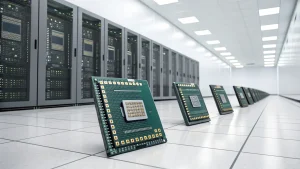
Integrated SIMs (iSIM) are called to be the next step in SIM card evolution. Unlike traditional SIM cards or eSIMs, they are integrated directly into the gadget’s main processor.
iSIMs are a superior evolution of eSIMs, offering greater efficiency, security, and design flexibility. By integrating the SIM directly into a device’s main processor, iSIMs eliminate the need for separate hardware, reducing size and power consumption. This integration also enhances security, making it harder to tamper with or extract credentials.
As carrier support grows, iSIMs are poised to become the standard for seamless, secure, and scalable mobile connectivity.
The Future of SIM Cards
Although many still think about the future of SIM cards positively, rapidly developing technologies leave no doubt – it is time for change. Traditional physical SIMs are rapidly becoming obsolete as industry shifts toward eSIMs and iSIMs. They are no longer just a convenience, but they are becoming the standard for connectivity all over the world.
It is important to note that eSIMs have been criticized for their limited compatibility. However, it is expected that they will improve soon.
All in all, it is predicted that new devices will soon no longer support traditional SIM cards. Due to their obvious limitations, eSIMs and iSIMs will undoubtedly take their place. So no matter how positively we view the current situation, the future is obvious.
Photo by Brett Jordan; Unsplash

Noah Nguyen is a multi-talented developer who brings a unique perspective to his craft. Initially a creative writing professor, he turned to Dev work for the ability to work remotely. He now lives in Seattle, spending time hiking and drinking craft beer with his fiancee.