You usually feel this architectural choice when a system stops behaving in a neat, linear way.
A customer clicks Buy, and suddenly, inventory, payments, fraud detection, email, shipping, analytics, and search indexing all depend on the same moment. If you built your system around request-response, that moment becomes a chain of synchronous calls. If you built it around events, that moment becomes a fact published into a stream, and other services react on their own timeline.
Plain-language definition: Request-response is a direct interaction where a client asks a specific service for an answer and waits for it. Event-driven architecture, EDA, is a style where services emit events, meaning facts about something that happened, and other services subscribe and react asynchronously.
Both approaches are valid. The real question is what you are optimizing for: tight control and immediate answers, or loose coupling and scalable reactions.
What experienced architects keep warning about
If you read beyond marketing pages and into practitioner essays and cloud architecture guides, several themes repeat.
Martin Fowler, Chief Scientist at Thoughtworks, has long cautioned that “event-driven” is an overloaded term. He breaks it into specific patterns such as event notification, event-carried state transfer, event sourcing, and CQRS. His point is simple: teams make better decisions when they are precise about which pattern they are adopting, because the tradeoffs differ dramatically.
Major cloud providers consistently emphasize that EDA is about loose coupling and independent scaling. The value is not that it is asynchronous for its own sake, but that producers and consumers do not depend on each other’s availability at runtime. Buffering, routing, and replay capabilities turn temporal coupling into queued work.
Microsoft’s architecture guidance also makes something clear that many teams overlook: event-driven systems often still use request-response internally when a synchronous answer is required. Hybrid designs are not a compromise; they are the norm.
Put together, the message from people who operate large systems is consistent. Event-driven architecture is a coordination strategy, not a silver bullet. It reduces certain classes of risk while introducing others.
The real difference: who owns coordination
It is tempting to frame this as synchronous versus asynchronous. That framing is too shallow.
The deeper distinction is who owns coordination.
In request-response systems, the caller owns the workflow. The caller decides which services to invoke, in what order, and what “done” means. The orchestration logic lives in one place.
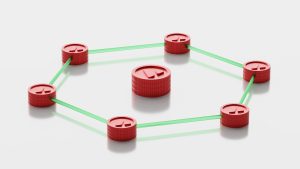
In event-driven systems, the producer emits a fact and relinquishes control. Consumers decide whether to react. Coordination becomes distributed and emergent.
That distinction has concrete consequences:
- Request-response optimizes for explicit, linear workflows.
- Event-driven optimizes for independent reactions and fan-out.
- Request-response failures cascade along call chains.
- Event-driven failures accumulate in queues and consumer lag.
The architecture style determines how your system fails, not just how it succeeds. (Mapping your dependency graphs in system latency reveals where those failure paths concentrate.)
A technical comparison you will recognize at 2 a.m.
| Dimension | Request-Response | Event-Driven Architecture |
|---|---|---|
| Runtime coupling | Tight, caller waits on callee | Loose, producers decoupled from consumers |
| Latency | Accumulates across the call chain | Producer fast, and downstream completion varies |
| Failure behavior | Cascading failures common | Backpressure, retries, dead-letter handling |
| Consistency | Easier strong consistency per flow | Often, eventual consistency across services |
| Fan-out | Manual orchestration required | Natural pub-sub fan-out |
| Observability | Straightforward tracing | Requires correlation IDs and lag metrics |
| Schema evolution | Versioned APIs | Versioned event contracts and compatibility strategy |
The table looks abstract. The pain shows up in production metrics.
A worked example: checkout latency and availability math
Imagine a checkout endpoint that must perform four downstream operations:
- Reserve inventory
- Authorize payment
- Run fraud checks
- Send confirmation email
Request-response chain
If all four are synchronous in one request, your p95 latency roughly equals the sum of their p95 latencies.
Assume:
- Inventory reserve: 80 ms
- Payment authorization: 250 ms
- Fraud check: 180 ms
- Email API call: 120 ms
Total p95 ≈ 80 + 250 + 180 + 120 = 630 ms, before your own business logic.
Now consider availability. If each downstream service has 99.9 percent availability, the combined availability when all must succeed in real time is:
0.999^4 ≈ 0.996
That is about 99.6 percent. Over 1,000,000 checkouts, roughly 4,000 would fail purely due to dependency availability, even if each service individually looks reliable.
You can add retries and circuit breakers, but that increases complexity and latency. (For a deeper look at how these small delays compound, see the latency tax.)
Event-driven alternative
In an event-driven approach, your checkout API might:
- Persist the order intent
- Publish an
OrderPlacedevent - Return success to the user
The user-facing p95 might drop to tens of milliseconds, because you no longer wait for fraud or email.
Inventory, payment, fraud, and email services consume the event and react independently. If the email service is down, orders still be processed. Emails queue and drain later.
The tradeoff is semantic. What does “success” mean? Is it “order accepted” or “order fully processed”? You have shifted from immediate end-to-end confirmation to eventual completion.
This is where many teams underestimate the design work required.
How to choose deliberately, not emotionally
Here is a practical four-step decision process I have used with teams evaluating this shift.
Step 1: Classify interactions as answer-needed or reaction-needed
If the caller truly needs an immediate answer to proceed, pricing, access control, payment authorization, or request-response is usually appropriate.
If the work is a reaction to a fact, update analytics, trigger email, notify partners, start downstream processing, events are often a better fit.
This single distinction resolves many debates.
Step 2: Decide whether you need a durable, replayable log
Not all event-driven systems are the same.
Simple pub-sub means new subscribers do not see past events. Log-based streaming systems persist events for replay. That difference changes everything from debugging to compliance.
If you anticipate adding new consumers who must rebuild the historical state, a durable event log becomes extremely valuable. It also increases your responsibility for data retention and privacy.
Be explicit about which model you are adopting.
Step 3: Treat event contracts as long-lived public APIs
With request-response, you version endpoints.
With EDA, you version event schemas and semantic meaning. A poorly named or underspecified event becomes technical debt across every consumer.
A short checklist prevents years of pain:
- Use past-tense event names such as
PaymentAuthorized - Include stable event IDs and correlation IDs
- Design for idempotency because duplicates happen
- Document schema compatibility expectations clearly
Event design is architecture, not plumbing.
Step 4: Budget for observability from day one
Request-response systems fail loudly. A 500 error surfaces immediately.
Event-driven systems fail quietly. Messages accumulate. Consumers lag. Dead-letter queues grow.
If you choose EDA, you must invest in:
- Consumer lag dashboards
- Dead-letter monitoring and replay processes
- Distributed tracing across async boundaries
- Clear ownership of each event stream
Without this, you gain decoupling but lose clarity.
Hybrid patterns that work in the real world
Most mature systems blend both approaches.
One common pattern is sync at the edge, async in the core. External clients interact via HTTP or gRPC, but internal services communicate via events.
Another is command plus event. A service receives a synchronous command, mutates state, then emits events describing the change.
A third pattern is to use events to build read models and request-response to query them, a lightweight form of CQRS.
These hybrids reflect a practical truth. You rarely need to choose one ideology. You choose coordination styles per interaction.
FAQ
Is event-driven architecture always eventually consistent?
Across service boundaries, yes, in most cases. You can maintain strong consistency inside a service, but cross-service workflows typically become eventually consistent unless you introduce distributed transactions.
Does EDA eliminate APIs?
No. You still need request-response for queries, control-plane operations, and user-facing interactions. Events complement APIs; they do not replace them.
What is the highest hidden cost of EDA?
Correctness under retries and duplication. You must assume at-least-once delivery and design idempotent consumers. That discipline is non-negotiable.
When is request-response the safer default?
When you require strong end-to-end consistency, your workflows are short and stable, or your team lacks mature async observability and operational tooling.
Honest Takeaway
If your system requires many independent reactions to the same business fact, and you care about resilience, fan-out, and independent scaling, event-driven architecture is often the stronger long-term foundation. It transforms runtime dependencies into buffered work, which changes your failure modes in powerful ways.
If you need immediate certainty, simple mental models, and straightforward tracing, request-response remains unmatched.
The most effective systems are rarely ideological. They use request-response, where answers are required, and events where reactions are sufficient. The hard part is not choosing a pattern. The hard part is being explicit about why you chose it and designing for the consequences. (For a structured way to pressure-test those choices, see architecture review behaviors that catch what tests miss.)

Kirstie a technology news reporter at DevX. She reports on emerging technologies and startups waiting to skyrocket.