The rapid adoption of Software as a Service (SaaS) solutions has transformed business operations, offering unparalleled flexibility and scalability. However, this shift has also introduced significant security challenges. In 2024 alone, 27% of organizations experienced security breaches in their public cloud infrastructure, with 23% of these incidents attributed to cloud misconfigurations. Alarmingly, 88% of data breaches were caused by human error, highlighting the critical need for stricter security measures.
High-profile incidents have further highlighted these vulnerabilities. For instance, the Midnight Blizzard attack exploited misconfigurations within Microsoft’s environment, leading to unauthorized access to sensitive corporate emails. These events highlight the need for thorough SaaS Security Posture Management (SSPM) solutions to find and fix security weaknesses, helping protect sensitive data in today’s complex digital world.
11 Best SSPM Vendors in 2025
As SaaS usage grows, so does the need for tools that can effectively manage and secure it. Here’s a look at 11 reliable SSPM solutions in 2025 that offer strong features, scalability, and ease of use to help secure your SaaS environment:
1. Reco

Reco is a dynamic SSPM solution that provides organizations with comprehensive visibility and control over their SaaS environments. By mapping interactions between users, applications, and data, Reco enables security teams to proactively identify and mitigate risks associated with misconfigurations, over-permissioned accounts, and unauthorized access.
Key Features:
-
- Comprehensive Application Discovery: Reco offers full visibility into SaaS applications, including sanctioned and unsanctioned apps, along with associated identities and their permission levels. This ensures that no application goes unmonitored, reducing potential security blind spots.
- Real-Time Posture Management: The platform continuously monitors SaaS configurations, detecting misconfigurations as they occur. This immediate detection allows for swift remediation, maintaining a robust security posture and preventing potential breaches.
- Identity Threat Detection and Response (ITDR): Reco’s ITDR capabilities provide instant alerts on data theft, account compromise, and configuration drifts. With numerous pre-built detection controls, organizations can respond automatically using existing tools, enhancing overall security efficiency.
- Data Exposure Management: Reco monitors and tracks all files and folders to identify data that has been shared publicly, with personal accounts, with risky accounts, or via other potential exposure points.
2. Adaptive Shield (CrowdStrike)
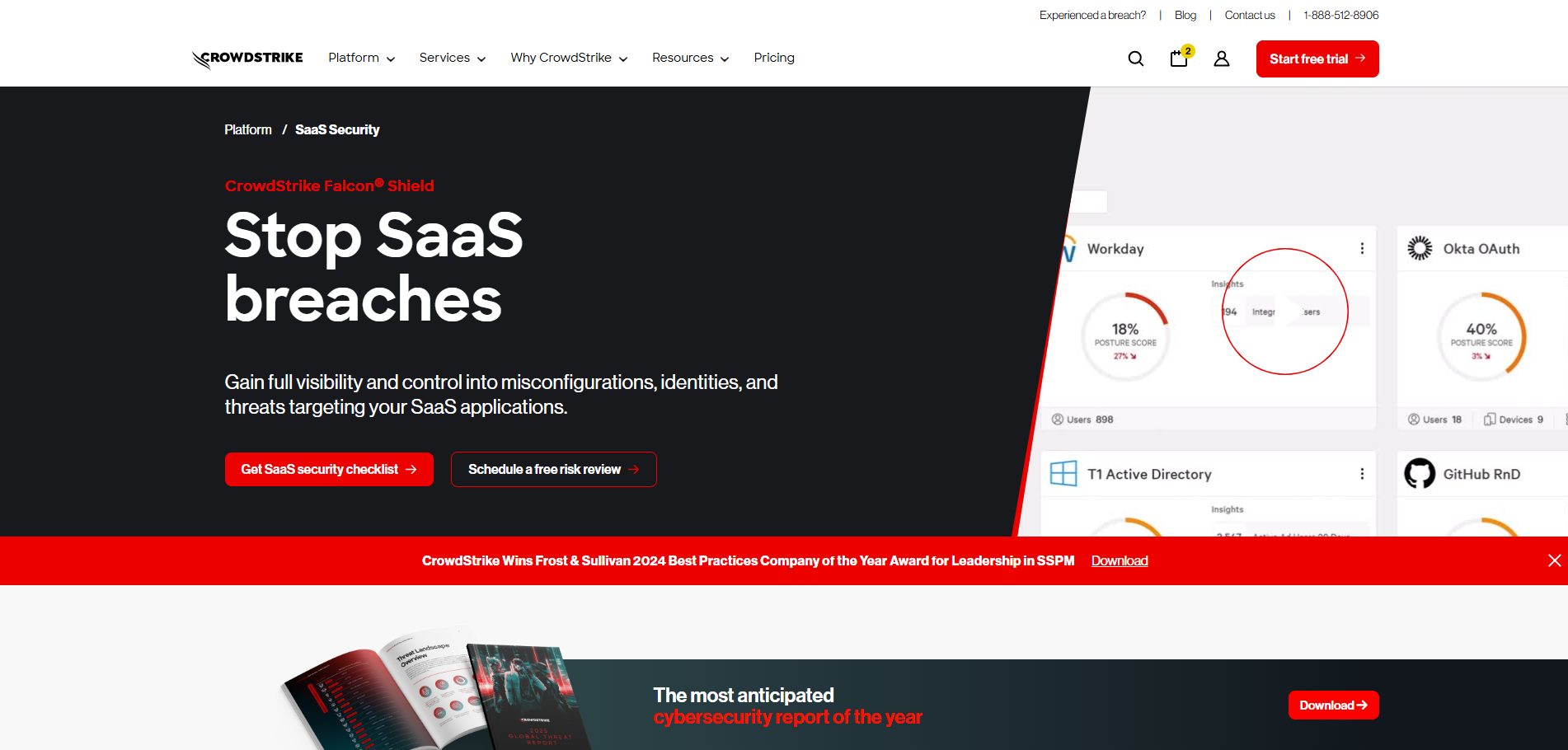
Adaptive Shield, now integrated into CrowdStrike’s Falcon platform, enables organizations to secure their SaaS applications by providing visibility into misconfigurations, identities, and potential threats.
Key Features:
- Extensive Application Integration: Supports over 150 out-of-the-box integrations, enabling organizations to monitor and manage a wide range of SaaS applications effectively.
- Real-Time Threat Detection: Continuously monitors user activities and application configurations to identify and alert to suspicious behaviors, facilitating prompt responses to potential threats.
- Automated Remediation: Offers over 5,000 built-in security checks and allows for custom configurations to detect misconfigurations and automate corrective actions, enhancing overall security posture.
3. AppOmni

AppOmni is a leading SSPM solution that empowers organizations to secure their SaaS environments by offering deep visibility and control over application configurations and user permissions. Its platform is designed to prevent data breaches and ensure compliance across various SaaS applications.
Key Features:
- Comprehensive Configuration Management: Continuously tracks and evaluates SaaS application settings to identify misconfigurations and enforce security best practices, helping minimize data exposure risks.
- User Permission Management: Provides detailed visibility into user permissions and access levels, enabling organizations to identify and manage excessive or unnecessary privileges.
- Security Policy Enforcement: Allows for the creation and enforcement of security policies across multiple SaaS applications, ensuring consistent protection and compliance with regulatory requirements.
4. Obsidian Security

Obsidian Security offers a comprehensive SaaS Security Posture Management platform designed to protect organizations’ SaaS environments by focusing on application posture, identity security, and data governance.
Key Features:
- Continuous Posture Management: Regularly assesses and monitors SaaS application configurations to identify and remediate misconfigurations, ensuring compliance with security best practices.
Identity Threat Detection and Response: Detects and mitigates identity-based threats by analyzing user behavior and access patterns, helping prevent unauthorized access and potential data breaches. - Third-Party Integration Oversight: Monitors and manages third-party apps connected to main SaaS platforms, reducing risks from too many permissions and possible data leaks.
5. DoControl
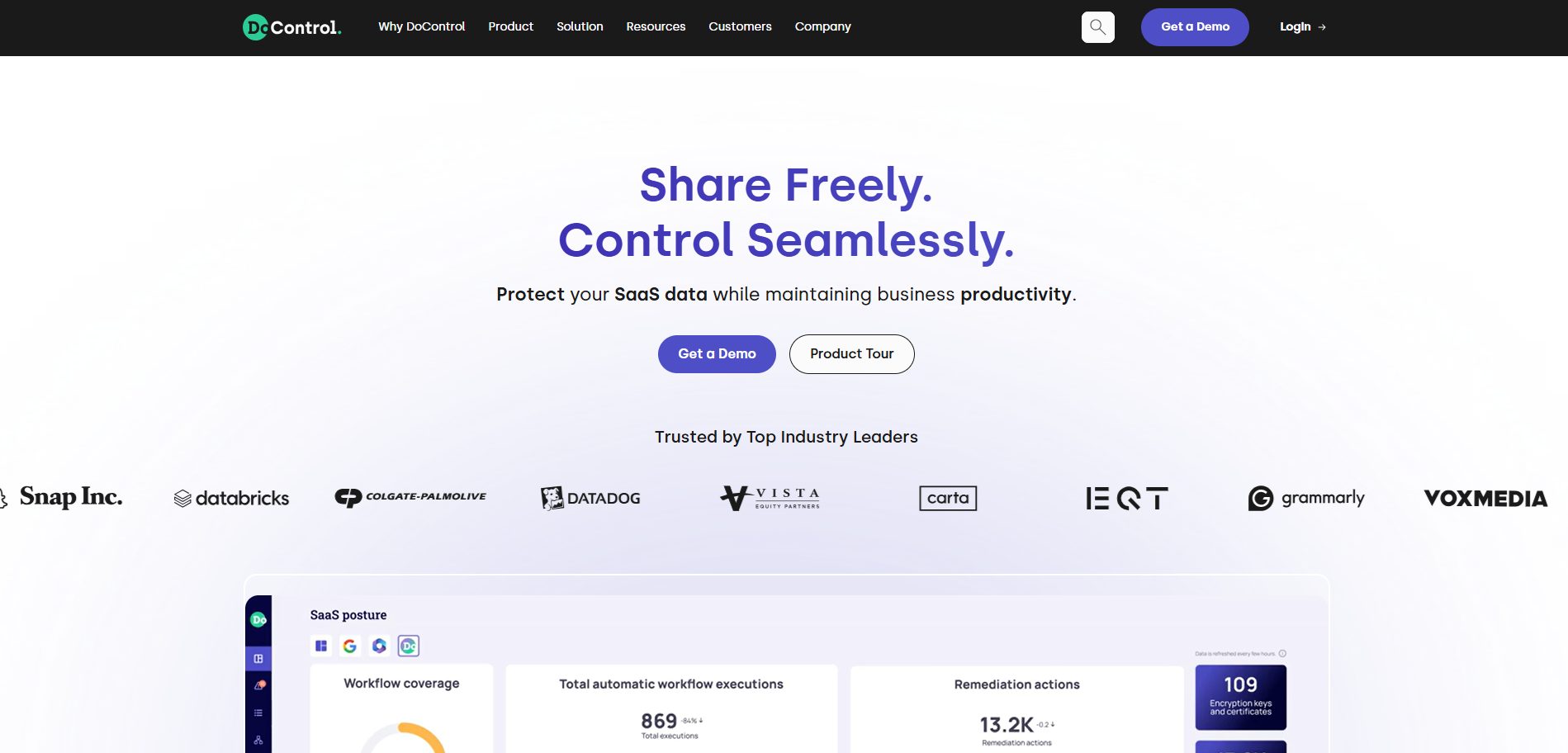
DoControl enables organizations to protect their SaaS applications through comprehensive visibility, real-time threat detection, and automated remediation. By focusing on data access governance, DoControl ensures that sensitive information remains secure across various SaaS environments.
Key Features:
- Data Access Governance: Automates access controls, giving organizations clear insight into how data is classified, used, and exposed.
- Identity Threat Detection & Response: Consolidates user data into a unified identity profile, evaluating risk levels to detect and respond to suspicious user behavior quickly.
- Shadow App Discovery & Remediation: This process identifies all active and inactive third-party apps, evaluates the risk of over-permissioned, malicious, or dormant apps, and enables the removal or deactivation of unnecessary ones.
6. Grip Security
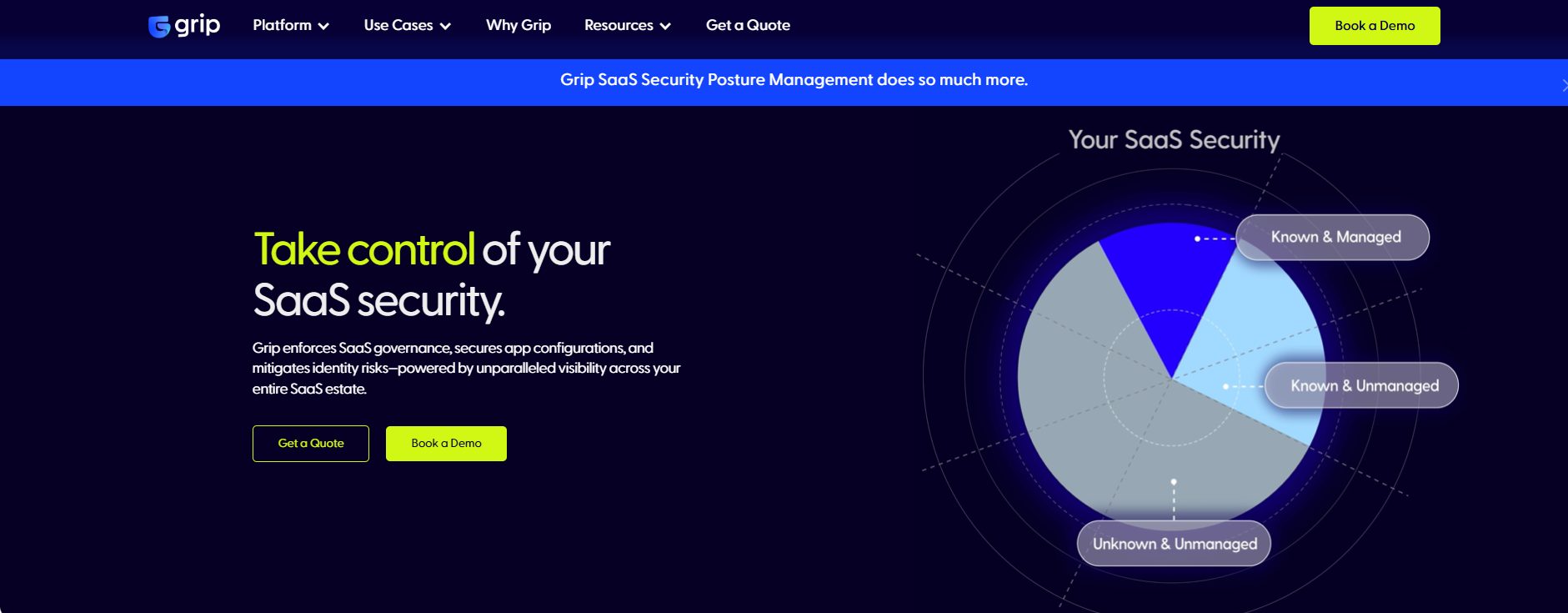
Grip Security offers a SaaS Security Control Plane (SSCP) designed to help organizations identify, prioritize, and mitigate risks associated with SaaS applications. By leveraging identity as the central control point, Grip provides profound visibility into the entire SaaS ecosystem, including shadow IT and unauthorized applications.
Key Features:
- Shadow SaaS Discovery: Uses identity-based discovery methods to uncover and secure shadow SaaS and rogue cloud accounts, providing a comprehensive inventory for security teams.
- Identity Risk Management: Manages the security posture of identities and SaaS capabilities within the enterprise environment, enabling proactive measures to prevent security breaches.
- Automated Remediation: Incorporates automated incident response capabilities to address identified risks promptly, reducing manual intervention and enhancing security efficiency.
7. Palo Alto Networks
Palo Alto Networks offers a comprehensive SSPM solution designed to help organizations detect and remediate misconfigurations in their sanctioned SaaS applications through continuous monitoring.
Key Features:
- Misconfiguration Detection: Continuously assesses SaaS application configurations to identify deviations from security best practices, categorizing them by severity to aid in risk prioritization.
- Effortless Remediation: Provides alerts for misconfigurations and offers straightforward remediation options, including one-click fixes and manual instructions, to promptly address security issues.
- Integration with CASB: Seamlessly integrates with Palo Alto Networks’ Cloud Access Security Broker to deliver a unified approach to SaaS security, enhancing visibility and control over both sanctioned and unsanctioned applications.
8. Microsoft Defender for Cloud Apps
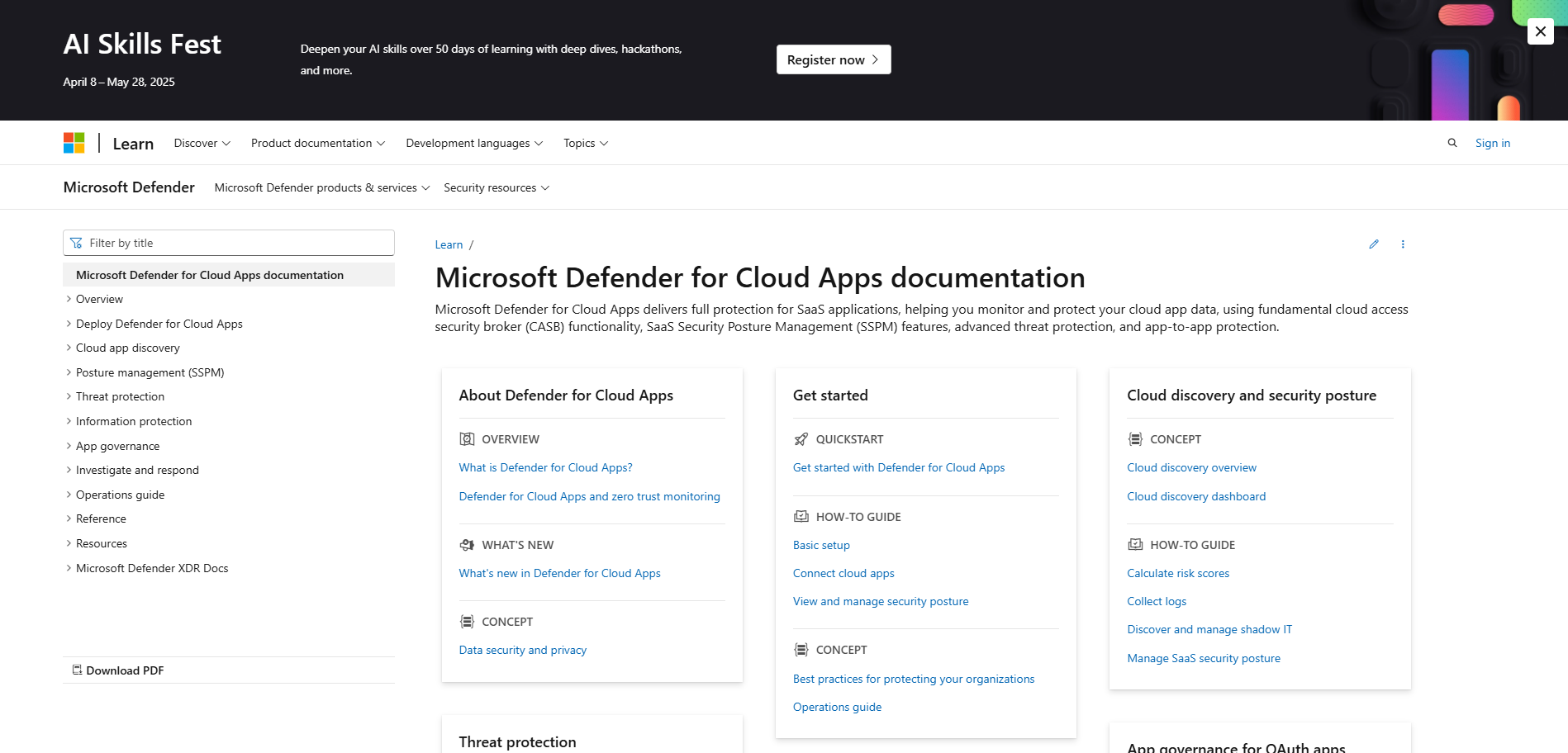
Microsoft Defender for Cloud Apps is a robust Cloud Access Security Broker (CASB) that gives organizations greater visibility and control over their cloud tools, ensuring secure and compliant usage.
Key Features:
- Comprehensive SaaS Discovery: Identifies and assesses all cloud services in use, assigning risk rankings and providing insights into user activities and third-party app integrations.
- SaaS Security Posture Management: Surfaces misconfigurations and recommends specific actions to strengthen the security posture of connected apps, based on industry standards and best practices.
- Information Protection and Threat Detection: Integrates with Microsoft Purview Information Protection to identify and control sensitive information, and offers advanced threat protection through continuous monitoring and analysis of user behavior and app activities.
9. Spin.AI (SpinOne)
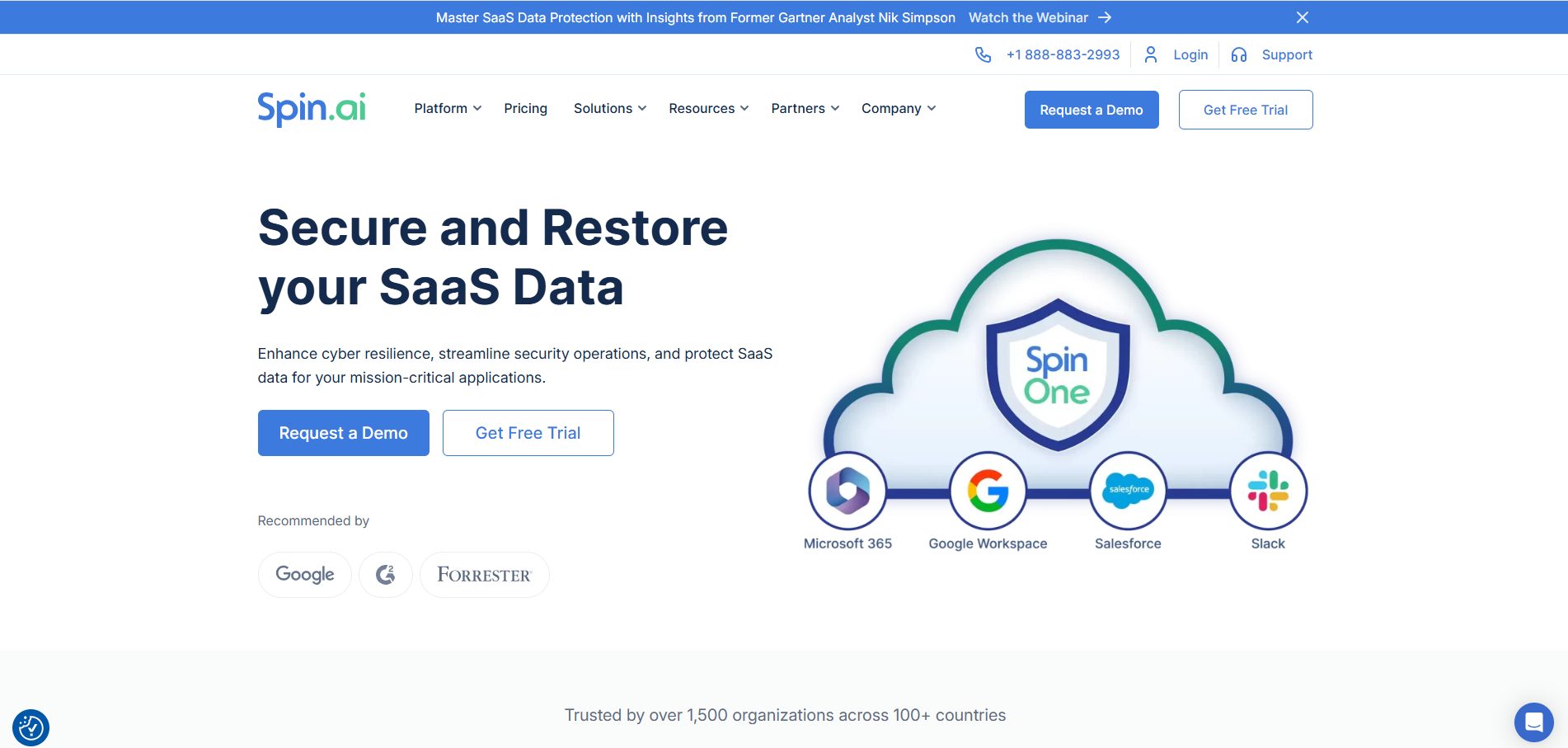
Spin.AI’s SpinOne is an all-in-one SaaS security platform built to protect mission-critical applications such as Google Workspace, Microsoft 365, Salesforce, and Slack. It offers comprehensive security measures to mitigate data leaks, data loss, ransomware attacks, and non-compliance risks.
Key Features:
- SaaS Security Posture Management: Provides full visibility and fast incident response for misconfigurations and unauthorized third-party apps and browser extensions, helping organizations reduce security, compliance, and data loss risks.
- SaaS Data Leak Prevention and Data Loss Protection: Controls access to sensitive SaaS data with customizable permissions and detailed reporting, supporting fast data recovery to limit operational disruption.
- SaaS Ransomware Detection and Response: Detects and stops ransomware attacks in real-time, reducing business downtime to less than two hours and decreasing recovery costs by over 90% through automated backup and recovery processes.
10. Valence Security
Valence Security’s SSPM solution helps organizations identify, assess, and remediate security risks across their SaaS applications. It provides deep visibility into app settings, user identities, data, and integrations, allowing security teams to address threats proactively.
Key Features:
- SaaS Discovery: Continuously discovers and inventories both sanctioned and unsanctioned SaaS applications, offering organizations a complete view of their SaaS ecosystem to identify shadow IT and manage SaaS sprawl.
- SaaS Risk Remediation: Provides flexible remediation options, including manual actions, automated workflows, and business user collaboration, to address identified security risks effectively and scale risk reduction efforts.
- SaaS Identity Threat Detection and Response: Monitors activities of both human and non-human identities to detect suspicious behavior, enabling organizations to respond promptly to potential security incidents.
11. Cloudflare One
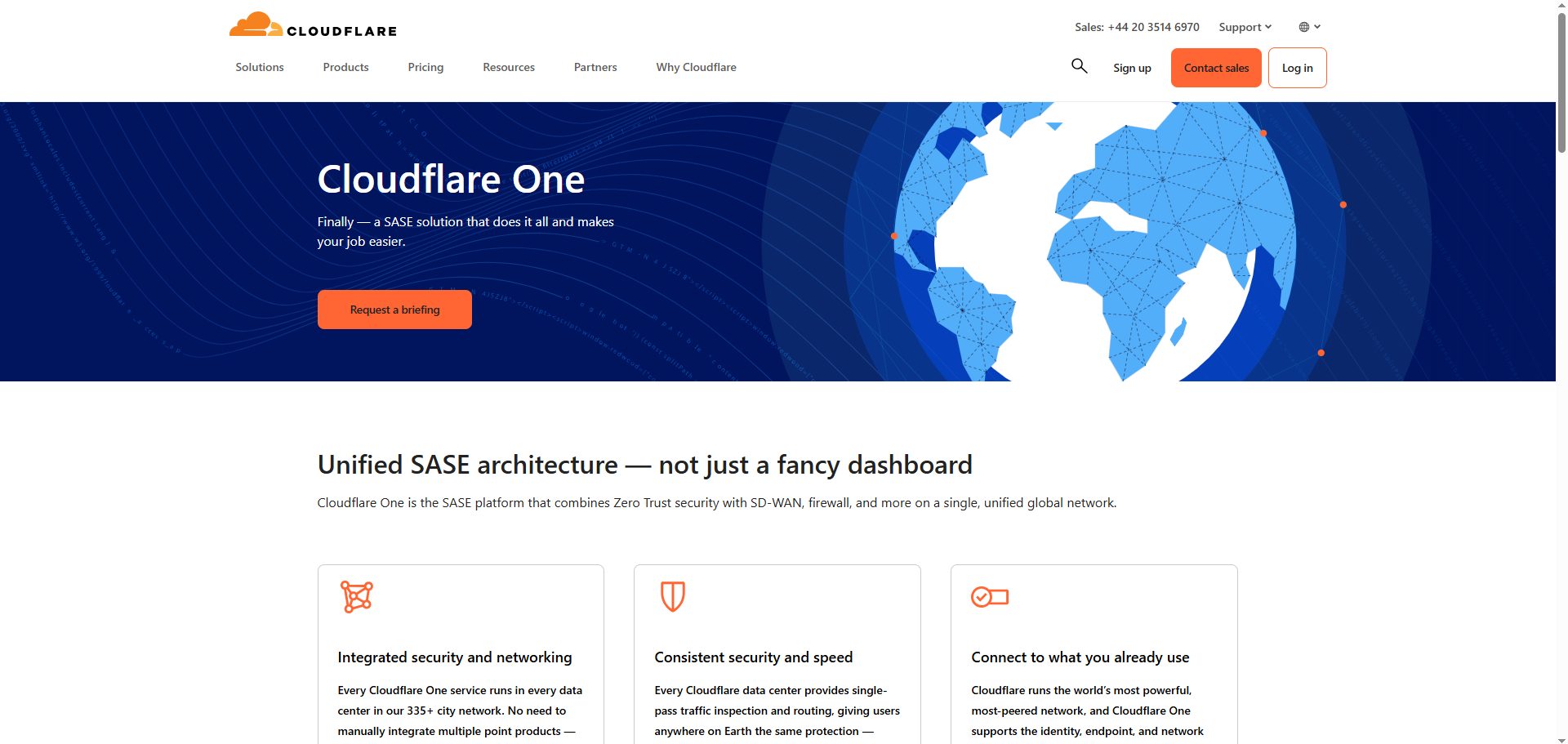
Cloudflare One is a Secure Access Service Edge (SASE) platform that integrates networking and security services to provide unified protection and performance across an organization’s entire IT infrastructure. While not exclusively an SSPM solution, Cloudflare One encompasses capabilities that enhance SaaS security.
Key Features:
- Cloud Access Security Broker: Offers visibility and control over SaaS applications by detecting misconfigurations, unauthorized user activities, and potential data exposures, helping prevent data leaks and compliance violations.
- Data Loss Prevention: Implement policies to prevent sensitive data from being shared or accessed inappropriately within SaaS applications, reducing the risk of data breaches.
- Zero Trust Network Access: Ensures secure, identity-aware access to SaaS applications, enforcing strict verification for every user and device attempting to connect, thereby minimizing unauthorized access risks.
Why is SSPM Essential for Securing SaaS Applications?
As SaaS adoption continues to grow rapidly, organizations face unprecedented challenges in managing their SaaS security across a sprawling ecosystem of cloud applications. Traditional security tools fail to adequately address the nuances of SaaS environments, where misconfigurations, excessive permissions, and unmanaged third-party integrations can quickly lead to data exposure.
SaaS Security Posture Management solutions are purpose-built to tackle these risks.
An SSPM solution enables security teams to detect and resolve problems prior to exploitation by constantly monitoring configurations, user activity, and application interconnectivity. It also plays a key role in compliance readiness by enforcing best practices and providing audit-ready visibility.
Key Considerations to Choose the Right SSPM Vendor
Choosing the right SSPM solution means aligning it with your organization’s risk profile, regulatory obligations, and SaaS sprawl. The ideal platform should balance comprehensive coverage with usability and seamless integration.
- Coverage: Ensure the tool supports a wide range of critical SaaS applications used across your organization.
- Automation: Look for automated remediation, alerting, and policy enforcement to reduce manual effort.
- Integrations: Prioritize vendors that integrate with your existing identity providers, SIEMs, and ticketing systems.
- Scalability: The platform should scale with your SaaS footprint without performance or visibility gaps.
- Ease of Use: A clear, intuitive interface helps reduce onboarding time and improve operational efficiency.
- Compliance Support: Built-in frameworks and reporting capabilities simplify audit prep and regulatory alignment.
- Risk Visibility: Real-time insight into user behavior, misconfigurations, and third-party access is essential for proactive defense.
Conclusion
The growing complexity of SaaS environments calls for smarter and more adaptive security solutions. The 11 SSPM vendors featured in this guide are among the most trusted in SaaS protection, providing the capabilities organizations need to detect misconfigurations, uncover shadow IT, manage access risks, and maintain compliance.
Identity-driven visibility, efficient remediation, and seamless integration with your existing stack are all critical capabilities in today’s SaaS landscape. The right SSPM platform brings these elements together to strengthen your overall security posture. As threats evolve and SaaS usage expands, adopting a purpose-built SSPM solution is not just beneficial but essential for modern enterprise security.
Featured Image by FlyD; Unsplash

Kyle Lewis is a seasoned technology journalist with over a decade of experience covering the latest innovations and trends in the tech industry. With a deep passion for all things digital, he has built a reputation for delivering insightful analysis and thought-provoking commentary on everything from cutting-edge consumer electronics to groundbreaking enterprise solutions.