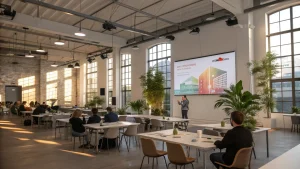
Distributed engineering organizations often rely on diverse teams to drive innovation and product development. Having led many such global engineering initiatives myself, I have found my success on the knowledge that achieving quality in and across teams is foremost about establishing and trusting robust systems that enable collaboration between team members. Of course, this is much easier said than done.
My current company’s successful distributed engineering operations rest on one key element: effective communication. You cannot have an internationally distributed team if team members cannot communicate effectively with one another. During my time as a project coordinator, I discovered that having a structured communication protocol makes all the difference in the world. My team and I developed this protocol. It became an ensemble cast of various meeting types and asynchronous communication tools, all of which collaborate with one another to ensure that our diverse team of engineers has the right information at the right time, that all the individuals in the team know their roles and responsibilities, and that they have what they need to do their jobs and be effective.
CAD Workflows and Design Standards Across Time Zones
The most daunting task in global product development is maintaining efficient CAD workflows across many places. I have found that the best way to achieve this is to set up a centralized PDM system with a robust version control system and clear check-in/check-out procedures. That prevents conflicts and ensures that everybody is working with the latest design iteration. The setup of standard modeling practices that are applied across all locations, as well as naming conventions that make sense and are followed consistently, has proven essential for maintaining design intent and ensuring that the places can effectively collaborate. However, even with these systems in place, it’s still necessary to use automated quality checks and validation procedures that catch potential issues before the designs are sent to the next location in the development chain.
Design Consistency
Achieving design consistency across dispersed teams necessitates one clear standard and regular validation of that standard in team reviews. I’ve successfully created design standards that cover everything from GD&T (geometric dimensioning and tolerancing) principles to standard parts libraries and getting teams to use them. These standards serve as a single source of truth for each team, helping to align their efforts. Team members from various locations come together in regular design reviews to assess work against established standards and ensure clarity in the standards and their consistent application across teams.
The careful planning and coordination of project development across time zones can be complicated—yet well worth the effort—when the number of project team members working in the various time zones grows. To avoid constantly “working in public,” I have come to prefer dividing big projects down into smaller, more manageable pieces that can be tackled fairly independently by the team members who work in different time zones. Team members working in one time zone can advance the work from their side while their colleagues in the next time zone are off duty—a somewhat virtual assembly line that can give the illusion of a continually moving project.
Building a Culture of Continuous Learning and Mentorship
For teams that are spread out worldwide, being well organized and sharing information are vital. My experience mentoring an international engineering team has taught me that the best way to do this is through living documentation. This is not to be confused with the kind of documentation that is done at the end of a project or that captures only “final” designs. Living documentation reflects what you would hope is a more mature way of working. It involves recording what was decided and the rationale behind making that decision, what discussions led up to it, and what will probably happen next. I would argue that routine maintenance of such a knowledge base is useful to both your team and your organization.
Mentorship plays an important role in elevating the capabilities of global engineering teams. I’ve found that training offshore engineers in critical areas like Design for Assembly (DFA) and Design for Manufacturing (DFM) requires a multi-faceted approach. Virtual video conferencing sessions allow for regular knowledge transfer. Still, I’ve found that periodically bringing offshore team members onsite to interact with physical components and understand assembly processes firsthand is invaluable. This hands-on experience helps engineers grasp the practical implications of their design decisions and fosters stronger working relationships. We’ve seen significant improvements in design quality and team collaboration by investing in comprehensive training and creating opportunities for direct exposure to manufacturing processes. These initiatives not only enhance technical capabilities but also build lasting professional bonds across geographical boundaries.
Driving Performance and Innovation Through Structure
For the global team, I have established obvious ways of measuring performance that focus not only on the efficiency of the process but also on the quality of output. We hold regular retrospectives that bring together team members from all locations. Retrospectives serve two primary functions: They allow the team to identify and discuss potential areas for improvement, and they give team members an opportunity to share and celebrate recent successful practices. Both functions are critical to developing a culture of continuous improvement.
As organizations in the engineering domain expand across the globe, the management of far-flung product-development teams assumes great significance. Achieving this balance demands clear mandates and communication, a Mandarin-like ability to pronounce structured processes, maintain clear communication protocols, and an incorruptible, robust technical infrastructure. Focus on these fundamentals, and you’re bound to produce highly effective global engineering teams, in my experience.
Over my career directing cross-disciplinary teams and overseeing intricate vehicle development projects, I’ve seen how these practices can transform geographically dispersed engineering operations from a mandatory challenge into a competitive advantage. As we continue expanding the frontiers of worldwide collaboration, maintaining our insistence on fundamentals while accepting new tools and technologies will be the deciding factor in our success.
About the Author:

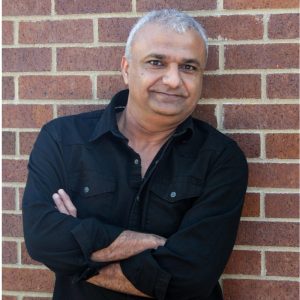
Brijesh Pandya is a mechanical design engineer with over 20 years of experience in the off-road vehicle industry, where he has demonstrated exceptional innovation through 13 applied patents and one approved patent. His expertise spans concept design, product development, and value analysis engineering, with particular success in creating simple, effective, and adoptable designs that have been embraced across both military and recreational applications. As a leader in cross-functional product development, Brijesh has built and managed successful offshore engineering teams while driving innovation in vehicle systems. His contributions to the transportation technology field have earned him recognition, including a Bronze Stevie® Award and Employee of the Year Award. Throughout his career, Brijesh has maintained a focus on enhancing customer experience and product performance while fostering strong partnerships between onshore and offshore engineering teams.

Brijesh Pandya is a mechanical design engineer with over 20 years of experience in the off-road vehicle industry, where he has demonstrated exceptional innovation through 13 applied patents and 1 approved patents. His expertise spans concept design, product development, and value analysis engineering, with particular success in creating simple, effective, and adoptable designs that have been embraced across both military and recreational applications. As a leader in cross-functional product development, Brijesh has built and managed successful offshore engineering teams while driving innovation in vehicle systems. His contributions to the transportation technology field have earned him recognition including a Bronze Stevie® Award and Employee of the Year Award. Throughout his career, Brijesh has maintained a focus on enhancing customer experience and product performance while fostering strong partnerships between onshore and offshore engineering teams.