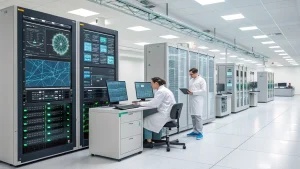
You have probably felt the difference within the first few weeks. One organization ships steadily, handles incidents without heroics, and seems to retain its best engineers year after year. Another moves fast in bursts, lives in Slack at all hours, and quietly churns senior talent while celebrating “hustle.” That second environment is not just unhealthy. It’s burnout factories. The gap between the two is rarely explained by headcount or tech stack. It shows up in deeper patterns around how systems are designed, how work flows, and how leadership treats technical reality. These patterns are not slogans. They are emergent properties of choices made under pressure, often years earlier. If you have built or scaled production systems long enough, you can recognize them quickly. The good news is that these patterns are learnable and, with effort, correctable. The bad news is that ignoring them compounds faster than almost any form of technical debt.
1. They design for steady throughput, not heroic bursts
Sustainable organizations optimize for consistent delivery over time, not peak output during crunch periods. You see this in how work is sized, how WIP limits are enforced, and how release pipelines are structured. Teams plan around what can be delivered with normal working hours and predictable on call rotations. Burnout factories implicitly reward spikes of effort. Shipping depends on late nights, context switching, and a few engineers carrying the system in their heads. The tradeoff is obvious. Heroic bursts feel productive short term, but they destroy system reliability and human reliability together.
2. Operational load is treated as first class work
In healthy orgs, on call load, incident response, and operational toil are visible, measured, and actively reduced. Leaders ask how many alerts wake people up, how often runbooks actually work, and where automation meaningfully reduces noise. This echoes lessons from Google SRE, where error budgets and toil tracking made operations an engineering problem rather than a personal burden. Burnout factories talk about reliability but schedule teams as if incidents are free. When operational work is invisible, it grows unchecked and silently taxes every sprint.
3. Technical debt is managed explicitly, not rhetorically
Every organization has technical debt. The separation happens in whether debt is tracked, prioritized, and paid down intentionally. Sustainable teams maintain explicit debt backlogs tied to business risk. They refactor critical paths, simplify data models, and invest in test coverage where change frequency is highest. Burnout factories rely on vague promises to “clean it up later.” Over time, change becomes slower and riskier, and engineers compensate with stress and workarounds. The system becomes brittle, and so do the people maintaining it.
4. Incident response optimizes learning, not blame
After an outage, sustainable orgs focus on understanding system behavior. Postmortems dig into contributing factors like alerting gaps, unclear ownership, or unsafe deployment patterns. Netflix’s chaos engineering culture reinforced this by normalizing failure as a way to surface hidden coupling before it hurts customers. Burnout factories treat incidents as personal failures. Engineers learn to hide mistakes, avoid risk, and silently absorb stress. The organization loses learning velocity exactly where it matters most.
5. Staff engineers amplify teams, not absorb dysfunction
In healthy environments, senior and staff engineers spend their time shaping architecture, improving developer experience, and reducing friction for multiple teams. Their leverage comes from creating clarity and better systems. In burnout factories, senior engineers become shock absorbers. They patch fragile systems, resolve escalations, and translate chaos upward. This feels valuable, but it masks underlying problems. When senior engineers leave, the organization realizes how much unsustainable load was hidden behind individual effort.
6. Capacity planning accounts for human limits
Sustainable orgs plan with slack. Not wasted time, but intentional buffer for incidents, learning, and unexpected work. Roadmaps assume engineers are not machines and that cognitive load matters. This mirrors research from Accelerate showing that high performing teams balance speed with stability. Burnout factories plan at 100 percent utilization on paper and rely on overtime to handle reality. Over time, every surprise becomes an emergency, and every emergency erodes trust in planning.
7. Leadership treats engineering constraints as real constraints
The final pattern is cultural but deeply technical. In sustainable orgs, leadership accepts that distributed systems, data consistency, and human cognition impose limits. Product plans adapt to those realities. In burnout factories, constraints are reframed as attitude problems. Engineers are told to “move faster” without changes to architecture, staffing, or scope. This creates chronic dissonance between what the system can do and what leadership expects. Engineers pay the difference with their energy and attention.
Sustainable engineering organizations are not slower or less ambitious. They are more honest about how systems and people actually behave under load. The patterns above reinforce each other. Ignore one long enough and the rest start to degrade. For senior technologists, the work is not just shipping features but shaping these patterns deliberately. Small changes in how work is planned, how incidents are handled, or how debt is surfaced can compound into years of retained talent and resilient systems. The alternative compounds too, just in the opposite direction.

Kirstie a technology news reporter at DevX. She reports on emerging technologies and startups waiting to skyrocket.