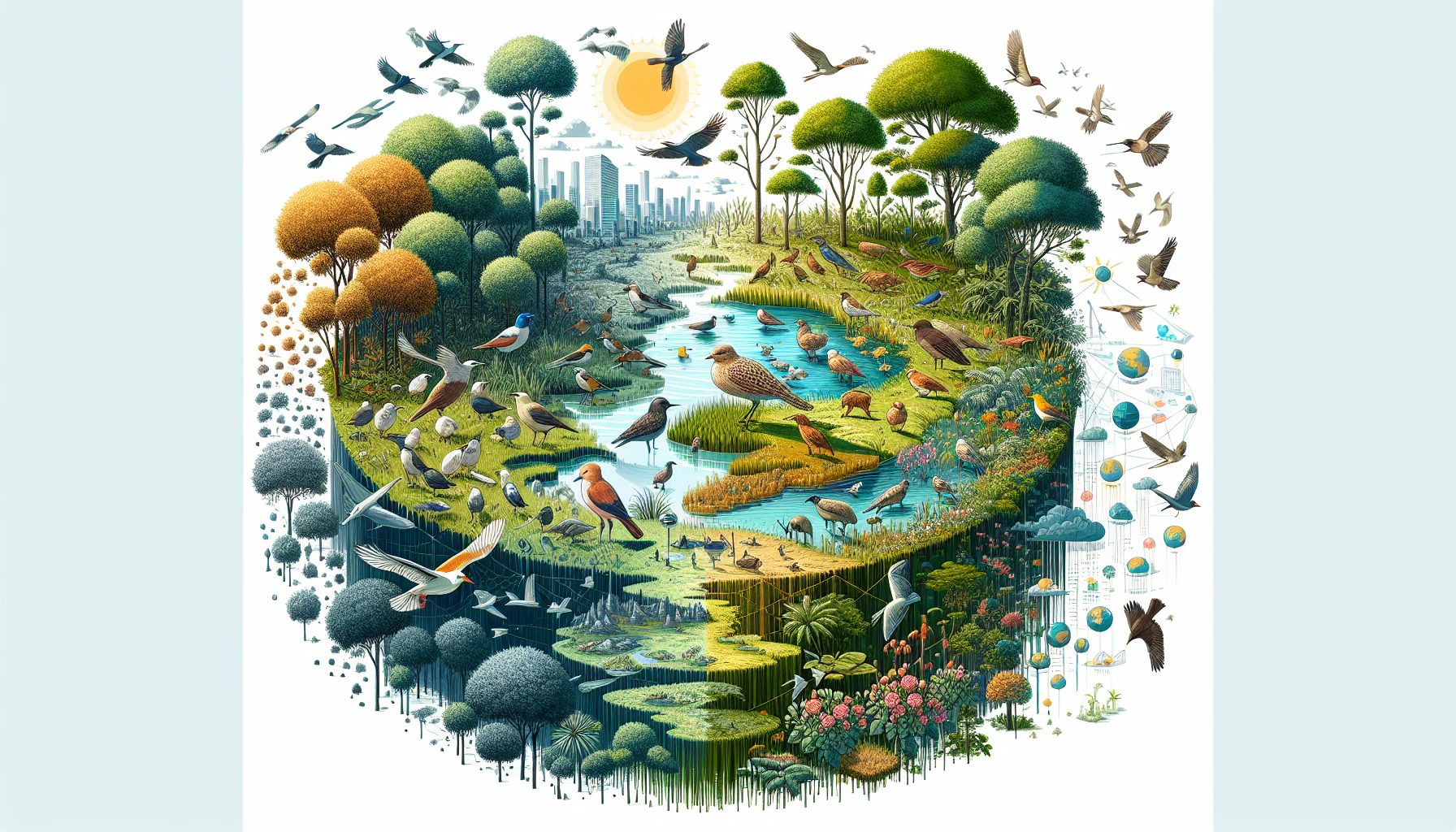
Birds are shifting their behavior in response to climate change, a new study from UCLA reveals. The research, which analyzed 27 years of data across 311 North American bird species, found that birds are adapting in three main ways: moving northward, ascending to higher elevations, and adjusting their breeding schedules. The study, published in Nature Ecology and Evolution, shows that birds are generally moving away from the heat.
They are shifting their ranges northward by an average of 1.1 kilometers per year and upward by 1.2 meters annually. However, the most significant adaptations are in the form of phenological changes, with birds advancing their breeding dates by an average of 0.08 days per year. “Of the temperature tracking we’ve observed in birds, 64% is due to phenology tracking alone,” said Monte Neate-Clegg, UCLA ecologist and lead author of the study.
Birds seem to find adjusting their timing easier and more efficient than moving long distances.
Birds shifting ranges and timelines
Despite these efforts, the study reveals that birds’ adaptations are not keeping pace with the rate of climate change.
The adjustments made by birds in the study accounted for only one-third of what would be needed to stay on track with the rate of warming. “In order to best target our conservation efforts, we need to know how species are and are not adapting to ongoing climate change,” said Morgan Tingley, a UCLA professor of ecology and the senior author of the study. “While shifting the timing of nesting may help in the short term, if they do not move in the long term, greater conservation efforts are likely to be necessary.”
The study also found significant variability among species.
Some, like the lesser goldfinch, are rapidly moving north and breeding earlier, while others, such as the black phoebe, are unexpectedly shifting south and downward, likely due to factors like urbanization, precipitation changes, and habitat availability. The research highlights the importance of understanding how birds adapt to climate change and suggests that conservation strategies should focus not only on habitat protection but also consider the timing of ecological events. The findings underscore the urgency of addressing climate change and the need for more comprehensive conservation efforts to support birds in adapting to rapid environmental shifts.

Cameron is a highly regarded contributor in the rapidly evolving fields of artificial intelligence (AI) and machine learning. His articles delve into the theoretical underpinnings of AI, the practical applications of machine learning across industries, ethical considerations of autonomous systems, and the societal impacts of these disruptive technologies.