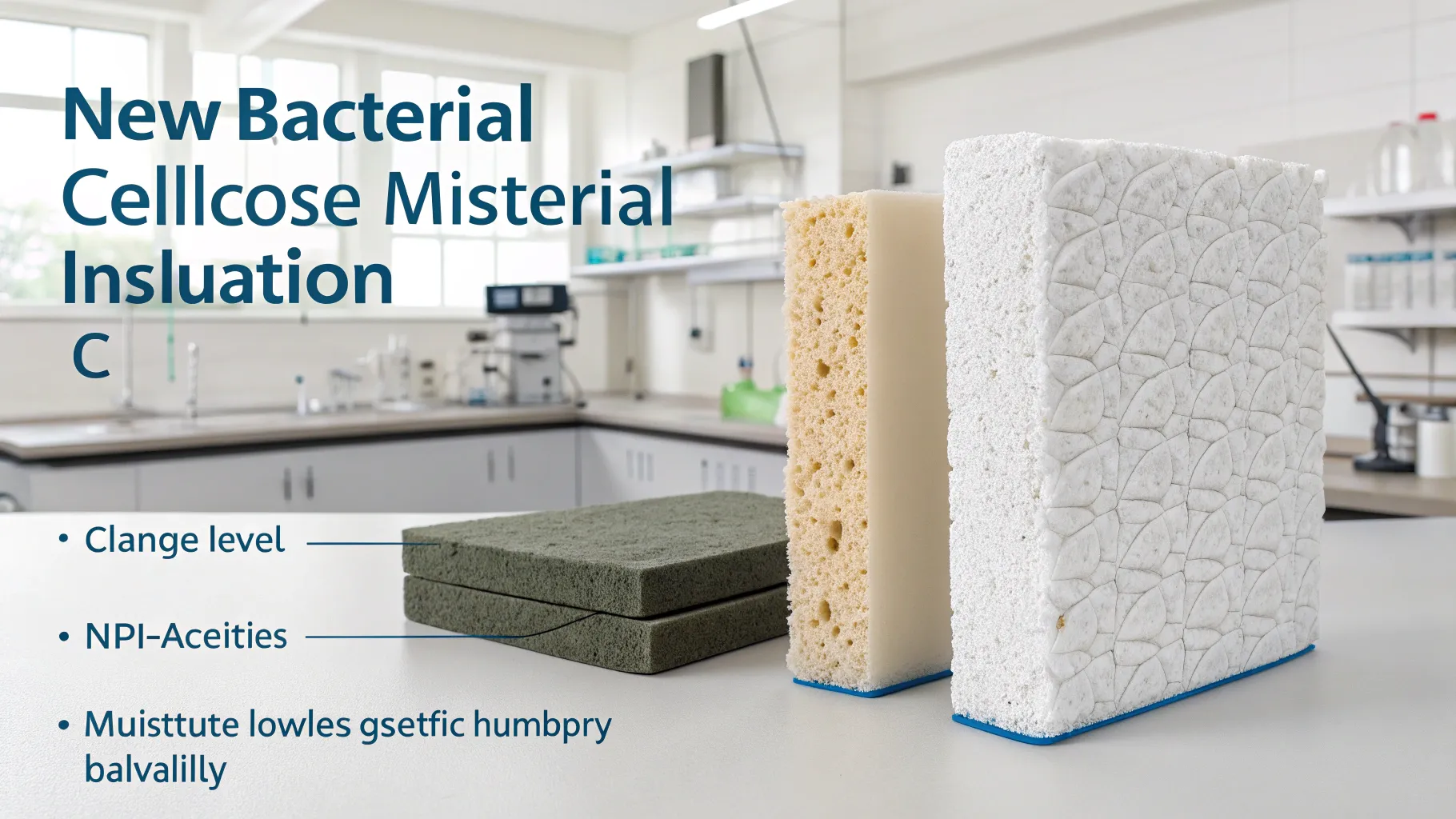
Scientists have developed a revolutionary material made from bacterial cellulose that automatically adjusts its insulating properties based on environmental moisture levels. This adaptive material could transform how clothing and building materials respond to changing weather conditions, helping maintain comfortable temperatures regardless of external conditions.
The newly engineered material increases its insulating capabilities in dry environments and reduces them when exposed to moisture. This automatic response mechanism works without requiring any external power source or human intervention, making it a potentially game-changing technology for thermal regulation applications.
How the Material Works
The bacterial cellulose material functions through a sophisticated yet natural mechanism. In dry conditions, the cellulose fibers create a structure that traps air, providing maximum insulation to retain heat. When moisture levels rise, the material’s structure changes at the molecular level, allowing more heat transfer and thus cooling the wearer or interior space.
This dual-state functionality mimics some biological systems found in nature, where organisms adapt to environmental conditions to maintain homeostasis. The research team behind the material spent several years perfecting the bacterial cellulose formulation to achieve consistent performance across varying humidity levels.
Applications in Clothing Technology
The most immediate application for this adaptive material appears to be in the clothing industry. Traditional fabrics typically excel at either keeping people warm or helping them stay cool, but rarely both. The bacterial cellulose material could be incorporated into garments that automatically adjust to both hot, humid days and cool, dry conditions.
Outdoor clothing manufacturers have shown particular interest in the technology. Hiking gear, athletic wear, and everyday clothing could benefit from this material’s ability to respond to both weather conditions and the wearer’s perspiration levels.
The material offers several advantages over current solutions:
- Eliminates the need for layering clothes in variable conditions
- Reduces energy consumption in temperature-controlled environments
- Provides consistent comfort without manual adjustments
Building and Construction Potential
Beyond wearable applications, the bacterial cellulose material shows promise for building insulation. Current building materials typically have fixed insulation values, requiring active heating or cooling systems to compensate for changing weather. Incorporating this adaptive material into walls or roofing could reduce energy consumption by naturally regulating heat transfer based on humidity levels.
This material represents a significant advancement in passive temperature regulation,” noted one researcher involved with the project. “Buildings could maintain more stable interior temperatures with less energy input, particularly in regions with significant daily humidity fluctuations.
Early testing in controlled environments has shown energy savings of up to 15% compared to traditional insulation materials when used in wall panels. The material’s natural origin also makes it an environmentally friendly alternative to petroleum-based insulation products.
Manufacturing Challenges
Despite its promising properties, scaling production remains a challenge. Bacterial cellulose is currently produced in relatively small quantities for specialized applications. Researchers are working to optimize the bacterial strains and growing conditions to increase yield while maintaining the material’s adaptive properties.
The production process involves cultivating specific bacteria in controlled environments where they produce cellulose fibers. These fibers are then harvested and processed to enhance their moisture-responsive characteristics. Current production methods are time-intensive and relatively expensive compared to conventional materials.
As manufacturing techniques improve and production scales up, the cost is expected to decrease significantly, making the material more accessible for widespread commercial applications.
With further development, this bacterial cellulose material could help address the dual challenges of personal comfort and energy efficiency across multiple industries, offering a biological solution to the age-old problem of adapting to changing weather conditions.

Senior Software Engineer with a passion for building practical, user-centric applications. He specializes in full-stack development with a strong focus on crafting elegant, performant interfaces and scalable backend solutions. With experience leading teams and delivering robust, end-to-end products, he thrives on solving complex problems through clean and efficient code.