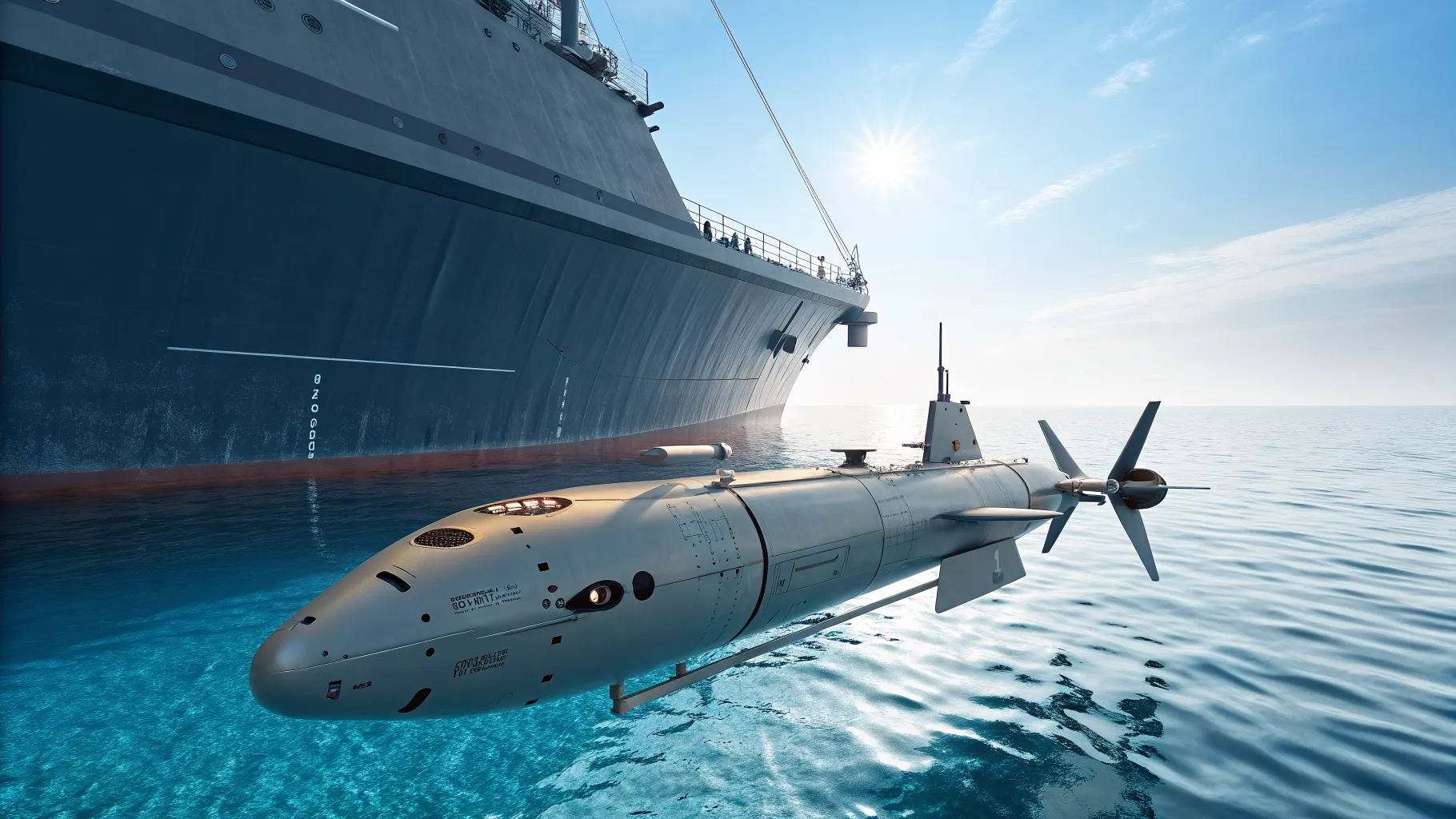
Lockheed Martin has introduced a new undersea drone that can latch onto friendly vessels to save power, a design that could reshape how navies scout, patrol, and defend. The Lamprey Multi-Mission Autonomous Undersea Vehicle, revealed by the defense contractor, promises longer missions by attaching to the hulls of ships or submarines while it recharges or restocks ordnance.
The approach reflects a broader military push to extend operational range and reduce logistical strain. Autonomous systems can loiter for weeks, reducing risks to crewed ships. Undersea platforms add a layer of stealth and resilience to naval operations in contested waters.
How the Lamprey Works
“The Lamprey Multi-Mission Autonomous Undersea Vehicle can physically attach to the hulls of ships and submarines to recharge or resupply while reducing power drain and extending mission duration.”
Unlike traditional autonomous underwater vehicles (AUVs) that operate independently, the Lamprey is designed to latch onto a host vessel using a mechanical interface. While attached, it can draw power from the host, recharge batteries, swap sensors or payloads, and receive new orders. This hybrid model—part autonomous, part tethered—blends the endurance of a host ship with the independence of a free-roaming platform.
The vehicle can detach and conduct missions—surveying shipping lanes, mapping seafloor, detecting mines, or gathering intelligence—then return to dock on the host hull. The design reduces the need for separate support ships and tender crews, lowering operational costs and crew risk.
Why Undersea Drones Matter in Naval Strategy
The ocean presents a communications and sensor challenge. Radio waves don’t travel far underwater. Cables are vulnerable. Wireless systems must compress data and tolerate delays. Autonomous drones that can scout ahead, map hazards, and relay critical updates offer navies new options for contested waters.
A carrier strike group or submarine can deploy Lampreys to screen for threats, clear mines, or conduct covert surveillance. The vehicles’ ability to attach means no separate logistics pipeline—the host ship supplies power, food, and direction. For long deployments, that saves fuel and crew burden.
Design Challenges and Tradeoffs
Mechanical latching at sea is complex. Waves, currents, and vessel motion can stress the interface. The design must handle salt corrosion, biofouling, and the pressure and temperature swings of deep water. Sensor suites must be compact and rugged. Batteries must withstand repeated charge cycles without degrading.
There are also operational limits. The Lamprey can only attach to compatible hulls. Installation or retrofit of host vessels requires docking facilities and technical crews. Range is limited to the host ship’s sphere, though that could stretch hundreds of miles. The vehicle’s speed and maneuverability are constrained by size and power budget.
Broader Context: The Autonomy Shift
The U.S. Navy has been testing distributed operations—spreading sensors and shooters across wider areas to reduce vulnerability to missiles. Autonomous vehicles are key to that vision. Smaller, cheaper platforms can loiter without constant crewed presence, gathering intelligence and raising alerts.
Allies are pursuing similar concepts. The UK and France are investing in autonomous systems for mine clearance and intelligence gathering. These efforts are reshaping how navies think about presence, speed, and survivability in contested zones.
Potential Uses and Limitations
Military planners see Lampreys useful for several roles:
- Anti-mine and anti-submarine screening ahead of ship movements.
- Intelligence collection in denied or contested areas.
- Emergency repair surveys or damage assessment.
- Swarm-based saturation of enemy defenses.
- Logistics relay between ships and shore bases.
The challenge is integration. Navies must train crews to operate and maintain the vehicles, set rules for autonomous decision-making, and ensure data security. Trials with operational units will show how well the Lamprey handles real seas, acoustic interference, and the fog of warfare.
What Comes Next
Lockheed Martin and the Navy will likely conduct at-sea tests with prototype units on participating ships. Key measures include successful docking cycles, power transfer rates, sensor payload swaps, and endurance on extended patrols. Early trials may focus on mine clearance, a well-understood mission with clear success metrics.
If the Lamprey proves reliable, follow-on versions could carry different sensors or payloads tailored to regional threats. Larger fleets of smaller drones could enable mass deployment tactics. The path from innovation to fleet-wide adoption typically takes years, but the concept addresses real operational needs.
The Lamprey points to a future where autonomous platforms extend naval reach without multiplying crew risk. If the design matures and costs stay reasonable, it could shift how navies organize logistics and sensor grids in the Pacific and beyond.
Related Articles

A seasoned technology executive with a proven record of developing and executing innovative strategies to scale high-growth SaaS platforms and enterprise solutions. As a hands-on CTO and systems architect, he combines technical excellence with visionary leadership to drive organizational success.