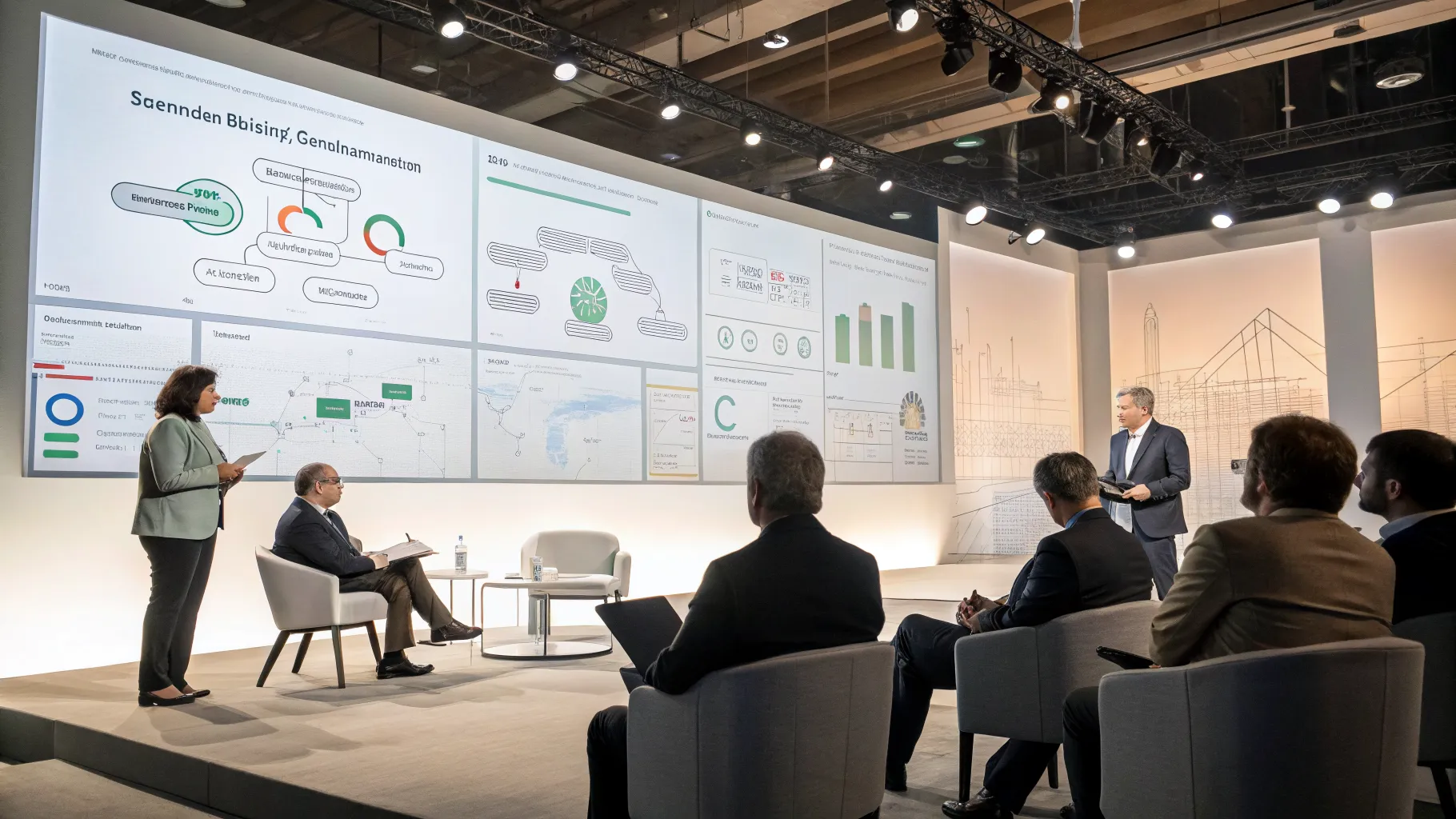
At ServiceNow’s Knowledge 2026 conference, a group of partners announced an expanded collaboration to bring governed autonomous agents to large organizations, promising tighter controls from the employee desktop to emerging “AI factory” deployments. The move signals a push to scale agent-based automation while keeping compliance, security, and auditability in focus.
The joint effort, unveiled in Las Vegas this week, targets companies that want AI agents to handle routine work and complex processes without sacrificing oversight. Organizers framed the initiative as a response to rising demand for safe, reliable automation across IT, HR, finance, and operations.
Why Governed Agents Are on the Rise
Autonomous agents can triage tickets, update records, draft content, and trigger workflows. Many firms have piloted these tools in small teams. Scaling them organization-wide has been harder. Leaders cite fears over data leakage, compliance gaps, and rogue actions.
Vendors now emphasize “governed” agents that operate within well-defined policies. They promise role-based access, approval checkpoints, human-in-the-loop review, and clear logging. The aim is to grant agents more autonomy while limiting risk and enabling audits.
Conference speakers said enterprises want consistent controls across endpoints, from local desktop assistants to centralized AI services. That requires harmonized identity, policy, and observability layers.
What the Partners Announced
“At ServiceNow Knowledge 2026, the companies are extending their collaboration to deliver governed autonomous agents to enterprises, from employee desktops to AI factories.”
The announcement points to two priorities. First, agents must function where employees work today: inside service portals, productivity tools, and collaboration apps. Second, they must also run at scale in data centers and cloud environments that some presenters labeled “AI factories,” where models and workflows are orchestrated for high-volume tasks.
While detailed product lists were not disclosed in the session summary, the group emphasized common governance across both settings. That includes consistent policy enforcement, monitoring, and incident response.
Potential Benefits—and Tradeoffs
Backers argue that governed agents can speed routine service delivery and reduce manual effort. Fewer handoffs and faster cycle times could improve employee experience and cut costs. Teams might also gain new insight through unified logs and analytics.
- Productivity: Agents handle repetitive tasks and first-line requests.
- Quality: Standardized steps lower error rates and rework.
- Compliance: Central policies and audit trails support reviews.
Still, tradeoffs remain. Strict guardrails may limit agent initiative or slow decisions that require approvals. Integration across legacy systems can be complex. Costs may rise if companies need premium security features or higher-capacity models. Leaders also worry about vendor lock-in as toolchains consolidate.
Security, Risk, and Oversight
Security teams at the conference pressed for controls that match enterprise standards. They want lineage for agent actions, signed prompts, red-teaming, and clear rollback options. Observability is another focus: dashboards that show what agents did, why they did it, and how outputs were used.
Risk managers are asking for model governance compatible with existing frameworks. That includes documented use cases, impact assessments, access reviews, and operational thresholds that trigger human intervention. These practices mirror those used for critical software changes.
Market Context and What Comes Next
Interest in agent-based automation has accelerated as companies move beyond chatbots to systems that act. Yet budgets are shifting from experiments to programs with measurable outcomes. Decision-makers are now prioritizing guardrails, service-level targets, and integration with core platforms such as IT service management and HR systems.
Analysts expect early adoption in IT support, customer operations, and procurement, where tasks follow set rules. Complex scenarios—like cross-department approvals or financial adjustments—will likely keep human oversight for now. Many firms may phase in autonomy, starting with suggestions and advancing to supervised actions.
The expanded partnership signals a maturing approach: grow agent capability while maintaining control. If the group delivers shared governance across desktops and centralized AI services, enterprises could scale automation with fewer surprises. The next milestones to watch include reference deployments, benchmarks on accuracy and resolution time, and clearer pricing. For now, the message from Knowledge 2026 is direct: autonomy is expanding, but not at the expense of oversight.

A seasoned technology executive with a proven record of developing and executing innovative strategies to scale high-growth SaaS platforms and enterprise solutions. As a hands-on CTO and systems architect, he combines technical excellence with visionary leadership to drive organizational success.