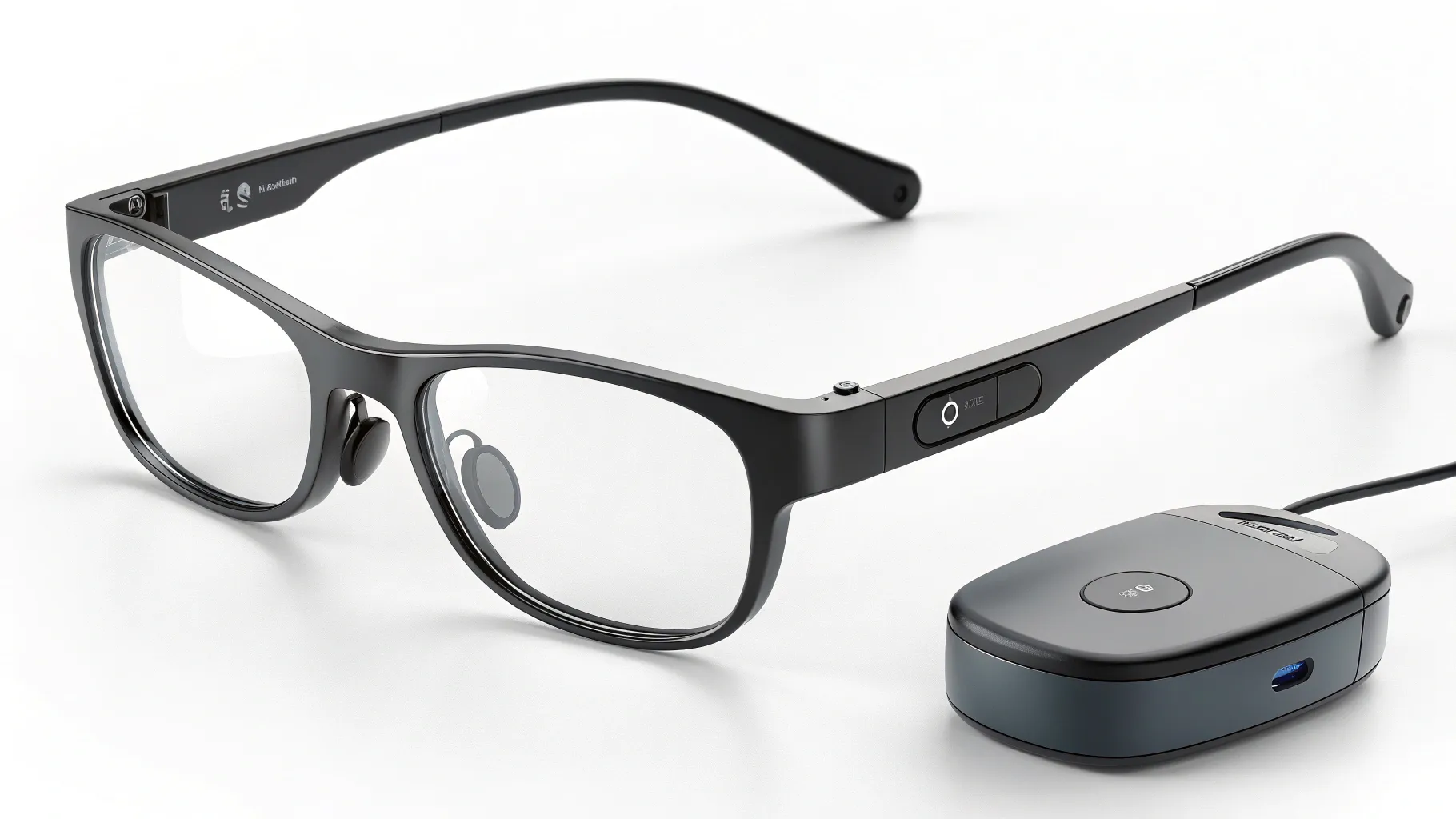
Meta is exploring a new class of smart eyewear that could mirror the Apple Vision Pro’s tethered design, signaling another turn in the mixed reality race. The device is said to pair lightweight glasses with a puck-like power source. The report comes as Meta pushes to expand its lineup beyond Quest headsets and Ray-Ban smart glasses.
The company has invested for years in virtual and augmented reality. A system that borrows from Apple’s battery-on-a-cable idea would show how rivals are converging on similar trade-offs. It also hints at a push to make extended wear more comfortable.
What’s Different About Meta’s Next Glasses
“Meta already sells VR headsets and Ray-Ban smart glasses, but these new glasses sound a bit different. Their format factor would reportedly be similar to the Apple Vision Pro, with a puck-like power source.”
The description points to a split system. The glasses could handle displays and sensors. A separate “puck” would provide power and possibly processing. That approach shifts weight off the face. It can also help manage heat and extend battery life.
Apple’s Vision Pro uses a cabled battery pack to reduce headset weight. If Meta follows a similar path, it would mark a change from the all-in-one design of the Quest line. It would also make the product feel closer to glasses than a helmet-like visor.
Market Context and Why It Matters
Meta’s hardware strategy spans two ends of the market. Quest headsets target immersive gaming and productivity at lower prices. Ray-Ban Meta glasses focus on cameras, audio, and AI helpers in a slim frame. A Vision Pro-style product could sit in the middle, aiming for mixed reality with longer wear.
The market is searching for a form factor that people will use daily. Weight and battery life remain the toughest problems. A tethered power pack is a practical workaround, even if it adds a cable.
- Weight off the face improves comfort.
- External power can allow larger batteries.
- Cables add friction and may limit movement.
For Meta, a split design could support brighter displays or more sensors without a heavy headset. It might also enable future upgrades by swapping pucks with better batteries or processors.
Design Trade-Offs and User Experience
A puck can be clipped to a belt or kept in a pocket. That reduces neck strain and makes long sessions easier. But it adds one more object to carry and charge. The cable itself becomes part of the user experience. It must be safe, flexible, and durable.
Developers would need to optimize apps for comfort and battery budgets. Video passthrough, eye tracking, and hand tracking can be power-hungry. Offloading compute to the puck or a phone could extend runtime. It could also enable heavier tasks like high-resolution rendering.
Competition and Industry Impact
Apple set a high bar on display quality and mixed reality features. Meta has competed on price and a larger app ecosystem. A glasses-plus-puck device could close a gap on comfort without chasing Apple’s premium price tier.
Carriers and retailers may play a bigger role if the glasses lean on smartphones for connectivity. Partnerships could bundle services, repairs, and financing. That mirrors how phones reached mass adoption.
For enterprises, a lighter device is appealing for training, remote support, and design. A cable is a trade-off many workplaces can accept. Consumer adoption will depend on content, price, and how natural the glasses feel in public.
What To Watch Next
Key questions remain. How large will the puck be? Will it handle processing or only power? Can the cable be made safe for exercise or outdoor use? Price will also be critical. Meta’s success with Quest shows strong demand at accessible price points. A premium device must offer clear value.
If Meta integrates its AI assistant into the glasses, hands-free search and translation could become daily habits. Camera features from Ray-Ban models might return, upgraded with mixed reality overlays.
The hint of a Vision Pro-style design suggests a shift in how big tech frames wearable computing. A lightweight display with a pocketable power source could be a practical middle ground. If Meta delivers comfort, strong apps, and a fair price, it could expand the market and pressure rivals to rethink their designs. Watch for details on battery life, weight, and whether the puck doubles as a compute module. Those answers will shape how useful these glasses are for work and everyday life.

Rashan is a seasoned technology journalist and visionary leader serving as the Editor-in-Chief of DevX.com, a leading online publication focused on software development, programming languages, and emerging technologies. With his deep expertise in the tech industry and her passion for empowering developers, Rashan has transformed DevX.com into a vibrant hub of knowledge and innovation. Reach out to Rashan at [email protected]