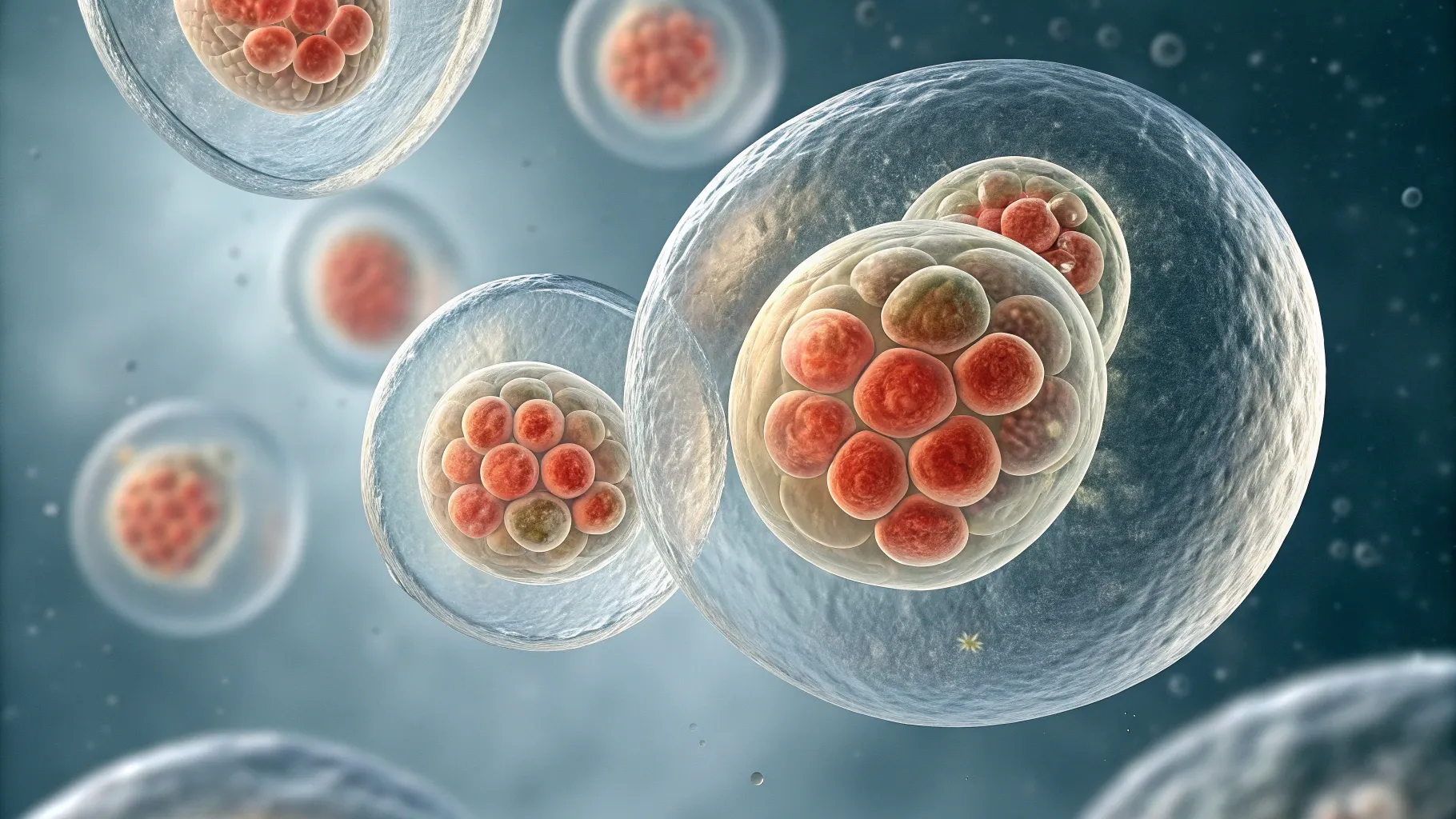
A research team has introduced a model that predicts, minute by minute, how single cells fold, divide, and rearrange in a fruit fly embryo. The approach gives scientists a new way to track the earliest steps of life and could guide studies of complex tissues and early disease warning signs.
The model focuses on the first stage of development, when cells build the body’s initial blueprint. Researchers say this level of timing and detail could improve how labs study growth and repair. They also see possible links to asthma and cancer, where early tissue changes can shape health outcomes.
Why Fruit Flies Matter for Human Health
Fruit flies, known as Drosophila, are a standard model organism in biology. Their embryos develop quickly, and many core genes match those in humans. This makes them ideal for testing ideas about how cells behave in a living system.
Scientists have long used fly embryos to study how tissues take shape, a process known as morphogenesis. But many methods look at averages across many cells or time points. Minute-by-minute forecasts of single cells can reveal steps that bulk measures miss.
Understanding these steps can help explain how tissues form and how errors arise. It can also inform tissue engineering, wound repair, and drug testing. Better models can narrow the gap between basic research and clinical insight.
What the New Approach Claims
“A new model predicts, minute by minute, how individual cells will fold, divide, and rearrange during a fruit fly’s earliest stage of growth. The method may help scientists predict the development of more complex tissues or identify early signs of diseases such as asthma and cancer.”
The research points to three core advances. First, it shifts the focus from averages to single-cell paths. Second, it links cell behavior to precise timing. Third, it connects early patterns to later tissue form.
- Single-cell predictions can capture rare but important events.
- Minute-scale timing may reveal triggers and feedback loops.
- Early signals could forecast later tissue structure and risk.
Potential Impact on Disease Detection
Asthma involves airway tissue changes that can start early and shape symptoms for years. If models can spot early remodeling, clinicians could intervene sooner. That may help avoid severe inflammation and airway narrowing.
Cancer often begins with local shifts in cell division and movement. Mapping how cells rearrange could help flag patterns linked to tumor growth. It may also support tests of drugs that aim to disrupt those steps.
Researchers expect that a clear view of early cell behavior will aid risk stratification. It could guide which patients need closer monitoring or different treatments. It could also help labs compare how tissues respond to gene edits or new compounds.
From Embryos to Complex Tissues
The model was built in a simple system. The next step is to test it in more complex tissues. That includes tissues with mixed cell types, strong mechanical forces, or immune signals.
Scaling the approach will require better imaging, faster computation, and careful validation. Models need to match ground truth across embryos and experiments. They must also handle noise from live data and biological variability.
Cross-checks with other animals and human organoids could strengthen confidence. If the approach generalizes, it could become a standard tool for early-stage research.
What Scientists Will Watch Next
Experts will look for independent replication of the minute-scale forecasts. They will track whether the model can predict outcomes in test data it did not see. They will also watch how well it handles stress, injury, or gene perturbations.
Teams may compare this method with classic lineage tracing and modern imaging tools. The goal is to learn when the model adds unique insight. Clear benchmarks, shared datasets, and open methods would speed progress.
The new model offers a sharper view of how life begins at the cellular level. It sets up tests for early signs of tissue change linked to asthma and cancer. The key questions now are scale, accuracy, and clinical relevance. If those hurdles fall, minute-by-minute predictions could guide both lab research and early detection. Readers should watch for validation studies, tests in organoids, and results that tie early cell behavior to patient outcomes.

Rashan is a seasoned technology journalist and visionary leader serving as the Editor-in-Chief of DevX.com, a leading online publication focused on software development, programming languages, and emerging technologies. With his deep expertise in the tech industry and her passion for empowering developers, Rashan has transformed DevX.com into a vibrant hub of knowledge and innovation. Reach out to Rashan at [email protected]