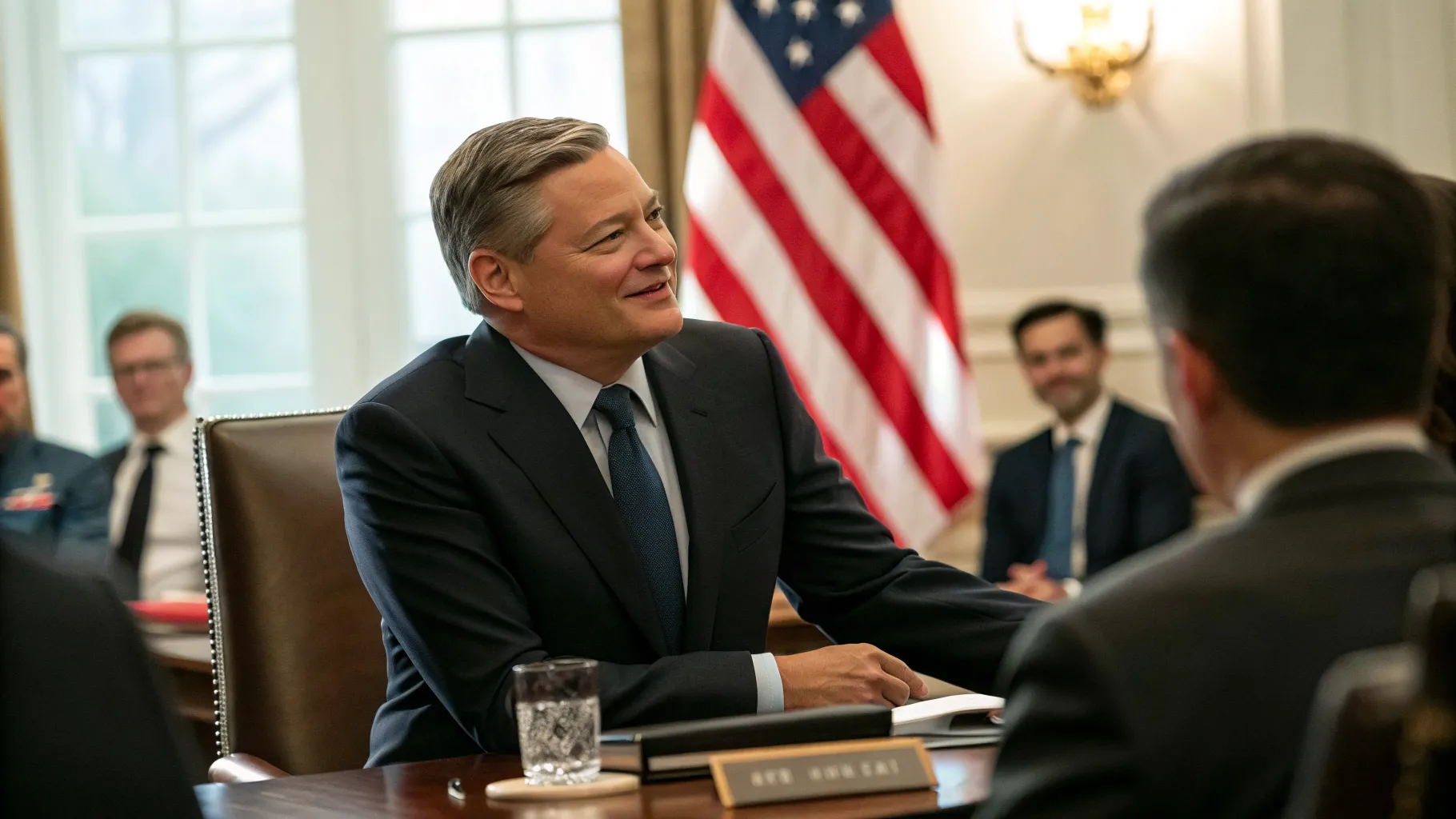
Netflix co-CEO Ted Sarandos met with officials at the White House on Thursday as the company pushes for federal approval of a proposed tie-up with Warner Bros. Discovery, the media owner behind CNN. The meetings did not include the president, but the visit signals the high stakes of the plan and the political attention it is drawing in Washington.
“Netflix co-CEO Ted Sarandos visited the White House on Thursday for meetings — though not with the president — as the streaming giant seeks Trump administration approval of its mega-deal with Warner Bros. Discovery, CNN’s parent company.”
The company is seeking to combine a global streaming leader with one of Hollywood’s most storied content libraries. Any deal of this size would face close review by federal antitrust officials and could reshape how viewers find and pay for shows, films, and sports.
Why This Matters Now
The proposed merger comes at a time of deep strain in entertainment. Traditional TV continues to lose viewers. Streaming growth has slowed. Debt from past mergers pins down studios. Companies are hunting for scale, stronger libraries, and new ways to make money through ads, bundles, and live events.
Warner Bros. Discovery (WBD), formed in 2022 from the WarnerMedia-Discovery combination, owns HBO, Warner Bros. Pictures, DC, and sports rights shared across Turner networks. Netflix leads in subscribers worldwide and has expanded into advertising, live events, and licensed sports documentaries. Joining the two would bring a vast catalog under one roof and could alter licensing markets for rivals.
Regulatory Hurdles and What Review Could Cover
Any approval would likely involve the Department of Justice and possibly the Federal Trade Commission. Reviewers would examine whether the deal could raise prices, limit choice, or disadvantage competitors in content licensing and distribution.
- Market power in premium scripted TV and film libraries
- Control over key franchises and classic catalogs
- Impact on wholesale licensing to rival streamers and TV channels
- Effects on advertising markets as streaming ad tiers grow
- Vertical concerns if control of production affects independent creators
Past mega-deals in media, such as AT&T’s purchase of Time Warner and Disney’s acquisition of 21st Century Fox assets, faced long reviews and remedies. More recently, the Microsoft-Activision deal showed that U.S. and overseas approvals can diverge, leading to complex concessions. A Netflix–WBD merger could follow a similar path, with potential conditions on licensing, bundling, or data practices.
Industry Impact: Winners and Losers
For consumers, a combined service could simplify access to hit series, award-winning films, and live specials. It could also bring new bundles that mix ad-supported and premium plans. But fewer large players might reduce the number of competing offers and promotions over time.
For studios and independent producers, a larger buyer with global reach could mean bigger deals for some projects. Others may worry that fewer outlets will bid on shows, lowering prices. Sports leagues and event organizers may gain leverage as deep-pocketed platforms bid for rights to stand out.
For rivals, the move could trigger fresh consolidation talks. Companies with smaller libraries or modest subscriber bases may seek partnerships. Tech platforms that control devices and app stores could gain influence over distribution terms as content giants get bigger.
What Sarandos’s Visit Signals
White House meetings without the president still matter. They show that Netflix is working to address policy concerns early. The company may be seeking to frame the deal as an investment in U.S. production, jobs, and global exports of American media. It may also be preparing for a long review that includes questions about data use, advertising transparency, and support for independent creators.
What To Watch Next
Key questions in the weeks ahead include whether the companies formally file merger paperwork, how agencies define the relevant markets, and whether early signals point to structural or behavioral remedies.
- Will regulators demand content licensing guarantees to protect rivals?
- Could divestitures of channels or studios be required?
- How will international regulators view global catalog control?
- What commitments will be made on pricing and ad practices?
The visit to Washington suggests the companies are laying the groundwork for a complex approval process. If cleared, the deal could reset streaming and studio power for the next decade. If blocked or constrained, it may push the industry to seek looser alliances, joint ventures, and licensing pacts instead. Either way, viewers should expect more bundling, clearer ad tiers, and a renewed contest to secure must-watch content.

Kirstie a technology news reporter at DevX. She reports on emerging technologies and startups waiting to skyrocket.