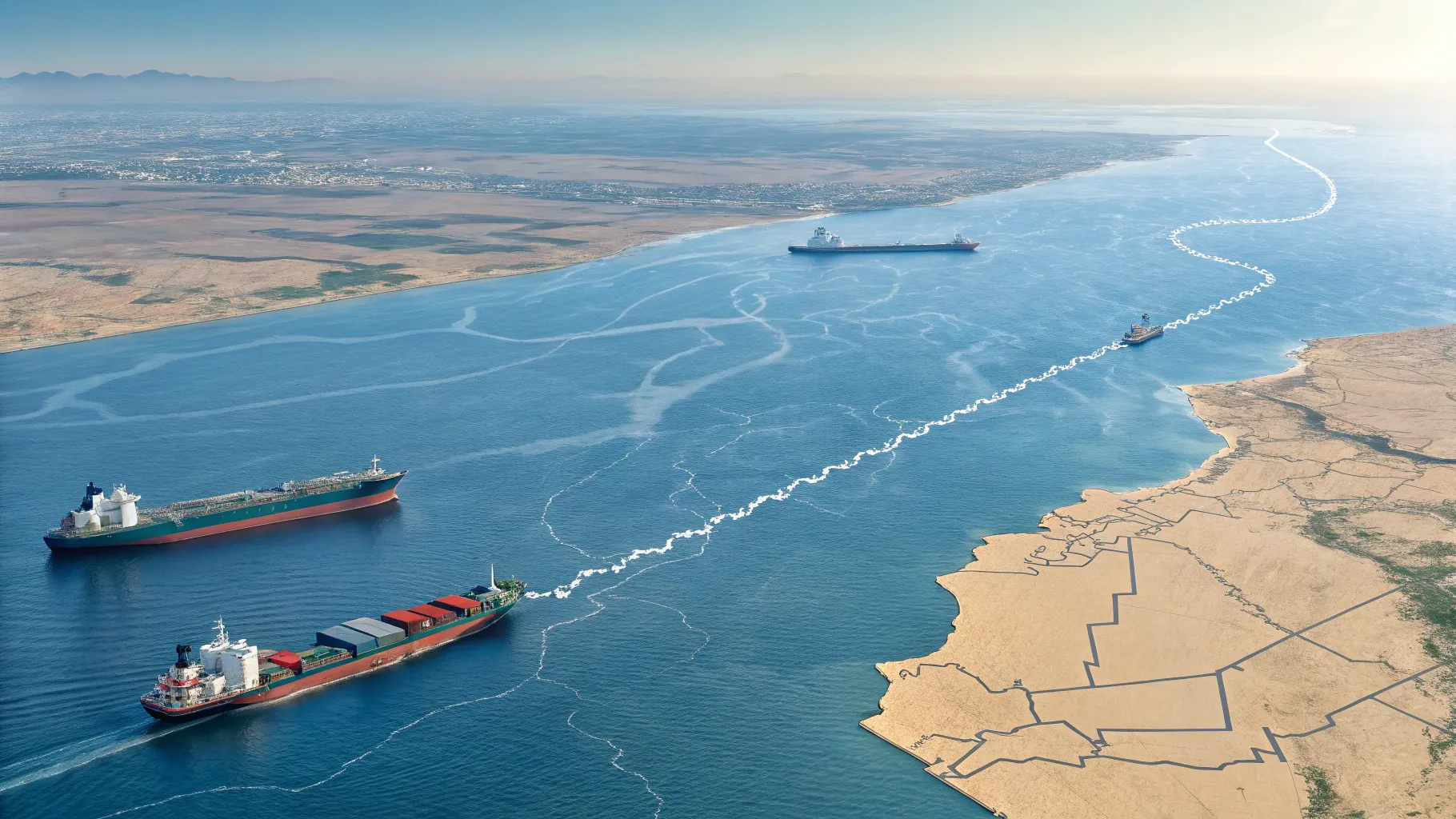
President Donald Trump said he will extend a pause on strikes against Iranian energy targets through April 6, following the safe passage of 10 ships through the Strait of Hormuz. The statement signals a short-term bid to reduce tensions in one of the world’s most important oil chokepoints, where security incidents can quickly ripple through energy markets and global shipping lanes.
“He will extend a pause on Iranian energy attacks to April 6 after 10 ships were allowed passage through the Strait of Hormuz,” Trump said.
Why the Strait of Hormuz Matters
The Strait of Hormuz is a narrow waterway that connects the Persian Gulf to the Gulf of Oman. It is vital to global trade. Energy analysts estimate that roughly one-fifth of the world’s seaborne crude oil and significant volumes of liquefied natural gas move through this corridor.
Any disruption can drive up shipping insurance costs, delay deliveries, and lift oil prices. Past incidents, including tanker damage and ship seizures in 2019, showed how quickly the passage can become a flashpoint. The decision to extend a pause signals an effort to keep the route open while talks, back-channel contacts, or maritime coordination continue.
Immediate Impact on Energy and Shipping
Markets often react to real-time signals from the Strait. A pause in attacks aimed at Iranian energy infrastructure lowers the immediate risk of retaliation and maritime disruption. That tends to calm traders and insurers, at least temporarily. The acknowledgment that 10 ships cleared the strait without incident supports a view that escorts, routing advisories, and communication among naval forces are working for now.
Still, the risk has not vanished. Energy companies rely on predictable passage to plan shipments and hedge cargoes. A single incident can upset that planning. Shipowners often reassess war-risk premiums after each event, which affects freight rates and ultimately fuel prices for consumers.
- The Strait carries about one-fifth of global seaborne crude.
- Insurance and freight rates rise when security risks increase.
- Short pauses can help, but do not resolve core disputes.
Diplomacy, Deterrence, and Domestic Calculations
The extension hints at a strategy that mixes pressure with restraint. Pausing attacks on energy targets can create room for diplomacy while maintaining the threat of force if ships are harassed or infrastructure is struck. For Washington, the move may align with calls from allies to avoid escalation and protect supplies to Asia and Europe. For Tehran, reduced pressure on energy facilities may offer time to weigh next steps, including talks through intermediaries.
Domestic politics also play a role. Leaders are sensitive to gasoline prices, which respond to real and perceived threats in the Gulf. A stable shipping corridor can soften price spikes. At the same time, signaling resolve remains important to deter further incidents at sea and along coastal infrastructure.
Regional Responses and Risk Outlook
Gulf states, including Saudi Arabia and the United Arab Emirates, have a stake in steady flows through Hormuz. They often support maritime patrols and information sharing. European partners have, in past crises, sent ships to support freedom of navigation. Asia’s major importers, including Japan, South Korea, India, and China, follow these developments closely because their refineries depend on Gulf crude and gas.
If the pause holds through April 6, risk premiums could ease further. But any attack on tankers, energy terminals, or offshore platforms would reverse that trend. Cyber threats to energy systems add another layer of uncertainty. Companies are likely to keep contingency plans active, with alternate routing, inventory buffers, and tighter vessel tracking.
What to Watch Next
Signals from naval commands in the region will be key. Clear rules for escorts, communication channels with commercial vessels, and incident reporting can prevent miscalculations. Energy traders will track daily transit counts through the strait, satellite imagery of tanker queues, and statements from both Washington and Tehran for clues on intent.
The time-limited extension sets a near-term checkpoint. If safe passage continues, more ships may accelerate departures to take advantage of calmer conditions. If not, insurers could lift premiums again and charterers may delay loadings.
The latest move reduces immediate risk in a narrow waterway vital to global energy. It offers a window for talks and steady shipping, but it does not settle the broader standoff. The next weeks will show whether restraint at sea holds and whether energy facilities remain off-limits, setting the tone for prices, policy, and maritime security through spring.

Rashan is a seasoned technology journalist and visionary leader serving as the Editor-in-Chief of DevX.com, a leading online publication focused on software development, programming languages, and emerging technologies. With his deep expertise in the tech industry and her passion for empowering developers, Rashan has transformed DevX.com into a vibrant hub of knowledge and innovation. Reach out to Rashan at [email protected]