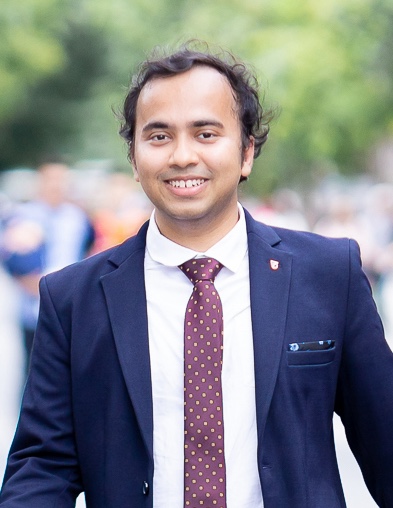
Rahul Biswas brings a unique blend of academic rigor and entrepreneurial spirit to the world of data science and consulting. As a Postdoctoral Scholar in UCSF’s Department of Neurology, his work in computational neuroscience, causal inference, and AI-driven analysis of neural data has advanced our understanding of complex brain dynamics. With dual Master’s degrees in statistics and a PhD in electrical and computer engineering from the University of Washington, Rahul has built a foundation that bridges theory and practice. Beyond his research, he founded Kaneva Consulting to fill a systemic gap: providing researchers and science-driven teams with expert data science support tailored to their domains. Through Kaneva, he collaborates on everything from hypothesis testing and pattern discovery to scaling impact.
In the following conversation, we explore what inspired him to launch a data science consulting firm, how he balances advanced methods like AI and causal inference with real-world business needs, and the strategies he employs to move clients from models to decisions. We also delve into his perspective on scientific entrepreneurship, share examples of breakthrough insights his team has delivered, and look ahead to the evolving role of science in fields such as health and climate analytics.
You’ve built Kaneva Consulting at the intersection of data science and business strategy. What inspired you to launch a science-driven consulting firm, and how is it different from traditional analytics providers?
Kaneva Consulting Inc was born out of necessity. During my time as a researcher in machine learning and neuroscience, I was frequently approached by friends and colleagues across fields such as neuroscience, biology, and sustainability who needed help with data science consulting. They were doing meaningful work but lacked access to analytical support tailored to their domain. It became clear this was a systemic gap. That is when I decided to build Kaneva Consulting.
I hold dual master’s degrees in statistics and a PhD in electrical and computer engineering, where my research focused on the intersection of neuroscience and machine learning. Kaneva is different because we are research-focused. We specialize in data science consulting for researchers and science-driven teams. You do not just delegate projects to us. We collaborate, uncover patterns, test hypotheses, and scale impact, providing expert-level support without the overhead of a full-time hire.
How do you balance technical innovation, such as AI, causal inference, and applied statistics, with the practical demands of business clients or research institutions?
We approach technical innovation as a means to an end. Clients come with complex questions that carry real consequences. Our role is to help navigate that complexity with the right balance of rigor and practicality.
Every engagement begins with understanding the research problem or operational challenge. We then calibrate the solution. Sometimes that means foundational data exploration. Other times it calls for advanced causal modeling or machine learning. Technology should accelerate insight, not overshadow it. The best models are not just powerful; they are ones clients can understand, trust, and use to create real-world impact.
Many data scientists struggle to translate academic expertise into real-world impact. What strategies do you use to help clients move from models to decisions?
We believe good research is collaborative. From the start, we work closely with clients to understand their questions and decisions. We stay in conversation, adjusting our approach as new insights emerge.
Throughout the project, we built transparent and grounded models of the problem. Sometimes that means simple statistical frameworks. Other times, more advanced methods. Regardless, we prioritize models that clients can trust. Our goal is not to deliver black-box analyses but to move from data to clear, informed action.
You’ve mentored early-career researchers on becoming scientific entrepreneurs. What key mindset shifts or skills do they need to make that leap?
The first shift is expanding from precision to momentum. Academic training builds rigor. Entrepreneurship builds speed through testing and refinement. Moving ideas into the world requires acting early and learning continuously.
The second shift is relational. Scientific entrepreneurship requires communicating across disciplines and sectors. It also means becoming comfortable with new systems. Project management, funding models, legal frameworks, and organizational design all become part of the journey. Above all, it requires initiative. Scientific entrepreneurs must design their own solutions and do the rigorous homework necessary to turn ideas into real-world outcomes.
What are some of the most exciting or unconventional ways your team has applied data science to solve real-world problems for clients?
One project focused on advancing neuroscience by decoding brain network dynamics during coma recovery. We developed models that estimated directional and temporal relationships between brain regions, uncovering structures that standard approaches often miss. This provided new insight into how brain networks reorganize after injury.
In the life sciences, we partnered with a biotech company tackling early-stage drug discovery. By applying statistical analysis and machine learning to biomarker and assay data, we built a sharper, data-driven pipeline that helped streamline the path to clinical trials.
In agriculture, we applied systems modeling to soil nutrient regeneration. By integrating agronomic and environmental data, we helped design strategies that support long-term soil fertility and sustainable productivity. Public health has also been a focus. We modeled how social factors like income, education, and housing shape health outcomes, guiding more targeted and equitable interventions.
Can you describe a time when combining causal inference and machine learning led to a breakthrough insight for a client?
In a neuroscience project focused on coma recovery, we worked with a research team to understand how brain network dynamics evolve during recovery. Traditional methods based on static connectivity missed critical temporal and directional changes.
We applied causal discovery methods alongside machine learning to estimate how information flows between brain regions changed over time. By comparing dynamic patterns between recovering patients and others, we uncovered a breakthrough: recovery was associated with distinct patterns of network reorganization. These findings offered deeper insights into neural plasticity and guided future research in prognostic assessment and rehabilitation strategies.
How do you see the role of scientific entrepreneurship evolving in the next five years, especially in fields like health, social science, or climate analytics?
Scientific entrepreneurship is moving toward deeper integration with the systems it aims to change. Entrepreneurs will embed within research teams, policy networks, and operational systems. The future belongs to those who can bridge scientific rigor with real-world complexity.
There will be growing demand for solutions that are transparent, ethical, and adaptable. Black-box models will not be enough in areas like healthcare or climate resilience. Entrepreneurs must design methods that are interpretable and aligned with public values. Those who can work across scientific, policy, and community boundaries will drive the most meaningful impact.
What advice would you give to technically skilled data scientists who want to start their own firm or data science consulting practice?
Start by staying close to the problem, not just the technology. Clients are looking for someone who can understand their challenges and translate expertise into outcomes. Focus on listening first. The better you understand the system, the more precisely you can apply your skills.
Keep your offering clear. No one is buying algorithms or technical jargon; they are investing in clarity and progress. Be prepared to learn new systems beyond the technical side. Project management, legal frameworks, funding models, and organizational design all become part of the journey. A strong network helps, but it is built over time through genuine collaborations. Finally, be patient and persistent. Impact builds gradually, one project at a time.
Photo by Markus Spiske; Unsplash

Rashan is a seasoned technology journalist and visionary leader serving as the Editor-in-Chief of DevX.com, a leading online publication focused on software development, programming languages, and emerging technologies. With his deep expertise in the tech industry and her passion for empowering developers, Rashan has transformed DevX.com into a vibrant hub of knowledge and innovation. Reach out to Rashan at [email protected]