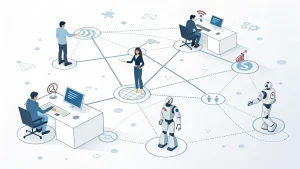
Artificial intelligence agents are starting to write and run software on demand, a shift that could change how applications are designed, built, and used. The move promises faster development and new types of user experiences, while raising hard questions about quality, security, and control. Industry observers say the transition is already underway as tools automate tasks that once required dedicated teams.
From Apps to On-Demand Capabilities
For decades, software creation followed a clear path. Teams scoped needs, wrote code, tested features, and shipped releases. Users then installed apps and waited for updates. AI agents challenge that model by producing functions in real time based on prompts or goals. This turns software into a flexible service that adapts to context.
“Software in the age of AI agents is becoming something anyone can create on the fly — which could have major implications in the way ‘applications’ are designed, built, and used.”
That view reflects a shift from static programs to task-driven agents that plan, call APIs, write code, and run it, often in seconds. Early adopters use them to automate workflows, draft interfaces, and stitch together services without hand coding every step.
What Changes for Developers
Developers are moving from writing every line of code to supervising agents, curating libraries, and setting policies. The job becomes more about system design, prompt engineering, and review. Teams also need strong test suites to catch errors produced by automated code.
- Define clear goals and constraints for agents.
- Use sandboxed environments to run generated code safely.
- Automate tests, logging, and rollback paths.
Tooling is shifting as well. Repositories now hold prompts, evaluation datasets, and guardrails. Build systems trigger agents to generate functions or documentation on request. Continuous integration expands to check agent output for quality and security issues.
Design and User Experience
If software can appear on demand, the interface must help users direct it. Experts point to conversational and goal-based design. Instead of clicking through menus, users state outcomes. The agent then assembles steps and explains what it plans to do.
This makes transparency vital. Users need to see proposed actions, data sources, and permissions before work begins. Clear summaries and undo options help build trust. Accessibility could improve as natural language becomes a primary control surface.
Security, Compliance, and Ownership
Real-time code generation introduces fresh risks. Models can produce insecure patterns or call unapproved services. Companies must set limits on what agents can access and where they can deploy code. Security teams are adding static analysis, dependency checks, and policy engines to monitor agent actions.
Compliance also gets harder. If functions change minute to minute, organizations need detailed logs to show what ran, why, and with which data. Data retention rules and audit trails should apply to both prompts and outputs. Ownership of generated code and content must be clarified in contracts and internal policies.
Industry Impact and Use Cases
Early use spreads across support, marketing, operations, and data analysis. In support, agents build one-off tools to investigate a ticket. In marketing, they stitch analytics with content generation to run quick campaigns. In operations, they write scripts to move data or repair configs after outages.
Traditional software firms may shift from selling fixed apps to selling capabilities plus controls. Value moves to data quality, integration points, and safety layers. Systems that expose clean APIs and clear schemas stand to gain, as agents rely on them to act reliably.
What to Watch Next
Several questions will shape the path ahead. How well can agents manage long tasks without drifting from the goal? Can teams measure reliability in a way buyers accept? Will regulators set standards for auditability and safe deployment? Answers will influence adoption across regulated fields like finance and health care.
Experts expect a hybrid period. Core systems stay stable, while agents compose features around them. Teams that set guardrails early, invest in tests, and track outputs closely are more likely to benefit.
As one participant noted, the shift is less about a single tool and more about how people create and use software. If anyone can assemble capabilities on demand, the meaning of an “app” will change. The winners will pair speed with safety, and convenience with clear oversight.

Kirstie a technology news reporter at DevX. She reports on emerging technologies and startups waiting to skyrocket.