The pace of AI development has reached a fever pitch, and I’m genuinely impressed by what I’ve witnessed this week alone. From open-weight models that rival proprietary giants to video editing tools that transform reality with a few clicks, we’re entering an era where the line between human and machine creativity continues to blur.
What caught my attention most was GLM 4.5, an open-weight model that performs nearly as well as GPT-4 and Claude 4 Opus on various benchmarks. While I’ve grown skeptical of benchmark comparisons, this model genuinely impressed me during hands-on testing.
The most remarkable aspect? It’s freely available for anyone to use. You can access it at Z.ai without paying a cent, though they’ll likely monetize through API access eventually.
When I tested GLM 4.5’s capabilities, it created a professional slide deck about the satirical “Birds Aren’t Real” conspiracy theory in minutes. The slides included relevant images, quotes, and well-structured content that looked far superior to what ChatGPT produced in similar tests. It even one-shot coded a functional Vampire Survivors game clone with minimal prompting.
Video Editing Reaches New Heights
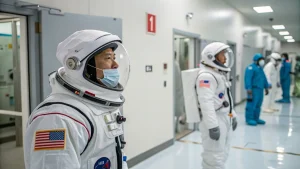
Runway’s new ALF feature and Luma Labs’ similar technology represent another leap forward. These tools allow you to feed in a video and transform specific elements with natural language instructions.
I tested both by trying to place a jet fighter in space, replace babies with a sandwich, and transform a scene from The Shining. Results varied, but the potential is clear:
- Changing environments (sky to space, indoor to outdoor)
- Replacing objects within scenes
- Creating new camera angles from existing footage
- Transforming product demos with minimal effort
The technology isn’t perfect yet, but it’s advancing rapidly. Just months ago, these capabilities would have required specialized teams and significant budgets.
Unexpected AI Behaviors Show What’s Coming
Perhaps most fascinating are the emergent behaviors we’re seeing in models like Google’s Veo. Users discovered you can write text instructions directly on input images, and the model will follow those instructions when generating video—a capability the developers didn’t explicitly program.
This kind of emergent behavior hints at deeper pattern recognition than we anticipated. When AI starts doing useful things its creators didn’t explicitly design it to do, we’re entering new territory.
The Democratization of Creation
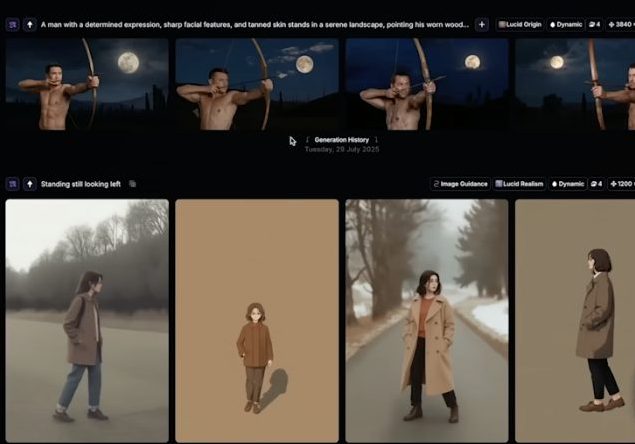
What strikes me about these developments is how they’re democratizing creative capabilities. Idiogram’s new feature lets you place any face into any image with just one reference photo—something that previously required dozens of images and technical skill.
Meshy 5 turns text prompts or images into detailed 3D models with textures. I tested it with a pizza prompt and Rick and Morty images, and while not perfect, the results were impressive for an automated process requiring zero modeling skills.
The fact that these tools are becoming accessible to everyone represents a fundamental shift in who can create digital content.
We’re rapidly approaching a world where the limiting factor in creation isn’t technical skill but imagination and judgment. This democratization will unleash creativity but also raise important questions about authenticity and media literacy.
What This Means For Our Future
As these tools become more powerful and accessible, we need to consider both opportunities and challenges. The ability to generate, modify, and transform digital content with natural language will change how we work, create, and communicate.
For professionals, these tools can eliminate tedious tasks and amplify capabilities. For educators and students, tools like ChatGPT’s new study mode can provide personalized learning experiences. For content creators, the boundaries of what’s possible expand weekly.
But we must also consider the implications for trust in media, copyright, and the value we place on human creativity. When anyone can generate convincing videos, images, and 3D models with a few words, how do we maintain trust in what we see?
The rapid evolution of AI isn’t slowing down. Each week brings capabilities that seemed years away just months ago. Whether we’re excited or concerned, one thing is clear: paying attention to these developments is no longer optional for anyone who wants to understand how our digital world is transforming.
Frequently Asked Questions
Q: What makes GLM 4.5 different from other language models?
GLM 4.5 stands out because it’s an open-weight model that performs comparably to proprietary models like GPT-4 and Claude 4 Opus. This means anyone can download and run it on their own hardware or access it freely through Z.ai. Its ability to create professional slide decks and code complex applications with minimal prompting makes it particularly noteworthy.
Q: How do the new video editing tools from Runway and Luma Labs work?
These tools allow you to modify specific elements of videos using natural language instructions. You provide an input video and describe what you want to change—like putting a character in space or changing objects within a scene. The AI then generates a new video incorporating those changes while maintaining the original video’s structure and movement. You can also adjust settings like “strength” to control how much the AI modifies the original footage.
Q: What is “emergent behavior” in AI models?
Emergent behavior refers to capabilities that AI models develop that their creators didn’t explicitly program. For example, Google’s Veo model can follow text instructions written directly on input images when generating videos—a feature the developers didn’t intentionally build. These behaviors emerge as models develop more sophisticated pattern recognition from their training data.
Q: How might these AI tools affect creative industries?
These tools are democratizing creative capabilities that once required specialized skills and expensive software. This will likely lead to more content creation by more people, potentially disrupting industries like graphic design, video production, and 3D modeling. However, human creativity, judgment, and expertise will remain valuable, with professionals likely incorporating these tools to enhance their workflows rather than being replaced by them.
Q: Are there concerns about these technologies being misused?
Yes. As these tools make it easier to create convincing modified media, concerns about deepfakes, misinformation, and copyright infringement grow. The ability to place anyone’s face into any scene or generate realistic videos from text prompts raises questions about consent, authenticity, and media literacy. Society and technology companies will need to develop both technical solutions and ethical frameworks to address these challenges.