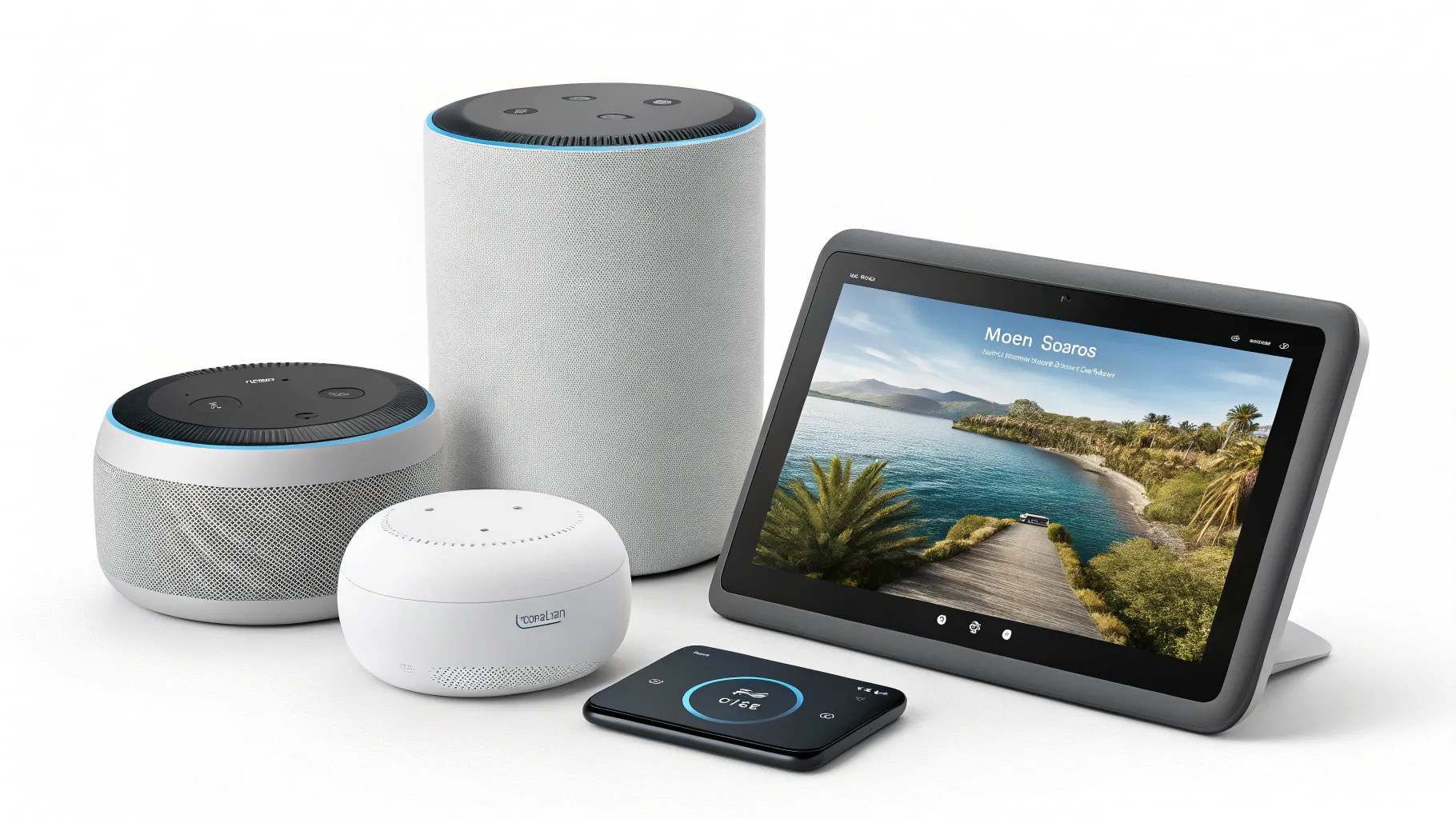
Amazon introduced a new wave of smart devices featuring artificial intelligence, signaling a fresh push to keep its Echo brand at the center of the connected home. The company announced the Dot Max, Echo Studio, Echo Show 8, and Echo Show 11. The products were presented as AI-powered, a sign that voice and visual assistants are moving into a new phase. The unveiling positions Amazon for the next shopping season and renews its bet on voice-driven computing.
“Amazon debuts new devices, the Dot Max, Echo Studio, Echo Show 8, and Echo Show 11, powered by AI.”
What Was Announced
The lineup spans speakers and smart displays, suggesting a focus on audio quality, on-screen information, and new AI features. While full specifications were not detailed, the product names suggest a spread from compact speakers to larger displays.
- Dot Max — a compact device, likely aimed at bedrooms, offices, and small rooms.
- Echo Studio — the premium speaker tier focused on richer sound.
- Echo Show 8 — a mid-sized smart display suited for counters and desks.
- Echo Show 11 — a larger screen for shared spaces and video viewing.
Each device is described as “powered by AI,” hinting at smarter responses, better on-device processing, and more helpful routines. It also suggests tighter links between voice commands, visuals, and home control.
A Decade of Echo Sets the Stage
Amazon launched its first Echo nearly a decade ago. That device helped introduce voice assistants to mainstream households. Since then, the Echo brand has grown to include screens, improved microphones, and better speakers. The broader market has matured as well. Consumers now expect devices to be useful out of the box, with simple setup and reliable responses.
AI has become central to that promise. Smarter models can handle more natural speech and more complex tasks. They can also personalize suggestions and automate routines without constant tweaking. The new devices arrive as companies race to add AI to everyday products.
Why AI Could Change Daily Use
AI-enabled features could improve how the devices understand requests, handle follow-up questions, and manage multiple tasks. That can reduce friction for users who want quick answers or smooth home control. In the kitchen, a smarter display might combine recipes, timers, and shopping lists with fewer commands. In the living room, a speaker might adjust audio settings based on content or suggest actions based on habits.
If processing shifts more onto the device, responses could be faster and more private. It could also keep core functions working during network hiccups. The real test will be whether these systems can handle the messy, everyday requests people make in homes with children, guests, and background noise.
Market Pressure and Consumer Questions
Amazon faces active rivals in smart speakers and displays. The contest often comes down to accuracy, ease of use, and integrations. Shoppers look for simple setup, steady performance, and trustworthy privacy controls. They also want devices to work well with lights, locks, cameras, and TVs from many brands.
Price will matter. If Amazon can keep costs in check while adding stronger AI, it could sway upgrades and first-time buyers. On the other hand, consumers may wait to see if the AI features deliver clear day-to-day value. Many already own older Echo models that still work fine for timers, music, and basic control.
What We Still Need to Know
Key details remain to be confirmed. Buyers will be watching for:
- Exact pricing and release dates.
- Which AI features run on-device versus in the cloud?
- Privacy settings, data retention, and opt-out options.
- Support for third-party services and smart home standards.
- Audio and camera improvements across the lineup.
Clear answers on these points will shape early reviews and adoption.
Outlook for the Smart Home
The new Echo family shows Amazon’s intent to move from basic voice commands to more helpful, context-aware assistance. If the AI features cut down on misheard requests and reduce setup headaches, they could win over households that have held back. If not, the devices may be judged as routine refreshes in a crowded market.
For now, the announcement resets the race for the living room and kitchen. As details emerge, watch for independent tests of speech accuracy, on-device speed, and privacy safeguards. The winners will be the devices that make everyday tasks feel simple and reliable.

Rashan is a seasoned technology journalist and visionary leader serving as the Editor-in-Chief of DevX.com, a leading online publication focused on software development, programming languages, and emerging technologies. With his deep expertise in the tech industry and her passion for empowering developers, Rashan has transformed DevX.com into a vibrant hub of knowledge and innovation. Reach out to Rashan at [email protected]