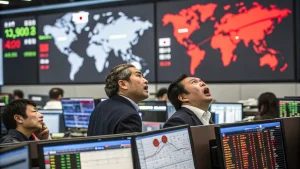
Amazon and Tesla led a surge in mega-cap technology shares after the United States and China announced a temporary truce in their trade dispute, lifting market sentiment across sectors. The move, revealed this week, eased immediate concerns over tariffs and supply chains, and sent investors back into the so-called “Magnificent Seven” stocks that dominate major indexes.
The rebound comes as traders weigh the impact of a pause in hostilities between the world’s two largest economies. The rally focused on companies with deep global ties and heavy exposure to manufacturing, logistics, and consumer demand linked to China. The gains highlighted how sensitive markets remain to policy signals that could reset trade flows, capital spending, and corporate profits.
Background: Trade Tensions and Big Tech’s Outsize Role
Washington and Beijing have sparred over tariffs, technology transfers, and export controls since 2018. Periodic talks have offered short breaks from escalation, but lasting progress has been hard to secure. Even short truces can move markets by lowering immediate risk to supply chains and margins.
At the same time, a handful of technology companies have carried an outsized share of stock market returns. The “Magnificent Seven” — Apple, Microsoft, Alphabet, Amazon, Meta, Tesla, and Nvidia — now account for a large slice of major U.S. indexes. Their global reach makes any shift in trade policy especially important.
Many of these firms rely on complex supply networks that touch China. Some generate direct sales there. Others depend on components, assembly, or third-party sellers based in the region. A pause in tensions can remove near-term uncertainty, supporting valuations that already price in strong growth.
Market Reaction and What Drove It
Investors rotated into mega-cap tech after the truce news. Amazon and Tesla paced the move, signaling confidence that friction-sensitive parts of their businesses could benefit first if calmer conditions hold.
- Amazon: Relies on a vast merchant base, including many China-based sellers, and on hardware supply chains that pass through Asia. Lower trade risk can ease cost and shipping pressures.
- Tesla: Operates a major factory in Shanghai and sells cars in China. Reduced policy strain can support production stability and consumer demand.
Other large tech names also advanced, reflecting relief across semiconductors, cloud services, and consumer electronics. Export control policies and licensing remain in place in key areas, but any cooling of tensions can reduce the chance of sudden disruptions.
Why Amazon and Tesla Stood Out
Amazon’s marketplace depends on cross-border logistics and predictable tariff schedules. Even a temporary thaw can ease the cost of goods for sellers and improve delivery reliability for shoppers. That supports retail volumes and advertising revenue tied to marketplace activity.
Tesla’s China business is both a manufacturing hub and a vital market. The Shanghai plant is a key part of its global output. Any sign that trade barriers will not tighten further helps planning for components, shipping, and pricing. Investor focus also remains on competition from domestic Chinese EV makers. A pause in trade stress may allow Tesla to concentrate on product updates and cost control rather than contingency planning.
The Caveats: Fragile Peace and Policy Unknowns
The truce is temporary. Export controls on advanced chips and equipment remain a flashpoint. Tariffs on a range of goods are still on the books. Policy announcements can change quickly and without much notice.
For tech, risks include renewed restrictions on semiconductor tools, stricter data rules, or consumer boycotts if relations sour again. Supply chain diversification projects may continue regardless, as companies seek to reduce single-country exposure even if talks progress.
Investors also face broader questions: the path of interest rates, the pace of consumer spending, and competitive pressure in cloud, AI, and EV markets. Those drivers can outweigh trade news once initial headlines fade.
What to Watch Next
Market attention will turn to whether the pause leads to concrete steps. Investors will look for reduced tariff rates in select categories, clearer licensing processes, or expanded business travel and regulatory cooperation. Company guidance during the next earnings cycle will signal whether management teams see lasting relief.
Key signposts include:
- Any joint statements outlining timelines for further talks.
- Regulatory updates on export controls and product approvals.
- Commentary from global manufacturers on inventory and lead times.
- Shifts in shipping rates, which often move first when demand or risk changes.
Amazon and Tesla’s gains show how quickly sentiment can swing when policy risk eases. The rally reflects hope that supply lines will remain open and demand steady. Whether the bounce endures depends on follow-through from both governments and on the next round of corporate results. For now, investors have a clearer line of sight, but not a full resolution.

Rashan is a seasoned technology journalist and visionary leader serving as the Editor-in-Chief of DevX.com, a leading online publication focused on software development, programming languages, and emerging technologies. With his deep expertise in the tech industry and her passion for empowering developers, Rashan has transformed DevX.com into a vibrant hub of knowledge and innovation. Reach out to Rashan at [email protected]