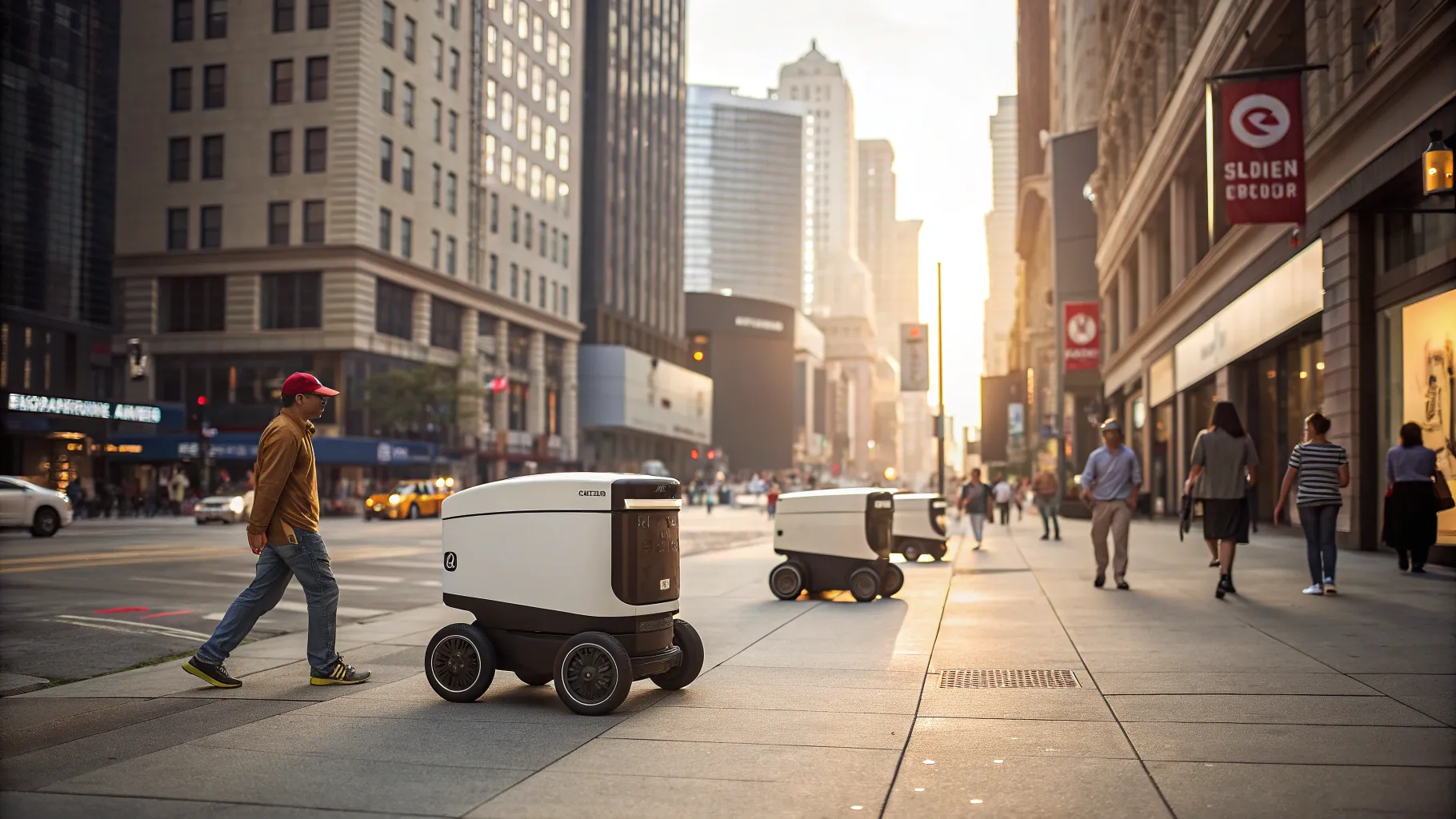
Investor sentiment is rising for a delivery-robot company that says it now operates the largest sidewalk delivery fleet in the United States. The firm’s disclosure has triggered fresh interest from analysts, who argue the scale could shift last-mile logistics. The news lands as e-commerce orders and urban congestion push retailers to seek faster, cheaper ways to move goods in dense neighborhoods.
“Analysts have gotten increasingly bullish on this company since announcing it has deployed the largest sidewalk delivery fleet in the U.S.”
The company has not released full details of its fleet size or coverage areas. Still, market watchers say the milestone signals a new phase in robot-assisted delivery. The timing matters. Retailers face tight margins on same-day and next-day delivery. Cities are testing new rules for low-speed devices on sidewalks. Consumers are adapting to a wider range of delivery formats, from lockers to drones to robots.
Why Scale Matters in Sidewalk Delivery
Sidewalk delivery robots travel at walking speeds and carry small loads. They target short routes that human couriers often find costly and time consuming. By clustering deliveries within tight zones, operators can raise route density. Higher density can lower cost per drop.
Scale also creates more data. Large fleets generate route information, failure rates, battery performance, and customer feedback. Over time, that data can improve navigation, unit reliability, and delivery times. Analysts say scale can also improve contracts with retailers by offering broader coverage across neighborhoods and campuses.
Yet scale brings new pressures. Larger fleets mean more maintenance hubs, more battery swaps, and more street-level support. Companies must work with local officials on operating hours, device size, and sidewalk safety. Insurers and city agencies will ask for incident logs and performance audits to assess risk.
Regulatory and Community Hurdles Ahead
City rules for sidewalk robots vary widely in the U.S. Some areas allow pilot programs under permits. Others set speed caps, device weight limits, or no-go zones. Sidewalk access can change block by block, which complicates routing and fleet planning.
Pedestrian safety is another focal point. Advocates want clear right-of-way rules and accessible sidewalks. Loading at curbside must avoid blocking wheelchair ramps and crosswalks. Operators need clear procedures for stalled units and remote assistance. Transparent reporting on incidents will shape public trust.
Labor questions persist. Couriers and driver groups watch how automation affects jobs and pay. Some retailers view robots as a supplement for small orders and off-peak hours, not a replacement for human-driven vans. The balance will vary by city, retailer, and route type.
Retailer Demands and the Path to Profit
Retail partners want reliable service levels, predictable pricing, and short delivery windows. To win contracts, operators must demonstrate high completion rates and quick recovery from errors. Battery life, weather performance, and secure handoff procedures all factor into service terms.
- Short-distance orders are prime targets for robots.
- Dense neighborhoods improve route efficiency.
- Weather and terrain can limit uptime and speed.
Unit economics remain the key test. Hardware costs should fall with volume. Software improves as more data trains navigation and routing. But fixed costs rise with support teams, depots, and fleet management. Analysts say the largest fleets have a better chance to spread those costs across more deliveries.
Environmental and Urban Impact
Smaller electric robots can cut emissions for short trips that would otherwise use cars or vans. They can reduce double-parking if curbside loading is well managed. Fewer vehicle miles means less traffic and noise on residential streets.
The benefits depend on integration with city rules and curb policies. Clear drop-off points, geofencing, and rider education help reduce sidewalk conflicts. Data-sharing agreements with cities could guide where fleets operate and how many units move during peak pedestrian hours.
What Analysts Are Watching Next
Analysts are focused on three signals. First, conversion of pilot programs into long-term retailer contracts. Second, unit economics that show steady improvement in cost per delivery. Third, regulatory wins that expand service areas without raising compliance costs.
They also want better disclosure. Investors will look for fleet size, utilization rates, average order values, and on-time performance. Weather resilience and theft prevention are frequent questions in briefings. Proof points during holidays and major events can show how the system performs under stress.
The rise of a leading U.S. sidewalk fleet suggests the sector is moving from trials to scaled operations. If the company sustains performance and secures supportive city rules, it could gain a durable edge. Retailers will respond to reliable service at a lower cost, while communities will judge by safety and street-level impact.
In the months ahead, watch for expanded service zones, deeper retailer integrations, and clearer operating metrics. Those updates will show whether optimism from analysts is matched by on-the-ground results.

Deanna Ritchie is a managing editor at DevX. She has a degree in English Literature. She has written 2000+ articles on getting out of debt and mastering your finances. She has edited over 60,000 articles in her life. She has a passion for helping writers inspire others through their words. Deanna has also been an editor at Entrepreneur Magazine and ReadWrite.