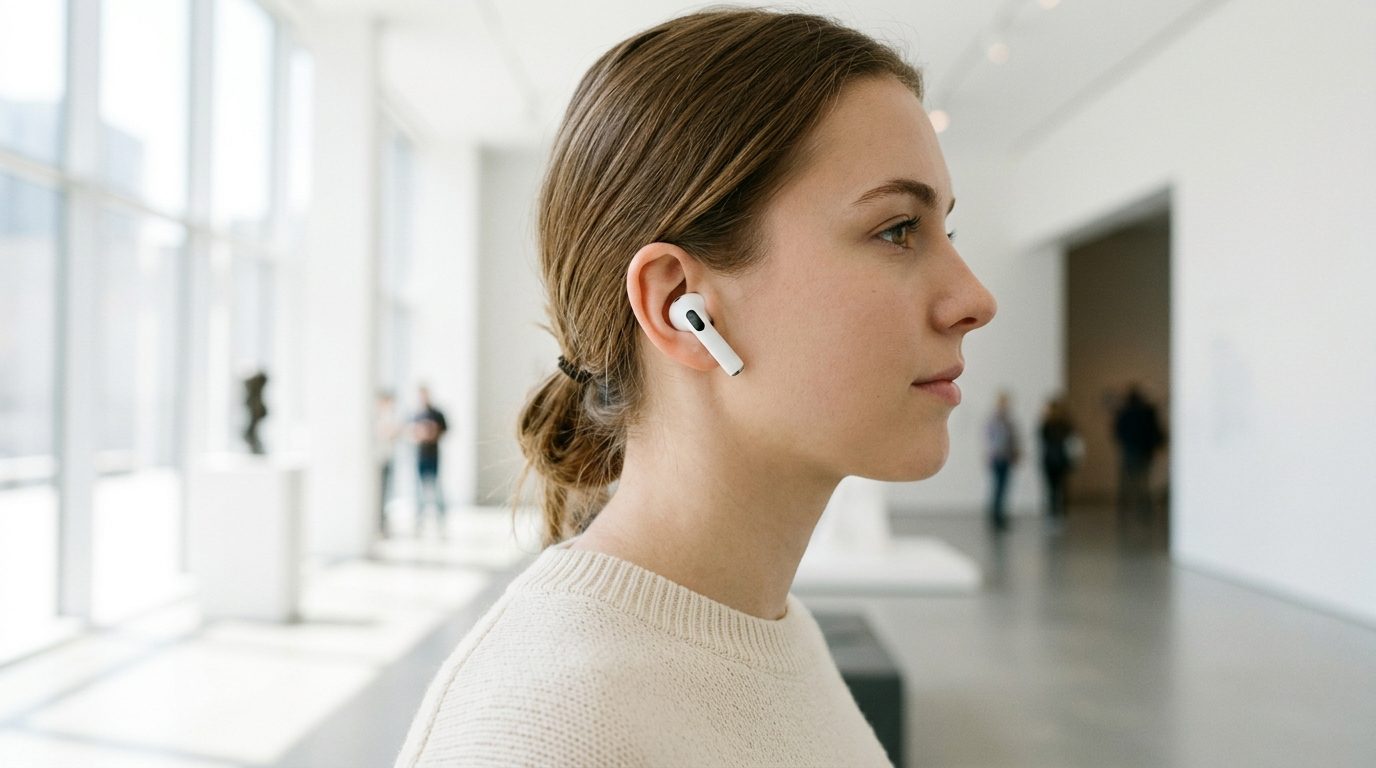
Apple may be developing camera-equipped AirPods that cannot take photos or record video, a restriction that could ease fears surrounding wearable artificial intelligence devices.
The leaked concept suggests Apple could use cameras as sensors rather than traditional recording tools. Such a design would let the earbuds interpret nearby conditions while limiting their ability to capture identifiable footage.
Details remain scarce, and Apple has not publicly confirmed the reported device. Still, the possible recording limits point to a deliberate response to one of the largest barriers facing AI wearables: public trust.
Cameras Without Traditional Recording
Adding cameras to AirPods may appear to turn the earbuds into discreet recording devices. The reported restrictions suggest a different purpose.
The leaked camera-equipped AirPods “might avoid the privacy pitfalls of other AI wearables” by preventing users from recording photos and videos.
Instead of saving images, built-in sensors could process visual information for specific functions. They might identify objects, support navigation, or provide useful context to an AI assistant. However, those uses have not been confirmed.
The difference between sensing and recording matters. A device may analyze its surroundings without creating a permanent image. Yet even temporary processing can involve personal information, depending on how and where the data is handled.
Privacy Problems Follow Wearable Cameras
Camera wearables have faced resistance for years. People nearby may not know whether a device is recording them. Small cameras can also be harder to notice than a raised smartphone.
AI adds another concern because visual data may be sent to remote computer systems for analysis. Users and bystanders may question how long information is retained, whether humans can review it, and whether it supports advertising.
Apple could reduce those concerns through several safeguards:
- Blocking photo and video capture at the hardware level
- Processing visual information directly on the device
- Deleting sensor data immediately after analysis
- Using clear indicators when cameras are active
No available details establish whether the reported AirPods would include these measures. A software-only ban on recording may also offer less assurance than a physical design that cannot store images.
Convenience Still Requires Public Consent
AirPods are already worn in offices, shops, schools, and public spaces. Adding cameras could give Apple a familiar platform for visual AI services. It could also make surveillance concerns more personal because the device sits at head level and may point outward.
Preventing conventional recording would address misuse by owners, including covert photography. It would not resolve every issue. Bystanders may still object to being analyzed, even if no image is saved.
Clear communication will therefore be central to any launch. Apple would need to explain what the sensors detect, where processing occurs, and whether any information leaves the earbuds or connected phone.
A Test for Apple’s Privacy Strategy
Apple has often presented privacy as a product feature. Camera-equipped AirPods would test whether that position can extend to devices that constantly sense their surroundings.
The reported inability to record could separate the product from earlier wearable cameras. It may also limit useful features, creating a trade-off between capability and public acceptance.
For now, the project remains unconfirmed. The key questions concern technical controls, data retention, visible alerts, and protections for people who never agreed to participate.
If Apple proceeds, success will depend on more than useful AI features. The company will need to prove that camera sensors can assist wearers without turning everyday earbuds into hidden recording tools.

Senior Software Engineer with a passion for building practical, user-centric applications. He specializes in full-stack development with a strong focus on crafting elegant, performant interfaces and scalable backend solutions. With experience leading teams and delivering robust, end-to-end products, he thrives on solving complex problems through clean and efficient code.