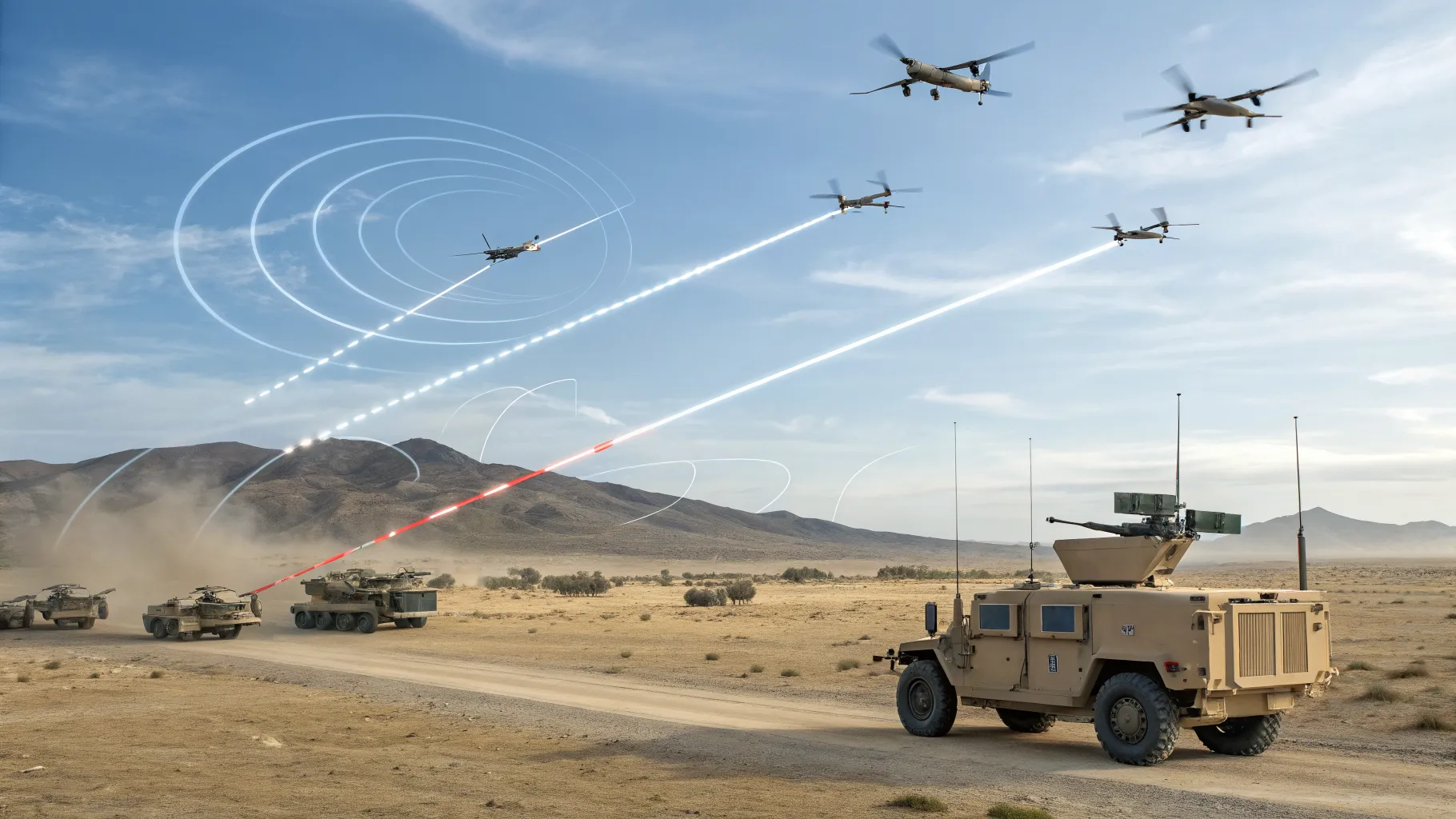
A US Army test using Raytheon’s Coyote Block 3 unmanned aircraft showed that an electromagnetic strike can knock down multiple hostile drones at once, offering a cheaper and reusable option than missiles. The demonstration highlighted a growing push to blunt drone swarms, a problem that has strained defenses from training ranges to active war zones.
In the trial, the Coyote Block 3 acted as a reusable interceptor and fired a non-kinetic effect at groups of small drones. The test, disclosed by the company and confirmed by Army officials, points to a shift in counterdrone tactics as militaries seek lower costs and faster response times against massed threats.
“With a single invisible shot, Raytheon’s Coyote Block 3 UAV zapped swarms of drones out of the sky in a US Army demonstration showing that a reusable drone with electromagnetic weapons is an economical alternative to explosive interceptors.”
Why Swarms Are Forcing New Defenses
Small drones are now cheap, easy to modify, and hard to track. They can arrive in clusters, overwhelm radar operators, and deplete missile stocks. Traditional interceptors, including shoulder-fired missiles or larger air-defense rounds, are effective but expensive on a per-shot basis. They also carry safety risks when fired over friendly areas.
In recent conflicts, militaries have faced nonstop drone harassment. Defenders often rely on jammers, guns, or short-range missiles. But each of those options has gaps. Jamming can fail when drones are preprogrammed. Guns struggle with tiny, fast targets. Missiles can be too costly for slow, low-signature quadcopters.
How the Coyote Block 3 Changes the Tradeoffs
The Coyote Block 3 is designed to be launched quickly, loiter near a threat, and use a non-kinetic payload to disable multiple drones at once. While officials did not share exact specifications, the effect appears to use directed energy in the electromagnetic spectrum, which can fry onboard electronics without explosives.
Raytheon has supplied earlier Coyote versions for kinetic intercepts. The Block 3 adds a reusable and non-explosive option. If fielded at scale, units could pair it with sensors and electronic warfare tools to build layered defenses. The promise is simple: more shots, lower cost, and less collateral risk.
Cost, Reuse, and Field Logistics
Modern air defenses face a math problem. Adversaries can launch ten or more cheap drones for the price of a single interceptor missile. A reusable platform with an electromagnetic payload flips that equation. It reduces reload time and resupply burdens and may allow a single sortie to counter multiple threats.
There are tradeoffs. Directed-energy effects depend on power, distance, and target design. Weather, terrain, and drone shielding could limit performance. Units will still need guns, jammers, and missiles in reserve. The most resilient approach remains layered and adaptable.
- Reusable interceptor can reduce per-engagement costs.
- Non-kinetic effect limits explosive hazards near friendly sites.
- Layered defense remains necessary against mixed threats.
Operational and Policy Questions
Fielding electromagnetic weapons raises policy issues. Commanders must manage spectrum use to avoid disrupting friendly communications. Clear rules are needed for operations near civilian infrastructure, where unintended effects could damage electronics. Training will matter as much as the hardware.
There is also an industrial angle. Stockpiles of missiles take time to build. Electromagnetic systems rely more on power generation, software, and ruggedized airframes. Procurement officials may weigh different timelines and suppliers than for conventional munitions.
What Comes Next
The Army has been testing several counter-swarm options, including high-power microwave systems and high-energy lasers, often integrated with mobile radars. The Coyote Block 3 adds another tool that can patrol airspace and react quickly. More trials will likely measure effectiveness against varied drone types, from off-the-shelf quadcopters to fixed-wing models.
Future evaluations will look at reliability, power demands, and integration with existing command-and-control networks. Cost-per-engagement and sustainment needs will shape any larger buy. Interoperability with allied systems could speed adoption if results hold up in field conditions.
The demonstration suggests a practical path for countering massed drones without burning through missile stocks. If the system proves durable and safe in complex environments, it could shift air-defense planning for bases, convoys, and critical sites. The next milestones to watch are extended-range tests, swarm sizes in live trials, and how quickly units can train crews to operate and maintain the system.

Kirstie a technology news reporter at DevX. She reports on emerging technologies and startups waiting to skyrocket.