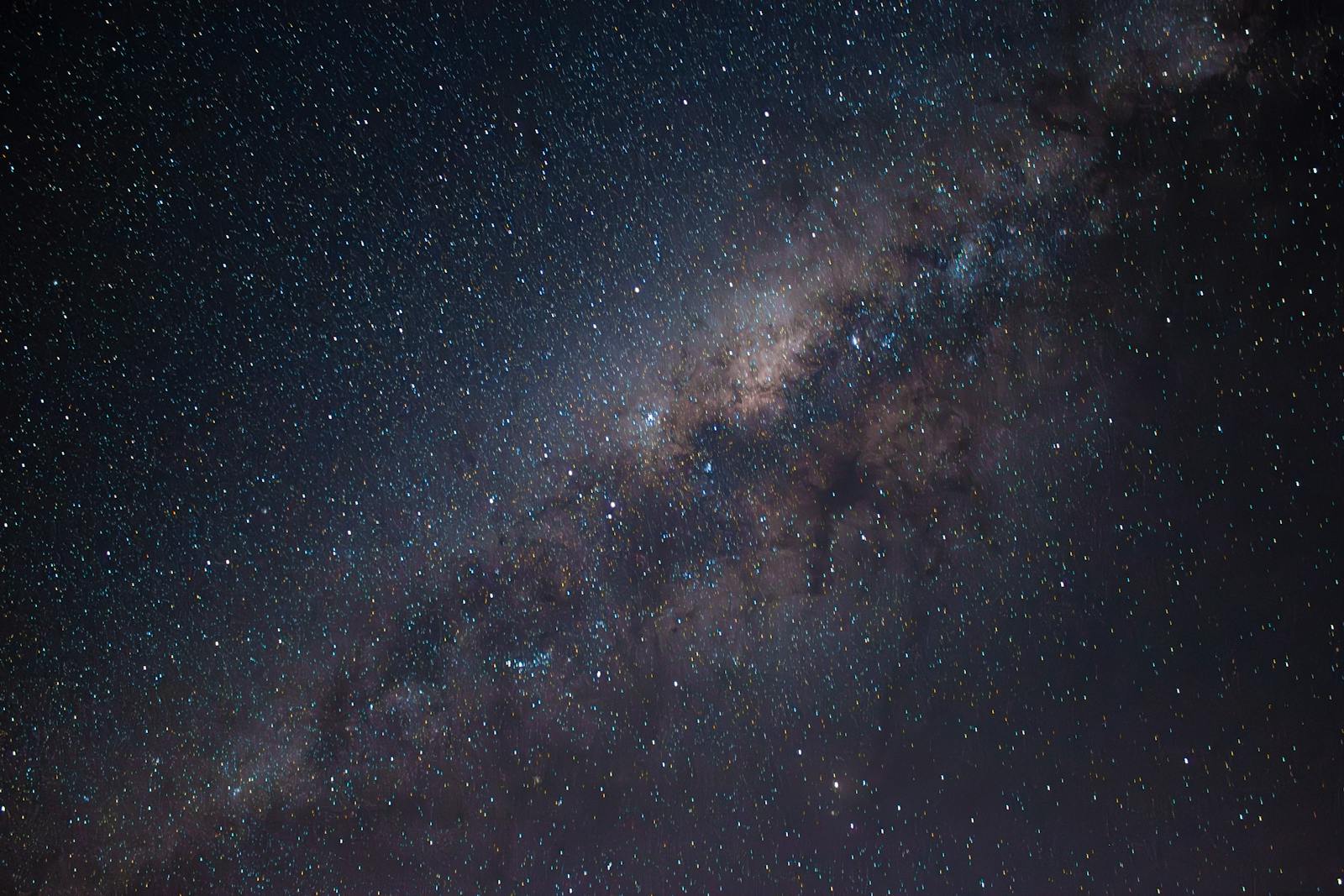
Astronomers have discovered two peculiar objects in the outer reaches of the Milky Way galaxy that are baffling scientists. The objects, which appear to be composed of ice, were first spotted in data collected by Japan’s AKARI space telescope between 2006 and 2011. The researchers, led by Takashi Shimonishi from the University of Tokyo and Niigata University, sought additional data from the Atacama Large Millimeter/submillimeter Array (ALMA) in Chile to investigate these mysterious objects further.
However, the new data has only deepened the mystery surrounding them. The two objects, which appear close together in the night sky but are actually located at vastly different distances, reside in a sparsely populated region of the Milky Way. One object is estimated to be 30,000 light-years away, while the other is believed to be 43,700 light-years from Earth.
What makes these objects particularly intriguing is their composition and size.
Icy objects defy expectations
Both objects have absorbed a significant amount of dust and ice, similar to those observed in young stellar objects or background stars behind dense clouds.
Additionally, they are approximately ten times the size of our solar system, which is relatively small for a gas cloud. The team also discovered that the gas surrounding the objects is primarily composed of silicon dioxide with some carbon dioxide mixed in. This composition is typically associated with young stellar objects. However, the researchers noted that the objects are not located in known star-forming regions or dense clouds, making their nature even more puzzling.
Previous infrared observations have reported that both objects show deep ice and dust absorption features often seen in embedded young stellar objects or background stars sitting behind dense clouds,” the researchers stated in their study. “However, they are located neither in known star-forming regions nor known dense clouds.”
The team hopes that future observations using the James Webb Space Telescope will provide more insight into these enigmatic icy objects and help unravel the mystery surrounding their formation and existence. The findings have been published on a preprint server and await peer review.
As astronomers continue to study these peculiar objects, they may shed new light on the complex processes that shape our galaxy and the universe as a whole.

Cameron is a highly regarded contributor in the rapidly evolving fields of artificial intelligence (AI) and machine learning. His articles delve into the theoretical underpinnings of AI, the practical applications of machine learning across industries, ethical considerations of autonomous systems, and the societal impacts of these disruptive technologies.