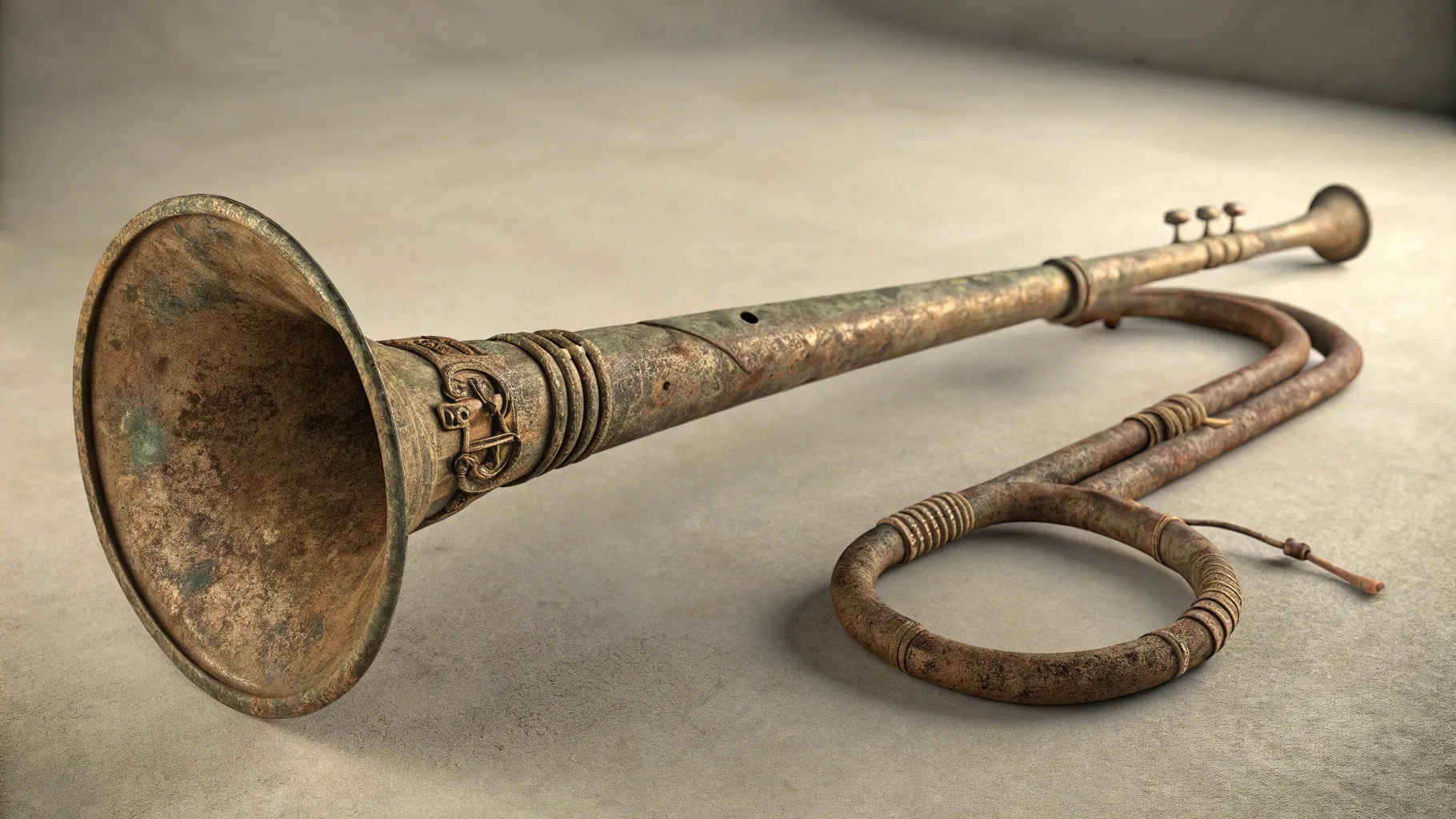
A rare bronze instrument believed to be a carnyx has been unearthed in Norfolk, in country once ruled by a Celtic tribe that fought the Romans. The find points to deep Iron Age roots in eastern England and may offer fresh evidence of warfare, music, and ritual on the eve of Roman rule.
Early reports describe a metal piece recovered from the soil in an area linked to the Iceni, the tribe led by a warrior queen who defied Rome nearly two millennia ago. Specialists say the object could be part of a ceremonial war trumpet. If confirmed, it would be one of the few such finds in Britain.
A Signal From the Iron Age
“Bronze instrument or carnyx dug up in Norfolk in area inhabited by Celtic tribe led by warrior who fought Romans.”
The carnyx was a tall, bronze wind instrument used by Iron Age groups across parts of Europe. Players held it upright, so the bell—often shaped like a boar, wolf, or serpent head—towered above a crowd or a battlefield. The instrument carried sound over long distances and was used for war signals, processions, and ceremonies.
Examples are rare. The Deskford carnyx, found in northeast Scotland in the 19th century, is one of the best known. In 2004, archaeologists in Tintignac, France, uncovered several carnyces together, including an ornate boar-headed example. These finds helped scholars reconstruct how the instrument looked and sounded.
Why Norfolk Matters
Norfolk sits in territory once controlled by the Iceni. The tribe is best known for the revolt led by Queen Boudica against Roman rule in AD 60–61. While texts describe the uprising, physical evidence from that period is uneven. A carnyx fragment from this region could link music, power, and warfare at a key moment in British history.
Experts say the object’s context will be crucial. If it came from a settlement, shrine, or hoard, it could point to ritual use. A battlefield context might hint at military signaling. Even a single fragment can inform debates about trade, craftsmanship, and local identity in late Iron Age Britain.
What Researchers Will Look For
- Metal analysis to confirm alloy and manufacturing techniques.
- Tool marks or decoration that match known carnyx styles.
- Soil and residue tests to fix a date range and context.
- Fragments that could fit a bell, tube, or mouthpiece.
Specialists will compare the piece to known finds in Scotland and France. If the bell survives, animal-head features could point to a specific workshop style. Even a tube segment may show seams, rivets, or repair marks that reveal how it was built and used.
Competing Views and Caution
Some archaeologists urge care before calling any bronze tube a carnyx. Horns, lur-like instruments, and other fittings can look similar when broken. Clear features—such as a distinctive bell or decorative plates—are needed for a firm identification.
Supporters of the carnyx reading point to the reported location and the cultural fit. Norfolk’s Iron Age hoards and metalwork show a strong tradition of fine bronze casting. An instrument tied to public ritual or warfare would align with that record.
What It Could Mean
If confirmed, the find would help map how sound shaped power in Iron Age society. Scholars have argued that the carnyx was both practical and symbolic. It could rally fighters, intimidate enemies, and mark sacred times. A Norfolk example would add a British case to a small but growing list.
The discovery could also renew interest in the Iceni’s material world. Beyond swords and coins, instruments show how leaders staged public life. Music, display, and theater were part of rule long before Rome arrived.
What Happens Next
Dating and identification will drive the next steps. A secure date near the mid-first century could link the object’s use to the tension around the Roman conquest. An earlier date would still enrich knowledge of the region’s Iron Age networks.
Museums and research teams may collaborate on conservation, scanning, and experimental reconstructions. Public interest will likely be high, given the Iceni’s place in national memory and the rarity of such instruments.
The early note is brief, but its claim is striking. A “bronze instrument or carnyx” from Iceni territory, where a leader “fought Romans,” suggests a rare window into sound and power from Britain’s Iron Age. Confirmation would mark a meaningful addition to the record and guide new work on how people rallied, warned, and worshiped through music. Watch for laboratory results, site reports, and any signs that more pieces lie in the ground nearby.

Rashan is a seasoned technology journalist and visionary leader serving as the Editor-in-Chief of DevX.com, a leading online publication focused on software development, programming languages, and emerging technologies. With his deep expertise in the tech industry and her passion for empowering developers, Rashan has transformed DevX.com into a vibrant hub of knowledge and innovation. Reach out to Rashan at [email protected]