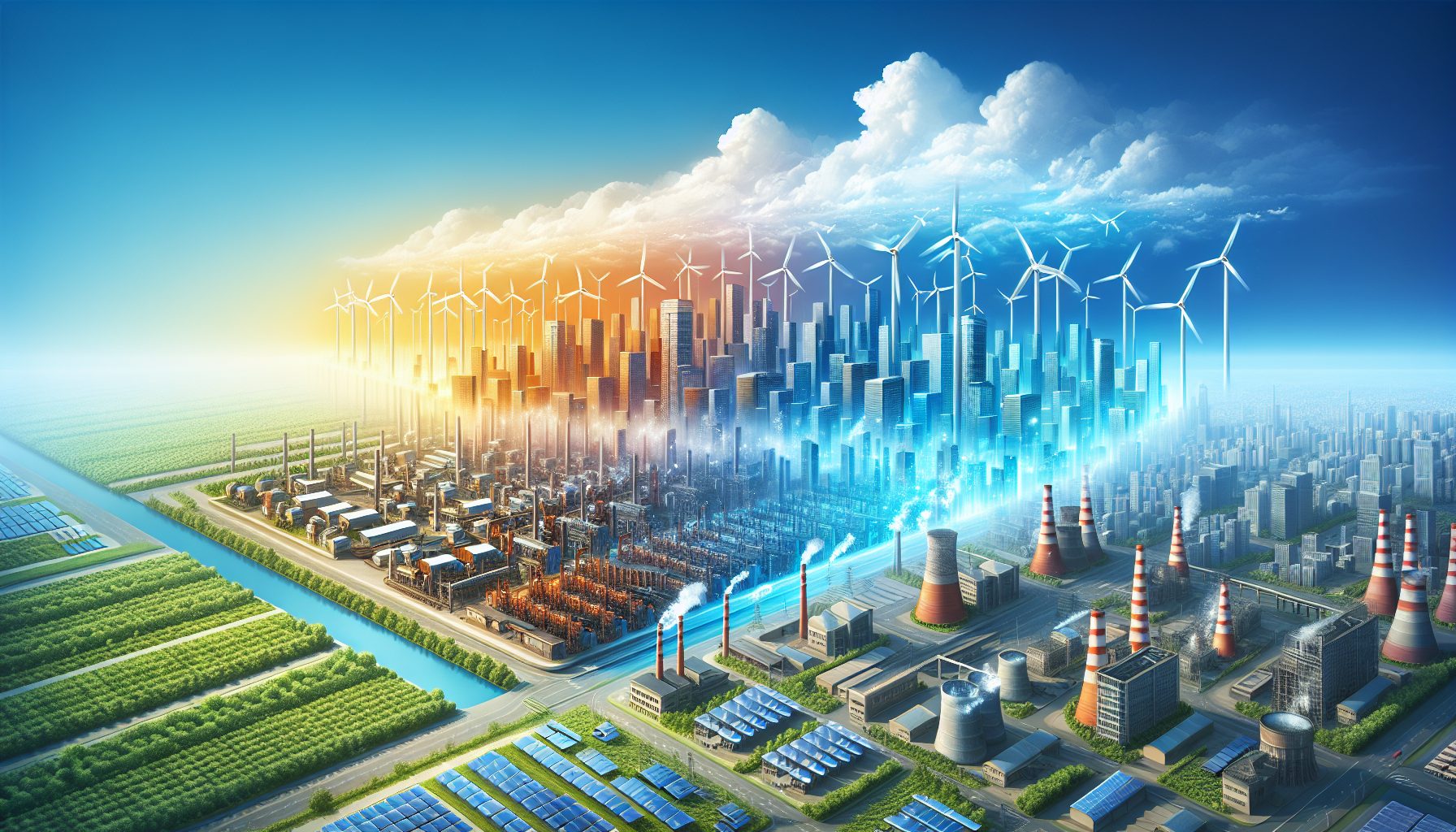
China has made significant strides in its efforts to combat climate change in recent years. The country has set ambitious goals to reduce carbon emissions and invest in renewable energy projects. China’s active participation in international climate negotiations reflects its broader commitment to a decarbonisation agenda.
During the recent COP29 conference, Zhao Yingmin, one of China’s delegates and the country’s vice-minister of ecology and environment, took a proactive approach. He reportedly held one-on-one meetings with delegates from developing nations in the final hours of the conference to emphasize the potential negative impacts of failing to reach a final finance agreement. China’s economic surge over recent decades has exceeded anything the world previously witnessed, with 19% of global output.
It has committed to peak climate pollution by 2030, a move that facilitated the 2015 Paris Climate Accord’s target to cap global heating at 1.5°C. However, China faces challenges in meeting this commitment, having been responsible for 90% of the growth in global carbon dioxide emissions since 2015. China’s rapid deployment of clean energy technologies may peak its climate pollution this year or next, offering the best chance at adhering to or not greatly overshooting the Paris commitment.
China’s total electricity generation is twice that of the United States, and its steel and cement production far surpass U.S. levels. Historically, China’s emissions have now surpassed those of the European Union. U.S. and EU emissions have been declining for some years.
However, whether the world has a shot at the 1.5°C target depends on how quickly China peaks and reduces its climate pollution. China’s renewable energy boom has already exceeded its 2030 growth targets for wind and solar energy.
China’s renewable energy milestones
In 2023 and 2024, China installed the majority of solar photovoltaic capacity globally. Clean energy is taking up the slack for the downturn in China’s real estate sector, which has been an important source of the nation’s growth. Clean energy accounted for 40% of economic growth in 2023, according to the Centre for Research on Energy and Clean Air (CREA).
The critical issue is grid capacity. “The key constraint on clean-energy growth will be the ability and willingness of grid operators to integrate very large amounts of clean energy,” writes Lauri Myllyvirta, a senior fellow at Asia Society Policy Institute, China Climate Hub. Local governments in China have been a dynamic factor in pushing renewables forward as a rural economic development strategy.
China could cut its carbon pollution by 30% by 2030 compared to 2023 if it achieves certain goals. Continuing its solar and wind growth could give the nation 3,500 GW of renewables by 2030 and 5,000 GW by 2035. Overall non-fossil electricity could amount to 65% of supply by 2035, aligning with the 1.5°C Paris path.
The largest source of energy growth from 2020-2023 came from energy-intensive industries such as steel and chemicals. To stay on the Paris track, industrial emissions must decline 25% from 2023 levels by 2035. This includes a 45% reduction in steel emissions.
China’s nationwide emissions trading system recently included steel, aluminium and cement, which should help achieve these targets. In conclusion, while China faces significant challenges in reducing its climate pollution, the nation’s rapid adoption of renewable energy technologies and ambitious climate targets provide a glimmer of hope for the global climate future. As China continues to advance its environmental policies and engage with other nations, its role as a climate champion appears to be solidifying.

Johannah Lopez is a versatile professional who seamlessly navigates two worlds. By day, she excels as a SaaS freelance writer, crafting informative and persuasive content for tech companies. By night, she showcases her vibrant personality and customer service skills as a part-time bartender. Johannah's ability to blend her writing expertise with her social finesse makes her a well-rounded and engaging storyteller in any setting.