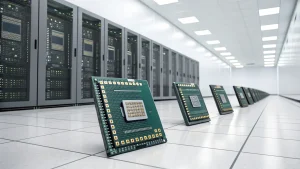
China’s independently developed third-generation superconducting quantum computer, Origin Wukong, has surpassed 20 million remote visits globally. Users from 139 countries and regions have accessed Origin Wukong remotely, with the United States leading in foreign user visits. Origin Wukong has completed more than 339,000 quantum computing tasks since it began operation on January 6, 2024.
These tasks span various industries, including finance and biomedicine. The quantum computer is built on Wukong, a 72-qubit indigenous superconducting quantum chip. It stands as one of China’s most advanced programmable and deliverable superconducting quantum computers.
Fears that other nations could gain an advantage are holding back the development of quantum computers. Export controls and other restrictions make it harder for researchers to work across borders. The first nation to develop a fully functional quantum computer will be able to crack many encryption algorithms in use today and gain access to the rest of the world’s most confidential data.
This drives governments to impose tighter restrictions on the export of quantum technology and collaborative research efforts. Both China and the US are aiming to pull ahead with quantum computing. Such geopolitical tussles may extend the development timeline, potentially hindering the collaborative spirit that often drives scientific breakthroughs.
China’s advancements in quantum computing and communications could threaten global encryption standards and accelerate data-driven surveillance, according to a report from the National Endowment for Democracy (NED).
Remote access to Origin Wukong
The report warns that China’s “harvest now, decrypt later” approach and leadership in quantum-secured communication systems pose significant risks to cybersecurity, corporate data, and democratic institutions.
China has invested heavily in quantum research, reportedly outpacing U.S. government funding in key areas of quantum computing and cryptography. Researchers at China’s Hefei National Laboratory for Physical Sciences, alongside firms such as Origin Quantum and QuantumCTek, are at the forefront of developing quantum processors and secure communication networks. One major concern is the “harvest now, decrypt later” strategy, where encrypted data is stored today with the expectation that future quantum computers will be able to decrypt it.
The report emphasizes the urgency for civil society groups, journalists, and human rights organizations to adopt quantum-resistant cryptographic methods before adversaries gain such decryption capabilities. Beyond decryption, China is leveraging quantum technologies for secure communications, deploying a national quantum network and operating the Mozi satellite, which facilitates space-to-ground quantum key distribution (QKD). The report indicates that China has conducted quantum communications tests with Russia and is exploring expanding this network among BRICS nations.
While QKD promises theoretically unbreakable encryption, the report warns of potential vulnerabilities. If quantum communication providers adopt cryptography standards and equipment with backdoors for government use, information on these networks could be vulnerable to state surveillance. The report urges democratic governments to engage in international standard-setting to prevent authoritarian digital norms from becoming the default.
It also recommends accelerating efforts to adopt post-quantum cryptography, fostering privacy-preserving technologies, and tracking the spread of China’s surveillance infrastructure. The analysts conclude: “The rapid and complex technological transition we are witnessing benefits authoritarian regimes, particularly Beijing. It presents an opportunity not only to challenge the technological edge of democratic states but also to weaken established rights to privacy, anonymity, and freedom of expression and assembly.
The danger of data-driven authoritarianism can only be mitigated if democracies recognize the centrality of data in today’s governance systems and work consciously to present an alternative to authoritarian approaches.”

Cameron is a highly regarded contributor in the rapidly evolving fields of artificial intelligence (AI) and machine learning. His articles delve into the theoretical underpinnings of AI, the practical applications of machine learning across industries, ethical considerations of autonomous systems, and the societal impacts of these disruptive technologies.