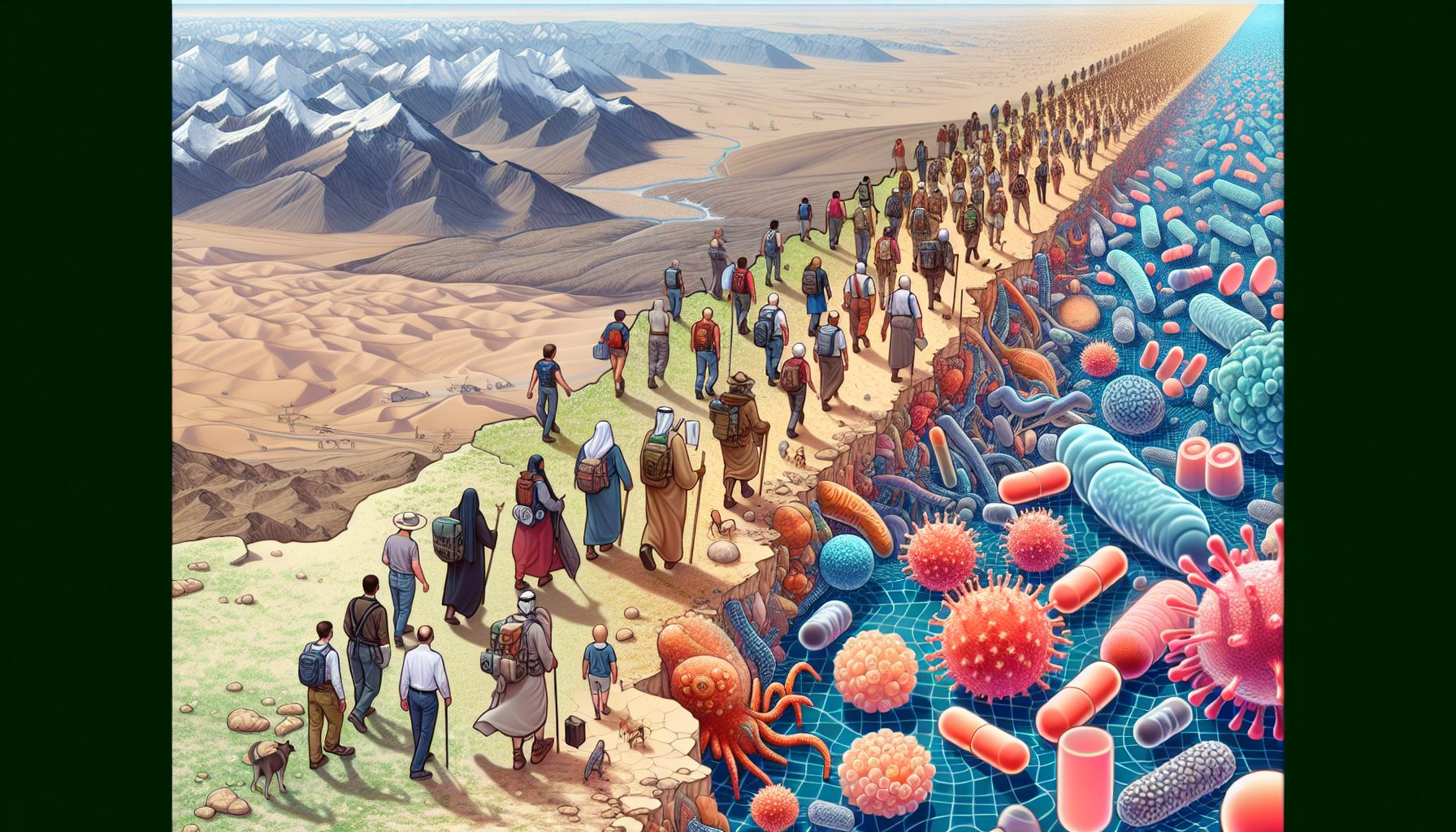
Climate change is forcing millions of people to migrate, and this number is expected to grow sharply in the coming years. Across Africa, drought, cyclones, and flooding have driven 7.4 million people from their homes in 2022 alone, according to the International Organisation for Migration. By mid-century, up to 5% of Africa’s projected 2 billion population could be on the move due to climate impacts, says the Global Centre for Climate Mobility.
While most climate migrants are expected to stay within their country or continent, scientists warn that these large-scale movements could alter the spread and occurrence of infectious diseases. Changes in temperature and rainfall might allow disease carriers like mosquitoes to expand their range. One study suggests an extra 4.7 billion people could be at risk of malaria or dengue by 2070 as these diseases’ “epidemic belt” grows.
Dr. Houriiyah Tegally, a researcher at Stellenbosch University, states, “We make the case that the mechanisms of climate-related migration to infectious diseases make sense and there’s a lot of migration that is due to climate disasters or climate change. But currently there’s not this proper link to confirm the increase in diseases because of climate migrations and that’s the goal of our funded research.”
Throughout history, major human movements have been credited with spreading infectious diseases.
Climate-driven migration and disease trends
The phenomenon has gained attention with increased human mobility, as newer infections like SARS and Covid-19 have rapidly spread through international travel. Scientists predict two types of future climate migration triggered by “fast” and “slow” onset events.
Fast-onset disasters like cyclones and heatwaves cause temporary displacement, while slow-onset events such as sea-level rise and desertification lead to longer-term migration. People fleeing short-term climate disasters may find themselves in crowded, unsanitary conditions that heighten the risk of disease outbreaks. Climate change migrants could also encounter new pathogens in unfamiliar areas and carry them back home.
Additionally, displaced humans encroaching on wildlife habitats might risk spillover infections from other mammal species. Prof. Tulio de Oliveira highlighted the potential for climate change migrants at a recent pandemic preparedness summit, noting that displaced populations often move to urban areas with their animals, living in close contact under terrible conditions.
As climate change continues to drive migration, it presents a growing challenge with profound implications for the spread and distribution of infectious diseases worldwide.

Rashan is a seasoned technology journalist and visionary leader serving as the Editor-in-Chief of DevX.com, a leading online publication focused on software development, programming languages, and emerging technologies. With his deep expertise in the tech industry and her passion for empowering developers, Rashan has transformed DevX.com into a vibrant hub of knowledge and innovation. Reach out to Rashan at [email protected]