
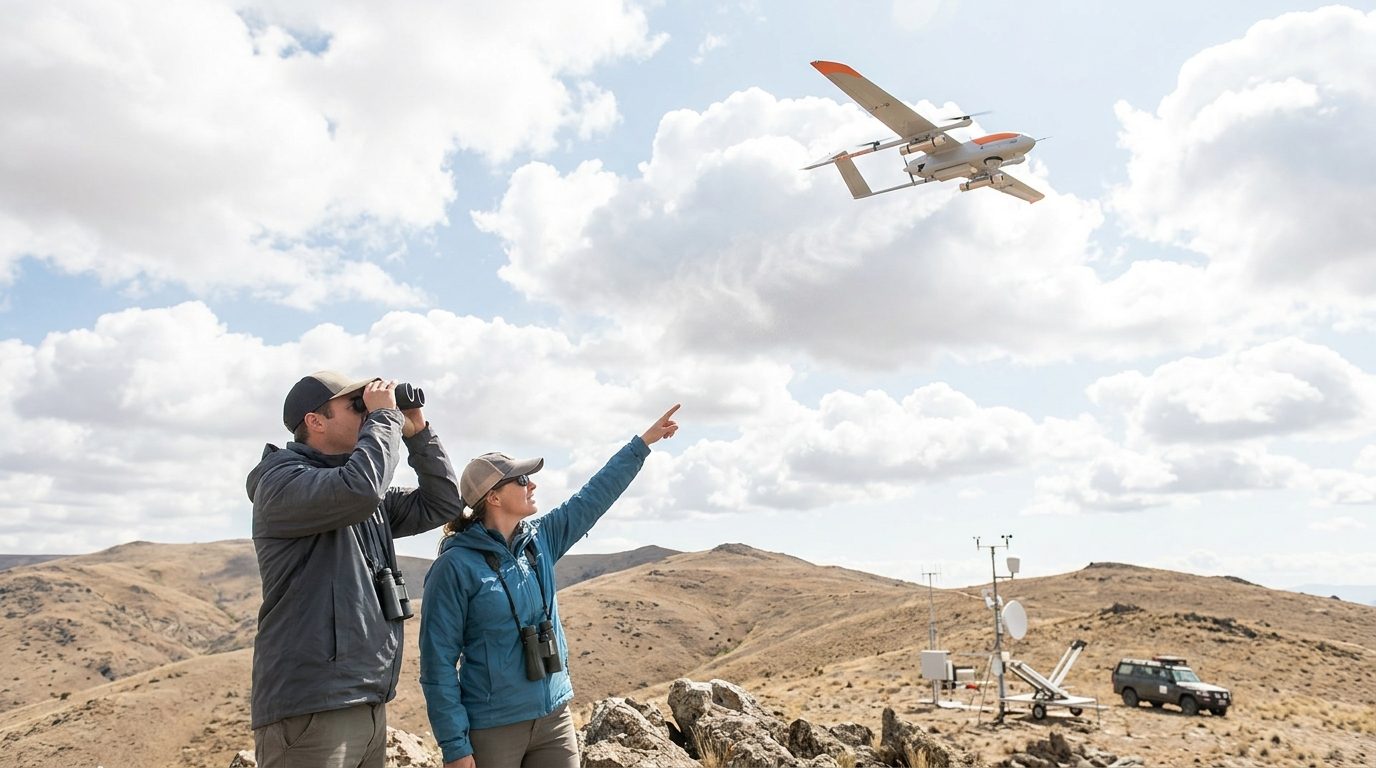
Cloud seeding is drawing fresh attention as countries seek more reliable rainfall, and drones may offer a safer way to conduct some operations.
The renewed interest comes as governments face pressure on water supplies from drought, population growth, and rising demand. Yet cloud seeding cannot create storms from clear skies. Its results depend on suitable clouds and local weather conditions.
How Cloud Seeding Works
Cloud seeding introduces small particles into clouds to encourage water droplets or ice crystals to grow. Common materials include silver iodide and certain salts.
The method usually relies on aircraft, ground-based generators, or rockets. Operators first identify clouds with enough moisture and the right temperature. They then release particles that may help precipitation form and fall.
The practice has existed for decades. Several countries have used it to support water supplies, reduce hail, or increase snow in mountain areas. Interest often rises during severe droughts.
However, weather systems are difficult to measure. Researchers must compare seeded clouds with similar unseeded clouds while accounting for natural changes in wind, temperature, and moisture.
Why Drones Are Attracting Interest
Drones could make some cloud-seeding missions cheaper and less risky. Unlike crewed aircraft, they do not place pilots inside unstable weather.
Potential advantages include:
- Access to remote areas and selected parts of a cloud.
- Lower operating costs for some missions.
- Real-time collection of temperature and moisture readings.
- Reduced danger to flight crews near severe weather.
Small aircraft also have limits. Payload capacity, battery life, icing, strong winds, and communication range can restrict operations. Aviation rules may prevent long-distance flights or missions near airports.
Larger drones could carry more equipment, but they may require stricter oversight. Governments would need standards for airspace access, chemical release, maintenance, and emergency procedures.
Evidence Remains a Central Challenge
Cloud seeding is not a guaranteed answer to drought. It can only work when suitable clouds are already present. Dry conditions that produce no seedable clouds leave operators with little opportunity.
Even during a successful operation, proving how much extra rain or snow resulted can be difficult. Natural rainfall varies widely across short distances and time periods.
Supporters view the technique as one tool within a wider water strategy. Critics warn that public claims can exceed the available evidence, especially when individual storms are treated as proof.
Careful measurement will determine whether drone-based programs provide meaningful gains. Trials need clear goals, independent review, and comparisons with untreated clouds. Results should also report failed missions and uncertain findings.
Environmental and Political Questions
Any wider use would bring environmental scrutiny. Authorities would need to monitor released materials, their concentration, and their effects on soil and water.
Weather modification can also create disputes between neighboring regions. Communities may question whether seeding changes where rain falls, even when atmospheric conditions make direct attribution difficult.
Transparent rules could reduce those concerns. Governments can publish flight records, release scientific findings, and explain what the technology can and cannot do.
Drones may improve access, safety, and data collection, but they do not remove the scientific limits of cloud seeding. Future programs will be judged by independent evidence, environmental monitoring, and realistic public claims. The key issue is not whether drones can enter clouds, but whether they can produce measurable water gains at an acceptable cost.

A seasoned technology executive with a proven record of developing and executing innovative strategies to scale high-growth SaaS platforms and enterprise solutions. As a hands-on CTO and systems architect, he combines technical excellence with visionary leadership to drive organizational success.