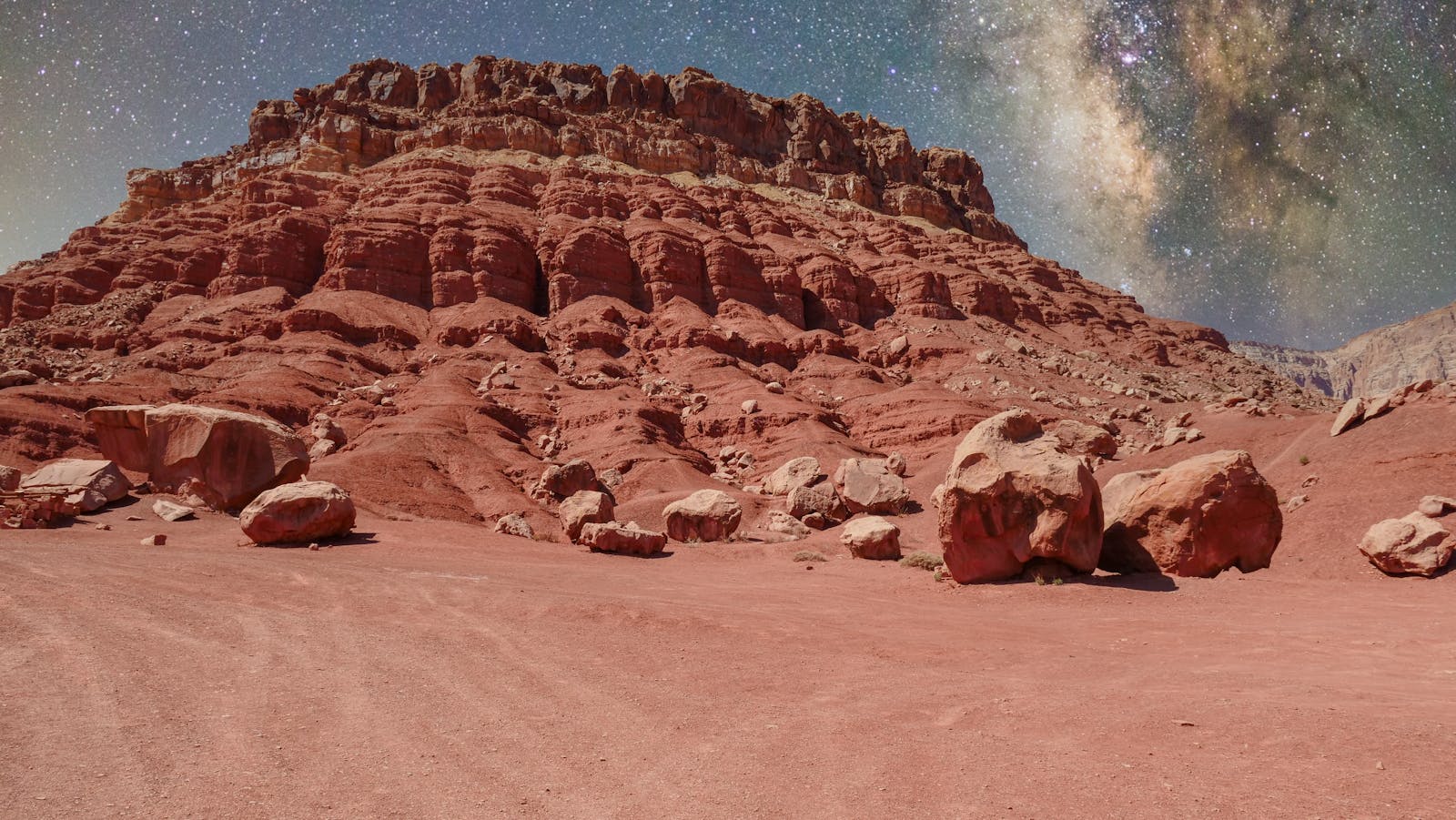
NASA’s Curiosity rover has discovered compelling evidence of ancient “wave ripples” in rocks on Mars, suggesting the presence of liquid water billions of years ago. These ripples, imprinted on the Martian surface, indicate a time when shallow bodies of water were open to the Martian atmosphere. The ripples, measuring just 6 millimeters high and spaced 4 to 5 centimeters apart, were shaped by the interaction of water and wind.
Their discovery is significant as it provides clear evidence of a standing body of water on Mars approximately 3.7 billion years ago. Dr. Michael Lamb, a geology professor at Caltech, created computer models based on these ripples to estimate the size of the ancient body of water.
The models suggest the existence of a shallow lake, no deeper than about 2 meters (6.5 feet). Claire Mondro, a postdoctoral scholar from The California Institute of Technology and the study’s first author, emphasized the importance of this discovery. “Extending the length of time that liquid water was present extends the possibilities for microbial habitability later into Mars’s history,” she said.
The presence of liquid water on Mars has significant implications for our understanding of the planet and the possibilities of life beyond Earth.
Ancient wave ripples reveal Martian water
Water is a fundamental ingredient for life as we know it, so finding evidence of past liquid water raises exciting questions about whether Mars could have supported microbial life.
These remarkable ripples went unnoticed until NASA documented them in 2022 during its expedition across the Gale Crater region of Mars, a region that was once home to wind-blown dunes. A nearby band of rock, the Amapari Marker Band, hinted at the existence of another lake, approximately 6.5 feet (2 meters) deep, that formed slightly later in Mars’s history. The discovery of these ancient ripples offers a crucial glimpse into Mars’s past, providing scientists with valuable data to reconstruct the environmental conditions that existed billions of years ago.
The presence of liquid water suggests that Mars once had a significantly thicker atmosphere capable of sustaining warmer temperatures. Understanding these transitions is key to determining how long Mars could have supported habitable conditions and whether it might have once harbored microbial life. Scientists believe that further exploration of ripple formations could shed light on the duration and stability of these ancient lakes, helping to piece together the timeline of Mars’ environmental shifts.
The findings from Curiosity’s observations could play a pivotal role in shaping the objectives of upcoming Mars missions. Future rovers and landers, equipped with more advanced instruments, may focus on analyzing ripple formations in greater detail, searching for chemical signatures that indicate past life-supporting conditions. The full study was published in the journal Science Advances.

April Isaacs is a news contributor for DevX.com She is long-term, self-proclaimed nerd. She loves all things tech and computers and still has her first Dreamcast system. It is lovingly named Joni, after Joni Mitchell.