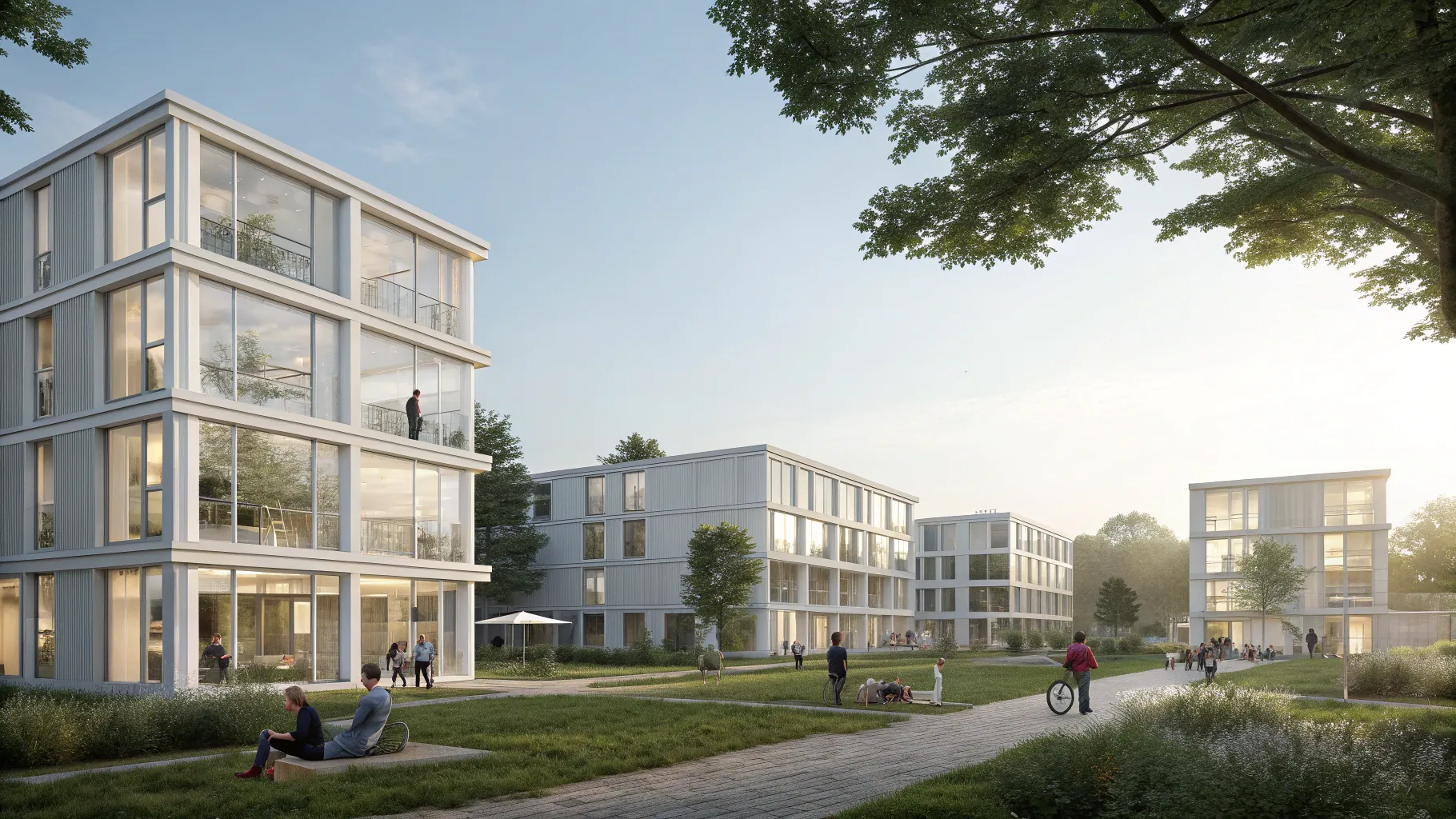
Denmark is pressing ahead with what organizers describe as Europe’s largest 3D-printed housing effort, a student-focused project called Skovsporet that has already produced 36 apartments. The team said it printed the homes at a pace of more than one unit per day, underscoring a rapid build schedule at a time when student housing demand is rising across the region.
The project is underway in Denmark and targets students seeking affordable, compact homes near education hubs. By using large-format construction printers and concrete mixes adapted for fast layering, the group aims to cut both construction time and labor needs. The approach could influence how universities and cities respond to housing shortages in the coming years.
Rising Demand Meets New Building Methods
European universities have reported pressure on housing as enrollment grows and urban rents climb. Local governments are testing modular building, prefab units, and, increasingly, 3D printing to speed delivery. Denmark has become a center for construction printing expertise, aided by homegrown manufacturers and pilot sites that prove the method can meet building codes and winter weather demands.
Skovsporet adds to a string of experiments in Europe and North America where printed walls are paired with conventional roofs, windows, and services. Advocates say the method can shorten schedules and reduce waste compared with traditional masonry. Critics caution that savings depend on design, supply chains, and local rules.
What the Team Says
“Described as Europe’s largest 3D-printed housing project, the Skovsporet development is currently underway in Denmark.”
Project leaders said the team produced homes at a rate of “more than one apartment per day.”
The organizers frame the project as a test of speed and repeatability. Printing core wall systems in place can remove weeks of formwork and manual laying. The group says that has helped keep the schedule tight and predictable.
Speed, Cost, and Quality Trade-Offs
Speed is the headline, but the long-term test is cost per square meter delivered. Up-front investment in printers and training can be high. Savings may appear when many similar units are built in sequence, as Skovsporet is doing. Standardized layouts also help accelerate permitting and inspections.
Quality control remains central. Printed layers must bond cleanly and resist moisture over time. Fire ratings, insulation, and acoustic performance need verification in each jurisdiction. Early pilots show that pairing printed structural shells with high-performance insulation and conventional fit-out can meet modern codes.
- Units delivered: 36 student apartments
- Production rate: Over one apartment per day
- Target: Faster, repeatable construction for student housing
Environmental Considerations
Supporters argue that 3D printing can reduce material waste by placing concrete only where it is needed, guided by software. Some projects blend cement with supplementary materials to cut emissions. Others explore printable earth or low-cement mixes. The climate benefit depends on the material recipe, transport, and energy used on site.
For student housing, smaller footprints and shared amenities can lower operational emissions. If printing enables tighter building envelopes or improved thermal detailing, it could also reduce heating demand in cold months.
Market Impact and What Comes Next
Universities and municipalities will watch Skovsporet’s delivery and early occupancy closely. If maintenance holds steady and costs compare well with prefab timber or modular steel, interest could grow. Construction firms may also see an opening for hybrid methods that combine printed cores with factory-made modules.
Insurance and finance are key. Lenders and underwriters need performance data before they back large portfolios of printed buildings. Clear standards, proven suppliers, and straightforward warranties would help the method scale.
Student sentiment will matter too. Well-designed interiors, daylight, and reliable heating and ventilation can decide whether printed housing is accepted as a mainstream option instead of a one-off experiment.
Skovsporet’s pace offers a glimpse of what is possible for time-sensitive housing. The next milestones will be full occupancy, energy performance through a full season, and audited cost results. If those benchmarks land well, more campuses and cities could adopt printing to ease housing bottlenecks, especially for students and first-time renters.
For now, Denmark’s project adds momentum to testing faster, repeatable construction. Watch for expanded printer fleets, standardized unit plans, and clearer guidelines from regulators as the method moves from trials to broader use.

A seasoned technology executive with a proven record of developing and executing innovative strategies to scale high-growth SaaS platforms and enterprise solutions. As a hands-on CTO and systems architect, he combines technical excellence with visionary leadership to drive organizational success.