Researchers at Johns Hopkins and North Carolina State universities have developed DNA storage and computing technology capable of storing data from a thousand laptops in a DNA-based storage device the size of a pencil eraser, according to project leader Albert Keung. The technology utilizes dendricolloids, which are soft polymer structures. A Nature research paper describes the system as having the ability to repeatedly write, read, erase, reload, and compute specific data from a substrate in a programmable manner.
This DNA-based store and compute engine can encode multiple image files into DNA and adsorb them onto colloidal substrate particles comprised of cellulose acetate. The dendricolloids used are highly porous with surface areas over 200 cm² and have binding capacities of over 10 DNA oligos mg. This allows the DNA files to be stably held, with durability for being repeatedly lyophilized and rehydrated over 170 times.
Accelerated ageing studies indicate half-lives of ~6,000 years at 4 °C and 2 million years at −18 °C. The data can be erased and replaced, and non-destructive file access is achieved through RNA transcription, which is then readable via nanopore sequencing. Albert Keung explained that DNA computing has faced challenges in storing, retrieving, and computing data in nucleic acids.
The research demonstrates that DNA storage technology can encompass traditional electronic device operations such as storing, moving data, reading, erasing, rewriting, and computing in a programmable manner.
DNA storage surpasses electronic devices
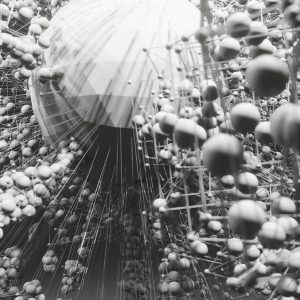
Co-researcher Orlin Velev added that the team created a hierarchical network of nanoscale fibers, increasing the surface area for depositing DNA without sacrificing data density.
This structure allows the copying and erasing of DNA information directly from the material’s surface without harming the DNA, much like electronic devices. Kevin Lin, another member of the research team, noted that the ability to discern DNA information from the storing nanofibers allows for conducting the full range of DNA data storage and computing functions. Moreover, depositing DNA on the dendricolloid material helps preserve it, enabling non-destructive read capability.
The research team, including contributions from Adriana San Miguel, Winston Timp, and James Tuck, integrated the materials into microfluidic channels to direct nucleic acids and reagents efficiently. This allowed for data movement and computational commands. The work from James Tuck’s lab also developed algorithms to convert data into nucleic acid sequences and vice versa, minimizing errors.
While this research marks a significant advancement in DNA storage, it does not yet solve the issue of lengthy data read and write times inherent in the technology. The published research paper is titled “DNA-based Store and Compute Engine” by Kevin N Lin, Kevin Volkel, Cyrus Cao, Paul W Hook, Rachel E Polak, Andrew S Clark, Adriana San Miguel, Winston Timp, James M Tuck, Orlin D Velev, and Albert J Keung, and was published on August 22, 2024, in Nature Nanotechnology. Members of this research team hold positions at NC State and Johns Hopkins and have potential interests in commercializing DNA-based information systems through DNAli Data Technologies.

April Isaacs is a news contributor for DevX.com She is long-term, self-proclaimed nerd. She loves all things tech and computers and still has her first Dreamcast system. It is lovingly named Joni, after Joni Mitchell.